

Generative Artificial Intelligence is more likely to augment than destroy jobs by automating some tasks rather than taking over a role entirely, a new study from the International Labour Organization has found.
The study, Generative AI and Jobs: A global analysis of potential effects on job quantity and quality , suggests that most jobs and industries are only partly exposed to automation and are more likely to be complemented rather than substituted by the latest wave of Generative AI, such as chatGPT. Therefore, the greatest impact of this technology is likely to not be job destruction but rather the potential changes to the quality of jobs, notably work intensity and autonomy.
Clerical work was found to be the category with the greatest technological exposure, with nearly a quarter of tasks considered highly exposed and more than half of tasks having medium-level exposure. In other occupational groups – including managers, professionals and technicians – only a small share of tasks was found to be highly exposed, while about a quarter had medium exposure levels.
The study, which is global in scope, documents notable differences in the effects on countries at different levels of development, linked to current economic structures and existing technological gaps. It finds that 5.5 per cent of total employment in high-income countries is potentially exposed to the automating effects of the technology, whereas in low-income countries, the risk of automation concerns only some 0.4 per cent of employment. On the other hand, the potential for augmentation is nearly equal across countries, suggesting that with the right policies in place, this new wave of technological transformation could offer important benefits for developing countries.
The potential effects of Generative AI are likely to differ significantly for men and women, the study finds, with more than twice the share of female employment potentially affected by automation. This is due to women’s over-representation in clerical work, especially in high and middle-income countries. Since clerical jobs have traditionally been an important source of female employment as countries develop economically, one result of Generative AI could be that certain clerical jobs may never emerge in lower-income countries.
The paper concludes that the socioeconomic impacts of Generative AI will largely depend on how its diffusion is managed. It argues for the need to design policies that support an orderly, fair and consultative transition. Workers’ voice, skills training and adequate social protection will be key to managing the transition. Otherwise, there is a risk that only a few, well-prepared countries and market participants will benefit from the new technology.
The authors note that the “outcomes of the technological transition are not pre-determined. It is humans that are behind the decision to incorporate such technologies and it is humans that need to guide the transition process”.



Related News.
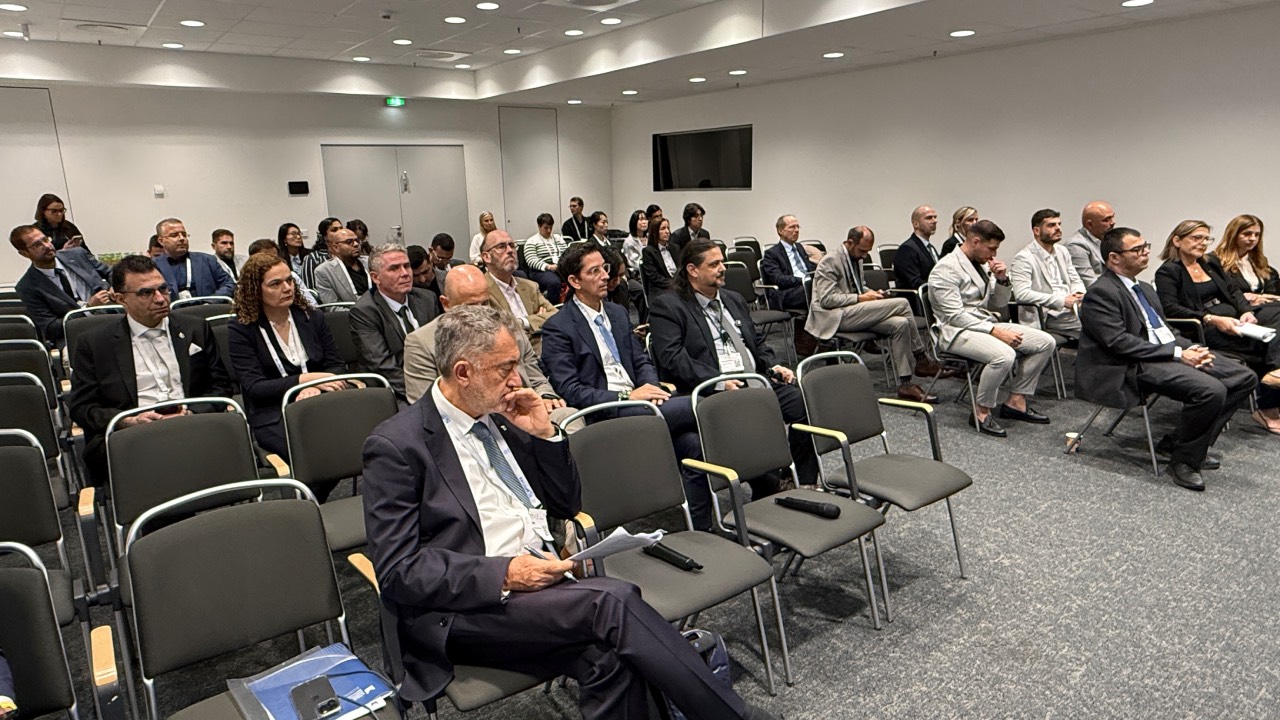
Cyprus Maritime Innovation takes Centre Stage at SMM Hamburg 2026
Underscoring its expanding role as a premier international hub for cutting-edge maritime technology and sustainable shipping, the Republic of Cyprus…

Trump seeks to refill US oil reserve with Venezuela deal but faces long delay
U.S. President Donald Trump said on the 30th (local time) that he would refill the U.S. Strategic Petroleum Reserve, which has been depleted with…

US Navy Official visits South Korean Shipyards in private
With U.S. President Donald Trump pushing a plan to allow overseas construction of U.S. warships, attention is focusing on whether the building of…

SES and De Boer Marine expand collaboration with FlexMaritime deployment across Global Markets
SES, a leading space solutions company, and De Boer Marine, a leading provider of top-quality marine equipment and maritime connectivity services,…
New ESG guidance to help maritime industry turn sustainability into commercial advantage
New framework helps shipowners and ports align ESG strategy with access to capital, charterer expectations and long-term asset value. Maritime…

Britannia P&I Club analysis finds four in five crew deaths linked to illness rather than accidents
New report highlights cardiovascular disease as leading cause of fatalities and raises concerns over mental health risks among younger seafarers.…

The Swedish Club launches new Loss Prevention podcast, Knot Another Lesson
The Swedish Club has launched Knot Another Lesson, a new podcast exploring the practical lessons, emerging risks and operational challenges shaping…

Lloyd’s Register appoints Jens Grunenberg as Senior Representative for Germany
Lloyd’s Register has appointed Jens Grunenberg as its Senior Representative for Germany, effective 1 September. Based in Hamburg, Grunenberg will…

Indian Register of Shipping sets sights on Hamburg for European Expansion
Indian Register of Shipping, a leading international classification society and full member of the International Association of Classification…

MOL completes Merger of 6 Ship Management Companies
Unifying Management of Over 200 Vessels and Strengthening Safety Mitsui O.S.K. Lines, announced that it has completed the integration of the MOL…
Subscribe to our newsletter!
if you dont want to swim alone in the ocean of news, sign up for the newsletter, and you will receive daily all the important news of world shipping!
