Potential shortages loom as Panama Canal restrictions impact holiday stocks

As wholesale inventories dwindle in the U.S., the ongoing restrictions at the Panama Canal could have implications for Christmas stocks and supply chains. With the imminent Christmas shopping season, the delay in inventory restocking due to shipping disruptions and congestion at the Panama Canal could result in missed sales opportunities for businesses.
The present disruptions have raised concerns about the ability of businesses to replenish their inventories in a timely manner due to shipping delays. If these disruptions continue, there is a looming threat of shortages for select goods during the critical Christmas shopping period.
“Ongoing challenges at the Panama Canal are making existing worries for industries even worse. New industry information shows that the U.S. economy’s consumer spending has seen an uptick, which is good. With inventories falling and demand expected to rebound, the Panama Canal, which carries 40% of container traffic from Asia to Europe, is likely to experience increased pressure.”, remarked, Christian Roeloffs, Cofounder and CEO of Container xChange.
With the Panama Canal Authority implementing water conservation measures in response to a drought, vessels are experiencing prolonged wait times and capacity limitations, resulting in a ripple effect across the shipping sector.
Prominent industry sources, including Alphaliner, Sea-Intelligence, and Drewry, have reported a notable increase in blanked sailings – the practice of cancelling scheduled sailings to manage capacity. Specifically, during June and July, approximate 10.8% of the regular sailings connecting Central China and Europe were cancelled. Comparable patterns have also emerged in the transpacific trade lanes. As a direct result of these capacity reductions, the market has witnessed a corresponding rise in spot freight rates. This outcome aligns closely with earlier projections made by industry experts.
Notably, the ongoing efforts by the Panama Canal Authority to conserve freshwater amidst the prevailing drought conditions have contributed to a substantial backlog of vessels – currently numbering around 200 – awaiting their turn to transit through the canal. As this queue lengthens, waiting times have surged to a peak of 21 days, introducing significant delays across multiple segments of the shipping industry.
Given the Panama Canal’s role as a vital trench for U.S. shippers, who channel 40% of all U.S. container traffic through the canal annually, the ramifications of the current disruptions are extensive. Measures such as the restriction of booking slots and adjustments to vessel weight requirements have compounded the existing backlog, further elongating waiting times. This, in turn, is straining shipping schedules, potentially leading to disruptions along supply chains and the potential for knock-on effects on pricing structures. The Panama Canal plays a critical role for U.S. shippers en route to Gulf and East Coast ports. The U.S. accounts for 73% of Panama Canal traffic representing about $270 billion in cargo.
The knock-on effects are also anticipated to affect costs. The need for alternative routes and the resulting longer lead times due to the ongoing congestion have the potential to increase operational expenses for carriers. These cost increases may eventually be passed down to businesses and consumers alike. While optimism surrounds the prospect of improvements as the rainy season approaches, historical data indicates that even after the removal of draft restrictions, the process of clearing the accumulated backlog may still be a time-consuming endeavour.
“These supply chain disruptions are expected to reverberate throughout the industry, with potential consequences for container prices. The ongoing congestion and reduced capacity have led to heightened competition for available slots, driving up spot freight rates. The scarcity of available vessel capacity has prompted carriers to reevaluate pricing strategies to offset increased costs and uncertainties. Consequently, the traditional equilibrium of container prices may experience adjustments to accommodate the challenges of the Panama Canal congestion.” commented Roeloffs.
Against this backdrop, collaboration among stakeholders becomes even more pivotal. Effective coordination and communication will be instrumental in addressing the multifaceted effects of the Panama Canal congestion on global trade routes and container prices.



Related News.

Beyond Technical Skills: WISTA Cyprus explores the human side of leadership
WISTA Cyprus hosted The Art of Leadership & Emotional Mastery, an interactive workshop held on 15 October at the Alasia Hotel in Limassol,…
The human cost of sending merchant mariners into war zones extends far beyond the immediate danger of missiles and drones. It raises a harder question: who is really protecting the seafarer?
Who protects the seafarer? I have spent much of my professional life at sea. I am a Master Mariner. I have stood on the bridge, made decisions…

Loss of bridge control: Human failure is normal – context is key
When bridge control is lost in a functioning system, it can be easy to blame human error. But accidents rarely happen because of one mistake…

Danish Shipping announces the transport of live animals by sea new rules should improve safety for animals, seafarers and the environment
Revised rules on the transport of live animals by sea are being negotiated in the EU. Danish Shipping wants to ensure good animal welfare,…

Japan’s flawed shipping proposal leaves developing countries adrift
A new analysis by Opportunity Green warns governments of the wide-ranging risks posed by Japan’s proposal at the International Maritime Organization…

Intermodal Report Week 42 2026
Pls find below the Intermodal Report - Week 42 2026 Intermodal Report Week 42 2026

Allied Weekly Market Review Week 42
Pls find below the Allied - Weekly Market Review - Week 42 ALLIED - Weekly Market Report- Week 42
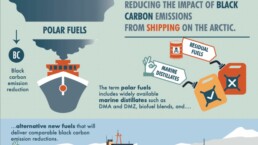
EU Arctic Strategy NGOs welcome EU ambition on on cutting shipping’s Arctic Black Carbon Emissions
Responding to today’s publication of the EU’s Arctic Strategy, which definitively states the EU’s intention to support International Maritime…

The final quarter of 2026 is expected to see softer bauxite flows
Chinese front-loading is expected to have run its course, pointing to softer bauxite flows in 2026 Q4. Global bauxite flows increased by 2.8% y/y…

DP World Foundation and Belewan new container terminal mark groundbreaking of AED 3.7 million school project in Indonesia
Classrooms of Hope initiative expands to Belawan, Medan with a new junior high school designed to provide modern learning facilities and greater…
Subscribe to our newsletter!
if you dont want to swim alone in the ocean of news, sign up for the newsletter, and you will receive daily all the important news of world shipping!
