

After installing scrubbers on majority of its fleet to tackle sulfur emissions in response to the International Maritime Organization’s global low sulfur mandate, product tanker firm Torm is gearing up for impending decarbonization rules with alternative fuels.
“We’re looking at methanol and ammonia,” Torm CEO Jacob Meldgaard said in an interview with S&P Global Commodity Insights on the sidelines of SIBCON 2022.
From a safety perspective and in terms of advances in development of engines, methanol as a marine fuel will likely be adopted earlier, he said.
In the coming months, about 10% of Torm’s fleet will be capable of carrying methanol on behalf of its clients and the next step would be to have dual-fueled engines on those ships to be able to burn methanol, Meldgaard said.
“For us, this is an opportunity to not only lower our CO2 emissions but also be part of the ecosystem to transport methanol to various bunkering hubs,” he said.
He also noted that the company will likely not consider LNG as a marine fuel for its fleet because of the nature of tramp shipping, which is mostly conducted on a spot basis rather than a fixed contract.
“If you are in the tramp business, your next port of call and destination is unknown…with this uncertainty and non-availability of LNG bunker fuel and infrastructure at most ports, it does not seem a logical choice,” Meldgaard added.
Not perplexed by scrubbers
Scrubber installations will likely continue in the shipping industry because of a favorable Hi-5 spread, Lars V. Mathiasen, Torm’s VP for its tanker division said in the same interview.
“We see the likelihood of increasing HSFO volumes coming to the market, especially from Far East Russia,” Mathiasen, who is also Torm’s head of commercial decarbonization, said. “This combined with tightness in gasoil, which are components into VLSFO means that the current high spread will remain wide for a considerable time.”
Platts, part of S&P Global, assessed the Hi-5 spread, which measures the discount of HSFO to VLSFO, at an average of around $222/mt on a delivered Rotterdam basis for Jan. 1-Oct. 5, 2022. The payback period for scrubber units, which ships must have installed to burn HSFO, remains at 2-3 years as the spread has been above $100/mt, analysts at S&P Global said in August.
While Torm recognizes that scrubbers do not tackle carbon dioxide emissions, the company was taking steps to achieve that goal.
“On very initial projects, we are actually looking at the possibility of doing carbon capture onboard ships [with scrubbers],” Mathiasen said.
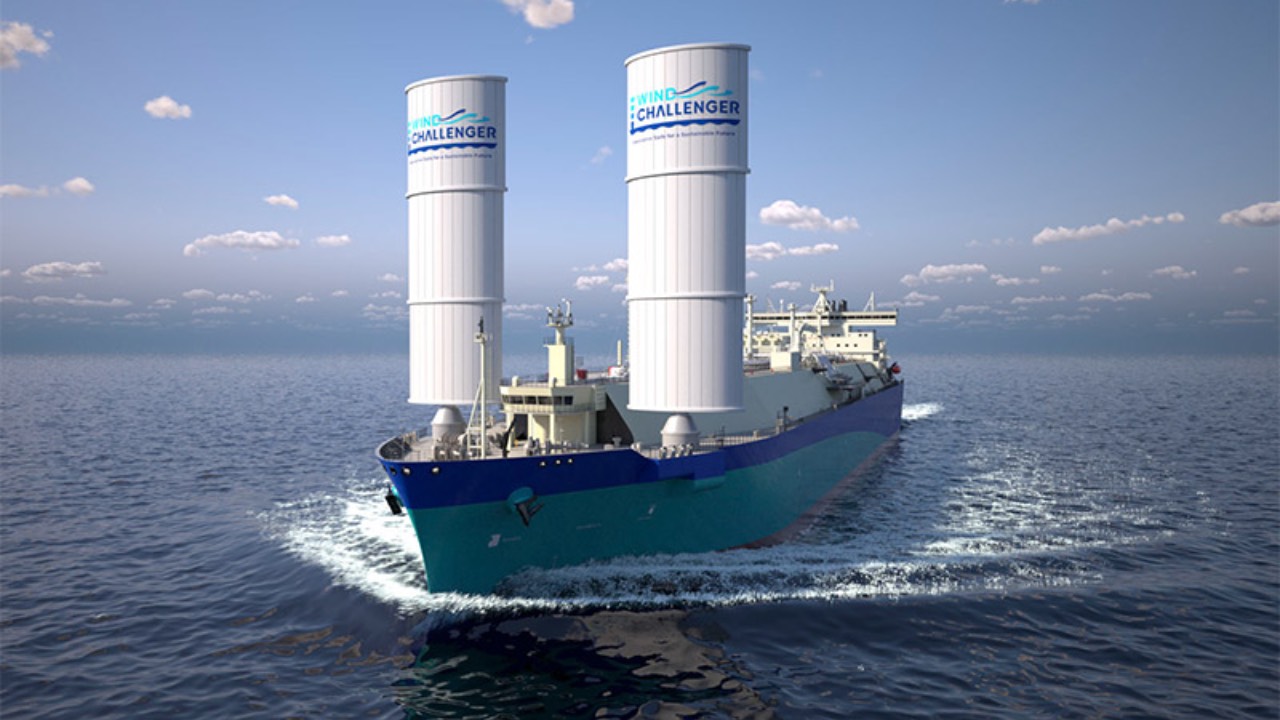
Torm is also increasing the efficiency of its fleet through steps including advanced hull coatings. “We are fitting an air lubrication system on a ship currently,” he said. “Next year, we will be fitting rotor sails in one or two ships.”
Mathiasen also said that Torm was prepared for the upcoming CII rules. “Some shipowners will, however, find it difficult to navigate through CII requirements because they cannot adjust trading patterns for the sake of these rules.”
EU targets more ambitious
To trim GHG emissions emanating from international shipping, both the IMO and the EU are considering measures to expedite decarbonization.
“Clearly, the EU’s Fit for 55 package is more ambitious than what is set out by the IMO. The Emissions Trading Scheme that is being discussed in Europe is also expected to come in advance of any market-based measures intended to be implemented by the IMO,” Meldgaard said.
Shipping’s inclusion in the EU ETS was first proposed to start in January 2023 in a phased-in approach, to be fully integrated by 2026, but details have yet to be finalized. The International Chamber of Shipping expects shipping to join the scheme in 2024.
“So, the industry will likely end up having a local regulation in advance of global regulation… However, that is not in anybody’s interest,” he said.
Melgaard also noted that there was a need for a carbon tax or carbon levy for shipping to incentivize the industry to become greener.
Product tankers outlook
“I think it’s a hazy outlook on geopolitics and how we solve the energy crisis, especially in Europe. However, the prospect for product tankers is positive because the services product tankers provide currently is much needed,” Meldgaard said.
“If you are going to provide Europe with an alternative to Russian oil at large, you need to take it from further away. That underlying story is our base case and that will prevail for some time,” he added.
On the supply side, product tanker owners “are very lucky right now,” Meldgaard said. Shipyard capacity is scarce because the containerized segment went through a boom ahead of the product tankers market, resulting in significant investments in new capacity for containerized freight and shipyards taking up the capacity for the coming 3 years or so.
“In earnest, if you want to get a new product tanker, you are looking potentially at 2026,” Meldgaard said, adding that the capacity on the supply side for product tankers was at a historic low, at around 5% of the current order book.
Source: Platts



Related News.
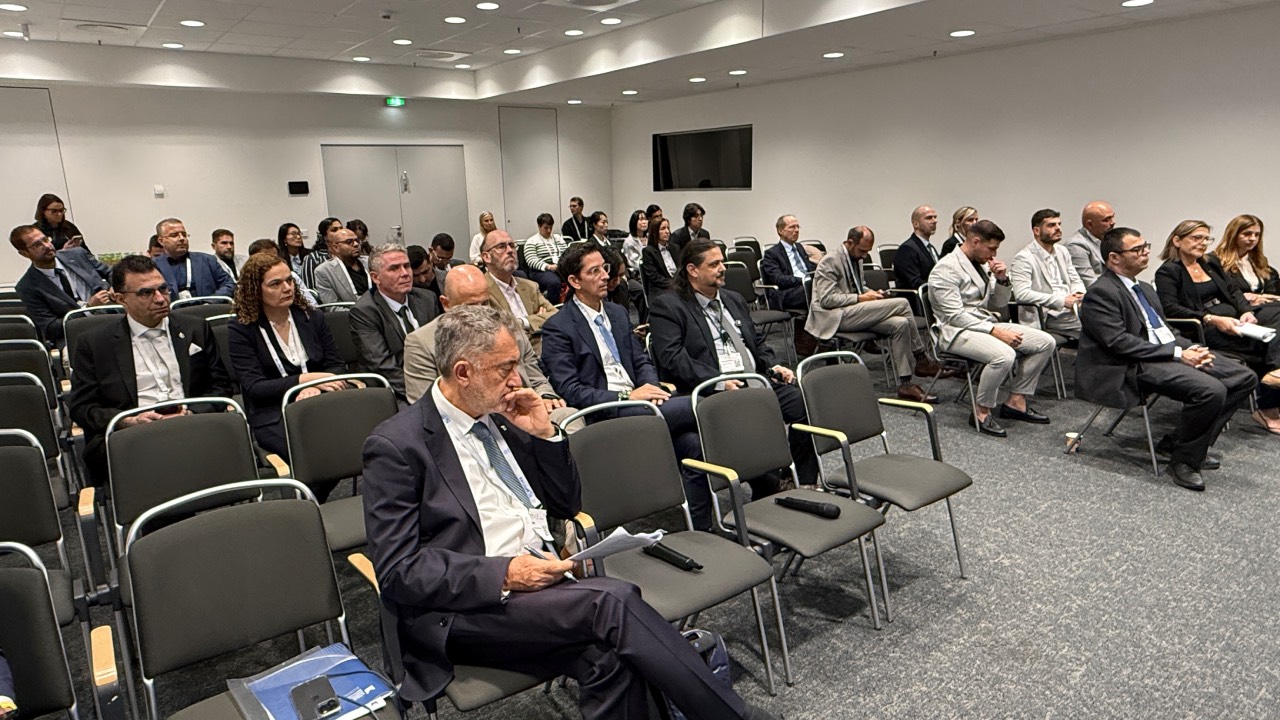
Cyprus Maritime Innovation takes Centre Stage at SMM Hamburg 2026
Underscoring its expanding role as a premier international hub for cutting-edge maritime technology and sustainable shipping, the Republic of Cyprus…

Trump seeks to refill US oil reserve with Venezuela deal but faces long delay
U.S. President Donald Trump said on the 30th (local time) that he would refill the U.S. Strategic Petroleum Reserve, which has been depleted with…
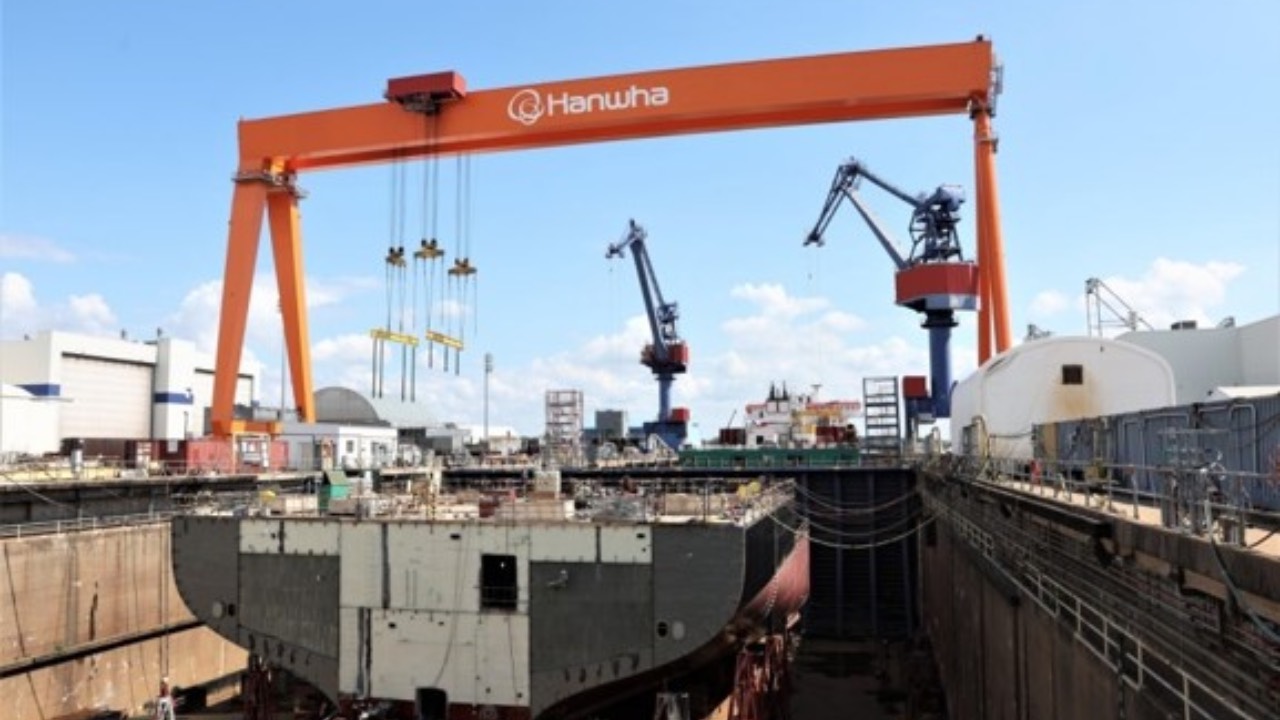
US Navy Official visits South Korean Shipyards in private
With U.S. President Donald Trump pushing a plan to allow overseas construction of U.S. warships, attention is focusing on whether the building of…

SES and De Boer Marine expand collaboration with FlexMaritime deployment across Global Markets
SES, a leading space solutions company, and De Boer Marine, a leading provider of top-quality marine equipment and maritime connectivity services,…

New ESG guidance to help maritime industry turn sustainability into commercial advantage
New framework helps shipowners and ports align ESG strategy with access to capital, charterer expectations and long-term asset value. Maritime…

Britannia P&I Club analysis finds four in five crew deaths linked to illness rather than accidents
New report highlights cardiovascular disease as leading cause of fatalities and raises concerns over mental health risks among younger seafarers.…
The Swedish Club launches new Loss Prevention podcast, Knot Another Lesson
The Swedish Club has launched Knot Another Lesson, a new podcast exploring the practical lessons, emerging risks and operational challenges shaping…

Lloyd’s Register appoints Jens Grunenberg as Senior Representative for Germany
Lloyd’s Register has appointed Jens Grunenberg as its Senior Representative for Germany, effective 1 September. Based in Hamburg, Grunenberg will…
Indian Register of Shipping sets sights on Hamburg for European Expansion
Indian Register of Shipping, a leading international classification society and full member of the International Association of Classification…
MOL completes Merger of 6 Ship Management Companies
Unifying Management of Over 200 Vessels and Strengthening Safety Mitsui O.S.K. Lines, announced that it has completed the integration of the MOL…
Subscribe to our newsletter!
if you dont want to swim alone in the ocean of news, sign up for the newsletter, and you will receive daily all the important news of world shipping!
