Ocean shippers playing catch up to electric vehicle fire risk
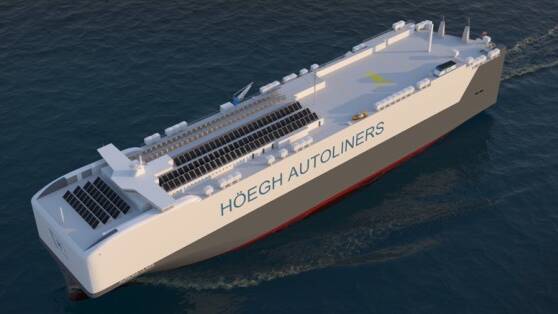

Electric vehicles are crisscrossing the globe to reach their eager buyers, but the battery technology involved in the zero- emission automobiles is exposing under-prepared maritime shippers to the risk of hard-to-control fires, industry, insurance and emergency response officials said.
That risk has been put under the spotlight by the burning car carrier drifting off the Dutch coast. The Dutch coastguard said the fire’s cause was unknown, but Dutch broadcaster RTL released a recording in which an emergency responder is heard saying “the fire started in the battery of an electric car.”
While all logistics companies deal with the risk of EV lithium-ion batteries burning with twice the energy of a normal fire, the maritime industry hasn’t kept up with the developing technology and how it creates greater risk, maritime officials and insurers said.
There were 209 ship fires reported during 2022, the highest number in a decade and 17% more than in 2021, according to a report from insurer Allianz Global Corporate & Specialty (AGCS) ALVG.DE. Of that total, 13 occurred on car carriers, but how many involved EVs was not available.
The European Maritime Safety Agency said in a March report the main cargo types identified as responsible for “a large share of cargo fire accidents included … lithium-ion batteries.”
There were 3,783 new cars on board, including 498 electric battery vehicles, a spokesperson of ship chartering company “K” Line said on Friday. Initial reports had put the number of electric vehicles at just 25.
Japan’s Shoei Kisen, which owns the ship, said it was working with authorities to get control of the fire.
The cause of the fire, while still officially undetermined, has raised questions about “what blind spots there are when transporting electric cars powered by batteries – which when they catch fire can’t be extinguished with water, or even by oxygen deprivation,” said Nathan Habers, spokesperson for the Royal Association of Netherlands Shipowners (KVNR).
“The first question that comes to mind is: Does the current code stack up against the risk profile of this type of goods?” he added.
One hazard in lithium-ion batteries is “thermal runaway,” a rapid and unstoppable increase in temperature that leads to fires in EVs that are hard to extinguish and can spontaneously reignite.
Fire extinguishing systems on the massive ships that haul cars weren’t designed for those hotter fires, and shipping companies and regulators are scrambling to catch up, said Douglas Dillon, executive director of the Tri-state Maritime Safety Association that covers Delaware, Pennsylvania and New Jersey.
Recent fire-related losses are resulting in increased insurance costs for automakers shipping cargo and costs are likely to increase for vessel owners as well, said John Frazee, a managing director at insurance broker Marsh. As ship owners seek to limit losses by legally pursuing automakers whose vehicles are determined to have caused a fire, automakers are buying additional liability protection, he said.
Exacerbating the risks is the business model used by the companies that includes tightly packed ships. Auto carriers like the burning ship are known as RoRos, which stands for roll-on/roll-off – the way cars are loaded and unloaded.
RoRos are like floating parking garages and can have a dozen or more decks carrying thousands of vehicles, industry officials said. Unlike parking lots, however, cars are parked bumper-to-bumper with as little as a foot or two of space overhead.
Firemen typically put out EV battery fires on roadsides by clearing the area around the burning vehicle and flooding the underside with water, something difficult to do on a RoRo, Dillon said.
“There’s no way for a firefighter in protective gear to get to the location of a fire” on a ship, he said, adding the cramped conditions increase the danger getting trapped.
While trains and trucks also transport EVs, isolating and extinguishing fires is easier as workers can unhook a rail car and a trucker can pull over, said Frazee.
Frazee expects insurers to lead the charge on strengthening safety systems on ships. Options being worked on include new chemicals to douse flames, specialized EV fire blankets, battery piercing fire hose nozzles and proposals to segregate EVs.
“I see no quick solution,” Frazee said.
The International Maritime Organization, which sets regulations for safety at sea, plans to evaluate new measures next year for ships transporting EVs in light of the growing number of fires on cargo ships, a spokesperson told Reuters.
That could include specifications on types of water extinguishers available on boats and limitations on the amount a battery can be charged, which impacts flammability.
With EVs here to stay, KVNR’s Habers said his group is discussing tightening regulations to account for the additional safety risks.
“There is already a whole lot of communication underway about this,” he said, “but with this incident it becomes apparent we might need to speed up the process, especially when you consider that the number of this sort of cars is only going to rise.”
Global auto sales last year totaled 81 million vehicles, 9.5% of which were EVs, according to EV-Volumes.com. China and Europe have been the most aggressive regions in pushing automakers to shift to EVs, and U.S. President Joe Biden’s administration has proposed rules that could result in as much as two-thirds of the new vehicle market shifting to EVs by 2032.
Source: Reuters reported by Lisa Baertlein in Los Angeles and Anthony Deutsch in Amsterdam, additional reporting by Victoria Waldersee in Berlin. Edited by Ben Klayman and Diane Craft



Related News.
Cyprus Maritime Innovation takes Centre Stage at SMM Hamburg 2026
Underscoring its expanding role as a premier international hub for cutting-edge maritime technology and sustainable shipping, the Republic of Cyprus…

Trump seeks to refill US oil reserve with Venezuela deal but faces long delay
U.S. President Donald Trump said on the 30th (local time) that he would refill the U.S. Strategic Petroleum Reserve, which has been depleted with…
US Navy Official visits South Korean Shipyards in private
With U.S. President Donald Trump pushing a plan to allow overseas construction of U.S. warships, attention is focusing on whether the building of…

SES and De Boer Marine expand collaboration with FlexMaritime deployment across Global Markets
SES, a leading space solutions company, and De Boer Marine, a leading provider of top-quality marine equipment and maritime connectivity services,…

New ESG guidance to help maritime industry turn sustainability into commercial advantage
New framework helps shipowners and ports align ESG strategy with access to capital, charterer expectations and long-term asset value. Maritime…

Britannia P&I Club analysis finds four in five crew deaths linked to illness rather than accidents
New report highlights cardiovascular disease as leading cause of fatalities and raises concerns over mental health risks among younger seafarers.…

The Swedish Club launches new Loss Prevention podcast, Knot Another Lesson
The Swedish Club has launched Knot Another Lesson, a new podcast exploring the practical lessons, emerging risks and operational challenges shaping…

Lloyd’s Register appoints Jens Grunenberg as Senior Representative for Germany
Lloyd’s Register has appointed Jens Grunenberg as its Senior Representative for Germany, effective 1 September. Based in Hamburg, Grunenberg will…

Indian Register of Shipping sets sights on Hamburg for European Expansion
Indian Register of Shipping, a leading international classification society and full member of the International Association of Classification…
MOL completes Merger of 6 Ship Management Companies
Unifying Management of Over 200 Vessels and Strengthening Safety Mitsui O.S.K. Lines, announced that it has completed the integration of the MOL…
Subscribe to our newsletter!
if you dont want to swim alone in the ocean of news, sign up for the newsletter, and you will receive daily all the important news of world shipping!
