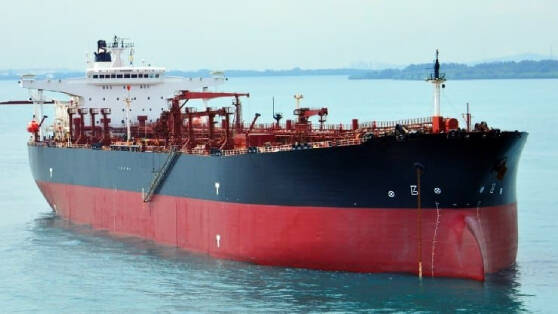

As a result of the European Union ban on Russian fuel that started on Feb. 5, tankers carrying clean oil products such as gasoline, diesel, jet fuel and naphtha are travelling between 16 and 18 days to bring Russian supplies to Brazil or U.S. cargoes to Europe, according to two shipping sources.That is up from the four to six days a ship used to travel from Russia to Europe, said the two sources, a broker at a major shipbroking firm and a charterer involved in the Russian trade of naphtha, which is used to make plastics and petrochemicals.
The ban comes on top of a halt late last year on Russian crude sales into the bloc as well as Western price caps.
Since the start of the ban, the Clean Tanker Index published by the Baltic Exchange, which measures average freight rates for shipping fuels like gasoline and diesel on some of the most common global routes, has more than doubled.
The redrawing of the shipping map underscores the knock-on effects of Western efforts to punish Russia over its invasion of Ukraine last year, adding to fuel supply insecurity and pushing up prices even as policymakers worry about inflation and the risk of a global economic downturn.
“Not only are voyages much longer, but vessel behaviour has also changed, keeping vessels from operating in other CPP (clean petroleum product) markets,” Dylan Simpson, freight analyst at oil analytics firm Vortexa, wrote in a March 31 note.
Russian cargoes of fuel are heading to far-flung buyers in Brazil, Turkey, Nigeria, and Morocco as Moscow compensates for the lost European business, while Europe is importing more fuels such as diesel from Asia and the Middle East, according to shipping data from Refinitiv and Kpler.
Asian cargoes, in turn, are being displaced by Russian fuels in Africa and the eastern Mediterranean, and redirected to the blending hub of Singapore for temporary storage, two northeast Asian refinery sources said.
European importers whose naphtha cargoes travelled from Russian ports to Antwerp in four days before Russia’s invasion of Ukraine now must wait 18 days for alternative supplies from the United States, the shipbroking source said.
The U.S. is also emerging as a top supplier of heavy naphtha to Europe amid the EU ban, while the Group of Seven Nations, EU and Australia have capped Russian naphtha prices at $45 a barrel and diesel and gasoline at $100 a barrel for trades that use Western ships and insurance. Meanwhile, Brazil, traditionally a U.S. naphtha importer, is boosting purchases from Russia at more attractive prices.
However, the journey from Russia to Brazil can take 18 days or longer and, at up to $7 million per voyage, the costs are nearly double that of a U.S. shipment, the ship charterer involved in the Russian market said.
Brazil received around 240,000 tonnes of Russian diesel and gasoil in the first three weeks of March, accounting for a quarter of Brazilian imports, up from Russia’s 12% share in February and less than 1% last year, said Benedict George, head of diesel pricing with energy and commodity data provider Argus.
“Until February, Europe had remained Russia’s primary market for refined product exports; however, in the space of a month, a major pivot has been observed,” tanker broker E A Gibson said in a recent report.
LONGER DISTANCES, MORE POLLUTION
Measured in terms of cargo miles, which multiplies the cargo quantity in metric tonnes by the distance travelled in nautical miles, the amount of Russian oil product shipments to Brazil in March rose to 3.07 billion metric tonne-nautical miles (MT-NM) from 941 million MT-NM in November, according to data from valuation company VesselsValue. Shipments from Russia to Nigeria rose to 1.88 billion MT-NM in March from zero in November, VesselsValue estimates showed.
Clean product cargoes to Saudi Arabia in March jumped to 1.75 billion MT-NM from 31 million MT-NM in November, while shipments to the United Arab Emirates were 4.43 billion MT-NM in March, up from 2.85 billion MT-NM in November, the data showed.
Also in March, Russian clean products shipped to Togo reached 973 million MT-NM, up from zero in November. In volume terms, Brazilian imports of oil products from Russia were about 284,000 metric tonnes in February, up from 73,300 tonnes in September, VesselsValue data showed. Conversely, Russian exports to the Netherlands dropped to 238,200 tonnes in February from 1.15 million tonnes in September.
Those longer distances are being done at higher costs for Russian products than for typical shipments from Europe.
According to market estimates, freight rates for the UK/European continent to West Africa are quoted at $55.77 per tonne for a product tanker with a standard 37,000-tonne load. This compares with an indicative rate of $174.24 per tonne for shipments from Russia’s Baltic ports to Nigeria, $103.84 for Morocco and around $150 to Egypt.
With ships travelling further, that is also likely translating into greater emissions from smokestacks.
Based on pre-pandemic data, a 10% increase in mileage for all tankers travelling to and from the European economic area would increase their emissions by around 1.5 million tonnes of carbon dioxide, equal to the emissions of around 750,000 cars per year in Europe, said Valentin Simon, data analyst with the Transport & Environment think tank in Brussels.
Source: Reuters reported by Mohi Narayan in New Delhi, Jonathan Saul and Shadia Nasralla in London, additional reporting by Trixie Yap in Singapore and Natalia Chumakova in Moscow; Edited by Tony Munroe and Christian Schmollinger



Related News.

Cyprus Maritime Innovation takes Centre Stage at SMM Hamburg 2026
Underscoring its expanding role as a premier international hub for cutting-edge maritime technology and sustainable shipping, the Republic of Cyprus…

Trump seeks to refill US oil reserve with Venezuela deal but faces long delay
U.S. President Donald Trump said on the 30th (local time) that he would refill the U.S. Strategic Petroleum Reserve, which has been depleted with…

US Navy Official visits South Korean Shipyards in private
With U.S. President Donald Trump pushing a plan to allow overseas construction of U.S. warships, attention is focusing on whether the building of…
SES and De Boer Marine expand collaboration with FlexMaritime deployment across Global Markets
SES, a leading space solutions company, and De Boer Marine, a leading provider of top-quality marine equipment and maritime connectivity services,…

New ESG guidance to help maritime industry turn sustainability into commercial advantage
New framework helps shipowners and ports align ESG strategy with access to capital, charterer expectations and long-term asset value. Maritime…

Britannia P&I Club analysis finds four in five crew deaths linked to illness rather than accidents
New report highlights cardiovascular disease as leading cause of fatalities and raises concerns over mental health risks among younger seafarers.…

The Swedish Club launches new Loss Prevention podcast, Knot Another Lesson
The Swedish Club has launched Knot Another Lesson, a new podcast exploring the practical lessons, emerging risks and operational challenges shaping…

Lloyd’s Register appoints Jens Grunenberg as Senior Representative for Germany
Lloyd’s Register has appointed Jens Grunenberg as its Senior Representative for Germany, effective 1 September. Based in Hamburg, Grunenberg will…

Indian Register of Shipping sets sights on Hamburg for European Expansion
Indian Register of Shipping, a leading international classification society and full member of the International Association of Classification…

MOL completes Merger of 6 Ship Management Companies
Unifying Management of Over 200 Vessels and Strengthening Safety Mitsui O.S.K. Lines, announced that it has completed the integration of the MOL…
Subscribe to our newsletter!
if you dont want to swim alone in the ocean of news, sign up for the newsletter, and you will receive daily all the important news of world shipping!
