Cargo is key to fair emissions calculations says SHIPNEXT CEO


A new emissions index has been developed by independent shipping platform SHIPNEXT, in a bid to address widely-held industry concerns about the International Maritime Organization’s emissions reduction measures.
According to Alexander Varvarenko, the Belgium-based shipping and tech entrepreneur, cargo is at the heart of the new SHIPNEXT emissions index, which has been designed for vessels carrying breakbulk, dry bulk, heavy and oversized shipments, and in consultation with ship owners.
The SHIPNEXT Voyage Emission Index (SVEI) is based on the individual technical parameters of the vessel, its speed, consumption and intake, whilst also taking into consideration the actual cargo quantity and the intended voyage.
SVEI considers the ship’s fuel consumption at sea to reflect the work of the particular vessel. Fuel consumption in the port is ignored, since such consumption is comparable for most ships and the time of loading and discharging is determined mainly by port technology, not by the technical capabilities of the vessel.
The SHIPNEXT CII (SCII) is proposed as an alternative to the IMO’s own Carbon Intensity Indicator (CII) rating, which seeks to measure the efficiency of a vessel above 5,000 GT. The IMO also intends to give vessels a performance score between A-D, with criteria becoming increasingly stringent by 2030.
Carriers including Maersk have complained that the IMO CII fails to incentivise cargo optimisation, and have instead called for a methodology that rewards more productive vessels. SCII has been designed to do just that.
“The major problem with the existing IMO guidelines is that they do not take into consideration the cargo actually being carried on a voyage,” says Alexander Varvarenko, the CEO and founder of SHIPNEXT. “When you do so, the emissions profile of a given voyage changes completely.”
SHIPNEXT modelling shows how an older, higher emitting ship, if managed properly and laden to full capacity, can prove to be the ‘greener’ solution, when compared to a more modern ship that’s producing more carbon dioxide because it is on a longer voyage.
Adds Varvarenko: “Our approach stimulates owners to manage their vessels more efficiently with fewer ballast runs, while also continuing to follow all the other existing emissions indexes that are imposed on them around vessel construction.
“There has to be logic to how shipping lines are taxed for their emissions. What we are proposing is a fair and reasonable approach during the transition to cleaner shipping, which allows both shippers and carriers to share the costs.”



Related News.

5th CSN Greece ICT Conference, Athens 19th November 2026 “Intelligent Skies, Secure Seas: The AI Impact on ICT” – Save the date
About the Conference The 5th CSN Greece Shipping ICT Conference, titled “Intelligent Skies, Secure Seas: The AI Impact on ICT”, will take place on…
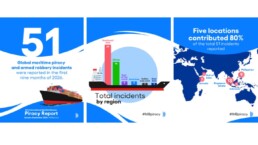
Maritime piracy incidents remain at historic lows despite Somali piracy concerns
The ICC International Maritime Bureau (IMB) has reported the lowest level (51) of piracy and armed robbery incidents since 1992 in the first nine…

Piraeus Port Authority main sponsor of Ferry Shipping Summit 2026
With the participation of more than 200 delegates from several European countries, the Ferry Shipping Summit 2026 took place on 8–9 October 2026 in…

EuroDry announces order for the construction of a third modern 82,000 DWT Kamsarmax Bulk Carrier
EuroDry , an owner and operator of drybulk vessels and provider of seaborne transportation for drybulk cargoes, announced that it has signed a…
India urges Russia, Ukraine to protect Black Sea shipping
India has urged both Russia and Ukraine to ensure safe passage for commercial shipping through the Black Sea as attacks on merchant vessels put…

PD Ports strengthens its commitment to the River Tees with multi-million pound Marine investment
PD Ports has officially opened a new multi-million-pound Marine facility on the banks of the River Tees, reinforcing its long-term commitment to the…

Maritime leaders head to Shanghai for the Annual Summit 2026
Shared seas, shifting horizons Maritime trade stands at a turning point. The rules-based order on which shipping has long depended is under…
Indian Register of Shipping grants type approval to Medha Energy’s 92 kWh LTO Lithium-Ion battery system
Indian Register of Shippinghas successfully completed the Type Approval process for the 92 kWh Lithium-Ion Battery System developed by M/s Medha…

KLine opens a Singapore New Hub for Consolidated Ship Management and Maritime Talenτ
Three Companies, One Roof — Singapore's New Hub for Consolidated Ship Management and Maritime Talenτ A ceremony for around 280 guests sets the stage…
ASA explores measures to Safeguard Free and Safe Navigation at Critical International Maritime Chokepoints
The Asian Shipowners’ Association which accounts for 56% of the world’s fleet capacity and consists of China, Cook Islands, Hong Kong, Japan, Korea…
Subscribe to our newsletter!
if you dont want to swim alone in the ocean of news, sign up for the newsletter, and you will receive daily all the important news of world shipping!
