‘A sustainable future is a joint effort’ says commercial director Jacco van Holten of Royal Den Hartogh Logistics
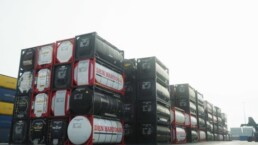

Full of ambition, with unique services and with innovative solutions, Royal Den Hartogh Logistics has embarked on the road to a sustainable Rotterdam chemical cluster. That road is not free of obstacles. “But with the right vision and commitment from all stakeholders in the supply chain, we can achieve the goals we have set,” is the conviction of commercial director Jacco van Holten. “The willingness is certainly there and that is cause for confidence.”
For Royal Den Hartogh Logistics, the Rotterdam chemical cluster has been a crucial hub for decades. The company provides global and intra-European transport and logistics services from the cluster, to the cluster, and inside the cluster. “For us, Rotterdam is a vital hub connecting global ports with the chemical industry throughout Europe,” explains Van Holten.
Unique services
Den Hartogh has been providing unique services based on an open network approach since 2015. For shippers, as well as for fellow carriers, volumes are combined and they are transported in economical and environmentally friendly ways inside the cluster. “We do that with our own dedicated team of planners and drivers but also, and increasingly, by exploiting the increasing opportunities provided by other modalities,” says Van Holten. “In recent years, a lot of road haulage to and from the deep-sea terminals on the Maasvlakte has been replaced by rail transport, and inland shipping has increasingly been used to make transport more sustainable.”
In addition, Den Hartogh operates the Logistics Service Center (LSC) Cluster service, where the company acts as the director and operator of logistics services for shippers and providers of logistics services. The scale and dedicated focus means that those services in the Rotterdam cluster are run on an efficient, cost-effective, green and safe basis. “We are convinced that this type of partnership is the way forward in order to maintain our capacity to manage the challenges in the market,” argues Van Holten.
Sustainable goals and initiatives
But Royal Den Hartogh Logistics is doing more. Environmental sustainability has been added as a fifth pillar to its global strategy and the goal of the service provider is to be carbon-neutral by 2050. The first milestone, a 25% reduction in the carbon footprint, has been set for 2025.
To achieve those goals, several initiatives have been launched in the organisation and Den Hartogh is increasingly getting suppliers and clients on board. Van Holten: “Measurements of the emissions from our services have been integrated in our transportation management systems and they comply with the framework developed by the Global Logistics Emissions Council (GLEC). This makes our footprint, and the positive effects of initiatives to reduce it, clear for our clients and our employees so that they also continue to be involved in proposing ideas and actions for further improvements.”
Den Hartogh commissioned the first electric truck in the Rotterdam chemical cluster in early 2023. “We started by conducting extensive testing in close collaboration with one of our key clients in this cluster: Huntsman Polyurethanes,” Van Holten explains. As early as 2021, Den Hartogh started transporting dimethylether for Shell using LNG-powered trucks only. “I’m sure that there more sustainable initiatives on the way: electric or based on LNG or biofuels. Close collaboration with our clients is crucial here. A sustainable future is a joint effort,” is Van Holten’s belief.
Insight thanks to digitalisation
In addition to the sustainable transportation initiatives, Den Hartogh is committed to further digitalisation. “The growing opportunities afforded by digitalisation contribute to a smooth and efficient supply chain,” continues Van Holten. “This provides our clients with visibility and predictability, and gives our employees more control and fewer surprises during the work.”
The service provider’s visibility strategy for the supply chain focuses on proactively sharing relevant information with clients – on the basis of real-time best-effort data – through customised tooling and smart connectivity via a central integration platform.
“We launched the first version of our visibility solution for the supply chain in 2020. Since then, we have constantly been adding more features on the basis of input from our clients,” explains Van Holten. For example, the entire fleet of tank containers used to transport isocyanates has been fitted out with telematics systems. Van Holten: “Those are smart tanks that are monitored continuously. We also spent two years working with our clients to develop ShuntPlant, a digital tool to get the right truck to the right production location at the right time. That tailored solution has exceeded all our expectations. Manual work has largely been eliminated and the potential for errors has been minimised.”
Stronger long-term vision
Striking a balance between long-term challenges on the one hand and short-term challenges on the other is the biggest issue at present, according to Van Holten. In the long term, clients and companies will be focusing on reducing carbon emissions and coping with ongoing driver shortages. In the short term, there are economic pressures, declining financial results and fluctuations in the market.
“The market can be opportunistic. When standard transport solutions are provided at a lower rate than solutions that we know are better in the long run, it can be difficult to stick with your chosen strategy and maintain the focus on the long-term goals agreed upon in the supply chain. We all know that things could and should be better in our sector: that includes a clear picture of what is going on in the chains and more sustainable logistics. But it can be very tempting to abandon the selected strategy and act opportunistically when short-term results look more economical,” he points out.
“The sector and the development of logistics in the Rotterdam chemical cluster benefit from a strong vision for the medium to long term, and the commitment of all stakeholders in the supply chain. Shippers in particular can, and should, play a distinctive, visionary role in achieving strategic goals. There is considerable willingness to collaborate on smart solutions for sustainable, cost-efficient logistics. That encourages innovation and competitiveness – now and in the future,” concludes Van Holten.



Related News.

Poland’s additional national requirements distort competition says Danish Shipping
Poland has introduced a national survey requirement for smaller foreign-flagged vessels operating in Polish waters. This creates significant…

Battery Vessels could help electrify most of Global Shipping Emissions
Battery-electric ships are economical only if the pack is cycled frequently, so they have been confined to short-sea, ferry and harbour vessels…

Mintra and Ledgid explore collaboration to connect Maritime digital identity, learning and workforce development
Mintra® and LEDGID are exploring opportunities to bring together complementary capabilities in digital learning, maritime training, professional…

World Shipping Council calls for global agreement on shipping emissions as industry investment surpasses $200 billion USD
The World Shipping Council (WSC) is calling on governments to agree on binding global greenhouse gas regulations for international shipping without…

What happened to the ITF whistleblower’s complaint?
In January 2026, a whistleblower complained that International Transport Workers’ Federation (ITF) General Secretary Stephen Cotton had manipulated…

Growing regulatory scrutiny puts seafarer wellbeing firmly on maritime safety agenda, VIKAND warns
Seafarer wellbeing is coming under greater regulatory scrutiny as international rules and guidance increasingly recognise crew health and welfare as…

Good Times Bad Times the Premium Stays with the Strait
In October, we wrote that if the transfer network off Oman kept pace, Gulf crude would carry China's refill and keep drawing tonnage east,…

Allied Weekly Market Review Week 47
Pls find below the Allied - Weekly Market Review - Week 47 ALLIED - Weekly Market Report- Week 47


Climate TRACE releases September 2026 Emissions Data
Climate TRACE reported that global greenhouse gas (GHG) emissions for the month of September 2026 totaled 4.7 billion tonnes CO₂e. This remains…
Subscribe to our newsletter!
if you dont want to swim alone in the ocean of news, sign up for the newsletter, and you will receive daily all the important news of world shipping!
