“Coexistence is essential” as DNV report shows demand for ocean space will grow 5-fold by 2050
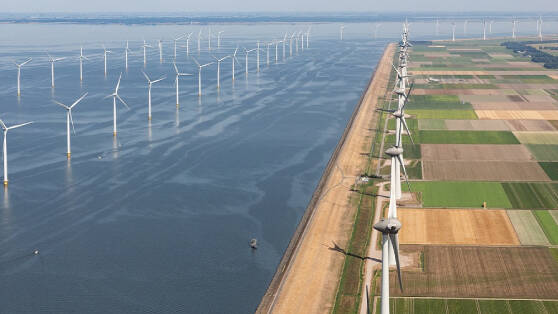

The collaboration between ocean industries will need to intensify for the rapid buildout of offshore wind and aquaculture to coexist sustainably with other industries and the ecosystem.
- Offshore wind will account for 80% of stationary infrastructure at sea by 2050, up from 15% today
- Europe will experience significant pressure on ocean space with demand particularly strong in North Sea, Celtic-Biscay Shelf and Baltic Sea
- Greater China will build most offshore infrastructure (covering 112,000 square kilometers by 2050), followed by Europe (70,000 square kilometers). Globally, ocean installations will cover 335,000 square kilometers by midcentury, which is larger than the landmass of Poland
- DNV also chosen to lead project to optimize marine spatial planning off coast of Norway

The collaboration between ocean industries will need to intensify for the rapid buildout of offshore wind and aquaculture to coexist sustainably with other industries and the ecosystem. According to DNV’s Spatial Competition Forecast, the amount of ocean space occupied by installations will grow 5-fold by 2050. This will be driven by offshore wind, which will account for 80% of stationary infrastructure at sea by midcentury, followed by aquaculture (13%) and oil and gas (5%).
Whilst ocean space is plentiful, industrial activity will be located primarily close to shore which will heighten the need for ocean coexistence. To enable stakeholders to gauge the demand for ocean space DNV has developed the Spatial Competition Index. According to this index, the North Sea is the area in Europe which will see greatest competition due to the large number of shipping lanes and ports, as well as the strong presences of the fishing, aquaculture, oil and gas and wind industries. Installations for offshore energy and food production will cover 23% of the area between 2-50 km from shore in water depths less than 50 metres.
Greater China’s emergence as the powerhouse of the blue economy is reflected in offshore construction. It will account for a third of all global infrastructure built at sea by 2050, mainly due to the sharp increase in offshore wind, which will make up 13% of the region’s electricity production. The Indian Subcontinent sees the strongest growth in area covered by stationary infrastructure, as the region experiences fast offshore wind development requiring vast areas, whereas historically, offshore oil and gas and marine aquaculture are negligible in this region.
Globally, the area occupied by fixed offshore wind will grow from about 9,000 km2 today to about 242,000 km2 by mid-century. Floating offshore wind will grow from a low 15 km2 today to more than 33,000 km2 by 2050. Compared with bottom-grounded installations, floating offshore wind can potentially ease some of the tensions between offshore wind and fisheries, as it takes renewable energy production out of the way of the fishing fleet operating on shallow banks.

“The ocean is crucial for the production of sustainable food and energy, but at the same time we must tread carefully as many ocean ecosystems are already under huge stress,” said Bente Pretlove, Ocean Space programme director at DNV. “This report underscores the urgent need to balance protection, productivity, and social development objectives for a sustainable Blue Economy. Those developers that are most adept at early stakeholder engagement, spatial efficiency, flexible coexistence, and pursuit of sustainability are likely to be most competitive. Coexistence is essential for the sustainable growth of the Blue Economy.”
DNV’s Spatial Competition Forecast builds on the findings of the previously published Ocean’s Future to 2050. The results are based on what DNV forecasts to be the most likely energy mix in 2050 and not what is required to reach net zero. To limit global warming to two degrees the amount of offshore wind in Europe, for example, would need to double.
DNV to lead research project to strengthen marine and offshore wind coexistence planning
The Norwegian coast will also experience pressure on space with the expansion of offshore wind and aquaculture in coexistence with maritime traffic, fishing vessels and oil and gas infrastructure. To facilitate collaboration between industries and enable stakeholders to find synergies, resolve conflicts and safeguard ocean health, DNV has recently received a grant of NOK 8.8 million from The Research Council of Norway to develop the MARine CO-existence scenario building (MARCO) toolbox. The project aims to establish a common knowledge basis among ocean stakeholders by introducing new ways of generating scenarios for co-existence in marine spatial planning and development projects in the ocean industries.
The Utsira Nord offshore wind licensing area in Norway will act as one of the case studies. The partners include offshore wind developer Mainstream Renewable Power, SalMar Aker Ocean, the Norwegian Institute of Marine Research, and the Norwegian Fishermen’s Association.



Related News.
Cyprus Maritime Innovation takes Centre Stage at SMM Hamburg 2026
Underscoring its expanding role as a premier international hub for cutting-edge maritime technology and sustainable shipping, the Republic of Cyprus…
Trump seeks to refill US oil reserve with Venezuela deal but faces long delay
U.S. President Donald Trump said on the 30th (local time) that he would refill the U.S. Strategic Petroleum Reserve, which has been depleted with…
US Navy Official visits South Korean Shipyards in private
With U.S. President Donald Trump pushing a plan to allow overseas construction of U.S. warships, attention is focusing on whether the building of…
SES and De Boer Marine expand collaboration with FlexMaritime deployment across Global Markets
SES, a leading space solutions company, and De Boer Marine, a leading provider of top-quality marine equipment and maritime connectivity services,…
New ESG guidance to help maritime industry turn sustainability into commercial advantage
New framework helps shipowners and ports align ESG strategy with access to capital, charterer expectations and long-term asset value. Maritime…
Britannia P&I Club analysis finds four in five crew deaths linked to illness rather than accidents
New report highlights cardiovascular disease as leading cause of fatalities and raises concerns over mental health risks among younger seafarers.…
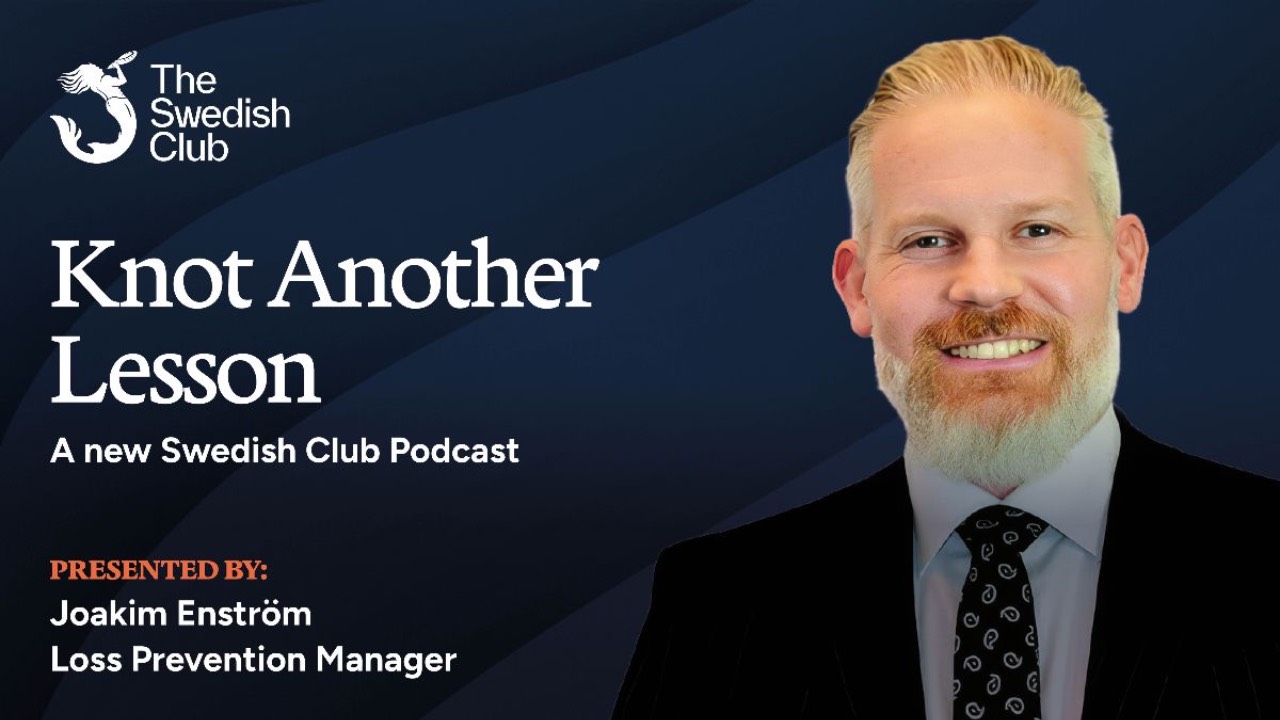
The Swedish Club launches new Loss Prevention podcast, Knot Another Lesson
The Swedish Club has launched Knot Another Lesson, a new podcast exploring the practical lessons, emerging risks and operational challenges shaping…
Lloyd’s Register appoints Jens Grunenberg as Senior Representative for Germany
Lloyd’s Register has appointed Jens Grunenberg as its Senior Representative for Germany, effective 1 September. Based in Hamburg, Grunenberg will…
Indian Register of Shipping sets sights on Hamburg for European Expansion
Indian Register of Shipping, a leading international classification society and full member of the International Association of Classification…
MOL completes Merger of 6 Ship Management Companies
Unifying Management of Over 200 Vessels and Strengthening Safety Mitsui O.S.K. Lines, announced that it has completed the integration of the MOL…
Subscribe to our newsletter!
if you dont want to swim alone in the ocean of news, sign up for the newsletter, and you will receive daily all the important news of world shipping!
