

In September 2022, the signatories to the Poseidon Principles for Financial Institutions and the Poseidon Principles for Financial Institutions for Marine Insurance announced a more ambitious emissions reductions policy.
The Poseidon Principles, which date back to 2019, provide a framework agreement aimed at aligning shipping investors with the IMO 2050 requirement to reduce total annual greenhouse gas emissions by at least 50% by 2050 compared to 2008 – whilst pursuing efforts to phase them out entirely by 2100.
The 30 shipping banks and 17 marine insurance providers and brokers announced that they will benchmark their portfolios against two trajectories.
The first will be aligned with the IMO’s target to reduce GHG emissions by 50% by 2050 (relative to 2008 levels), and the second will be aligned with net-zero by 2050 and a maximum temperature rise of 1.5 C above pre-industrial levels by 2100.
For the first time, this will mean emissions up and down the marine fuel value chain will be factored in when tracking their clients’ portfolios.
It is important to note that the commitments do not apply yet. They will apply once “widely accepted science-based decarbonization scenarios” have been approved by the membership of each individual Association and are subject to evaluation following the expected adoption of the Revised IMO GHG Strategy at MEPC 80 in July 2023.
While this evaluation will almost certainly raise the level of climate ambition, it is clear, given the recent stark projections by the UN that the adoption of the commitments cannot come soon enough.
In October 2022, the Poseidon Principles chairman, Michael Parker, shed light on the group’s future ambitions. He gave the view that the Principles could extend to the field of biodiversity and to shipping companies’ corporate finance instead of just loans for ships.
He also said that it would be “logical” to expand the Principles to cover ship demolition once the IMO’s treaty on Ship Recycling (the Hong Kong International Convention for the Safe and Environmentally Sound Recycling of Ships) comes into force, which will be two years after ratification by at least 15 states with at least 40% of the global fleet.
As it has currently been ratified by 19 states with only c.30% of the global fleet, this, too, can be considered a medium-term target.
Comment
The Poseidon Principles form part of the shipping industry’s efforts to combat climate change, existing alongside a suite of regulations, such as the Energy Efficiency Existing Ship Index and Carbon Intensity Indicator, which are new vessel efficiency standards coming into force in 2023 and 2024 respectively.
But, while such progress is admirable, the fact that there is no direct linkage between these new efficiency protocols and the Poseidon Principles highlights the challenge faced by financiers, owners, and charterers in achieving climate targets.
Source: Clyde & Co



Related News.

Cyprus Maritime Innovation takes Centre Stage at SMM Hamburg 2026
Underscoring its expanding role as a premier international hub for cutting-edge maritime technology and sustainable shipping, the Republic of Cyprus…

Trump seeks to refill US oil reserve with Venezuela deal but faces long delay
U.S. President Donald Trump said on the 30th (local time) that he would refill the U.S. Strategic Petroleum Reserve, which has been depleted with…

US Navy Official visits South Korean Shipyards in private
With U.S. President Donald Trump pushing a plan to allow overseas construction of U.S. warships, attention is focusing on whether the building of…

SES and De Boer Marine expand collaboration with FlexMaritime deployment across Global Markets
SES, a leading space solutions company, and De Boer Marine, a leading provider of top-quality marine equipment and maritime connectivity services,…

New ESG guidance to help maritime industry turn sustainability into commercial advantage
New framework helps shipowners and ports align ESG strategy with access to capital, charterer expectations and long-term asset value. Maritime…

Britannia P&I Club analysis finds four in five crew deaths linked to illness rather than accidents
New report highlights cardiovascular disease as leading cause of fatalities and raises concerns over mental health risks among younger seafarers.…
The Swedish Club launches new Loss Prevention podcast, Knot Another Lesson
The Swedish Club has launched Knot Another Lesson, a new podcast exploring the practical lessons, emerging risks and operational challenges shaping…

Lloyd’s Register appoints Jens Grunenberg as Senior Representative for Germany
Lloyd’s Register has appointed Jens Grunenberg as its Senior Representative for Germany, effective 1 September. Based in Hamburg, Grunenberg will…
Indian Register of Shipping sets sights on Hamburg for European Expansion
Indian Register of Shipping, a leading international classification society and full member of the International Association of Classification…
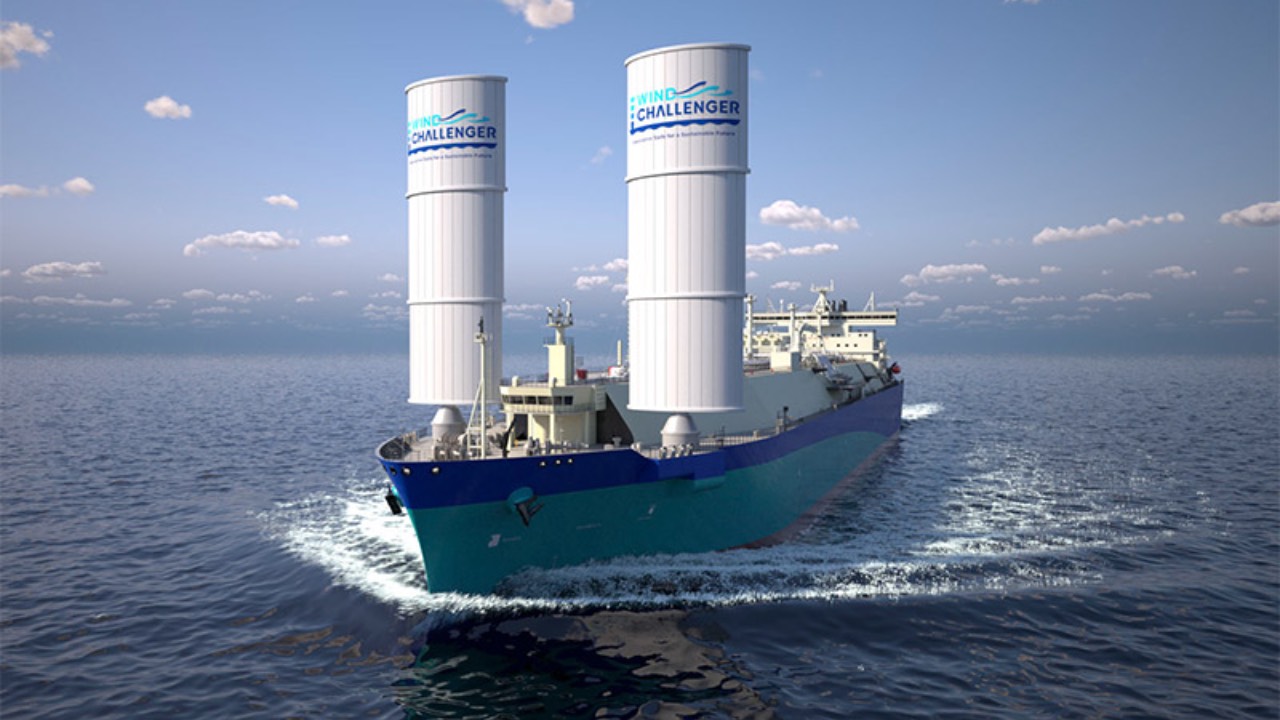
MOL completes Merger of 6 Ship Management Companies
Unifying Management of Over 200 Vessels and Strengthening Safety Mitsui O.S.K. Lines, announced that it has completed the integration of the MOL…
Subscribe to our newsletter!
if you dont want to swim alone in the ocean of news, sign up for the newsletter, and you will receive daily all the important news of world shipping!
