

An in-depth survey in the maritime industry revealed shocking figures in gender-based discrimination against women, onboard harassment and bullying. WISTA International, Anglo Eastern, International Seafarers Welfare and Assistance Network (ISWAN) and International Chamber of Shipping (ICS) conducted a public online survey (timeframe to be added) designed to examine how female seafarers perceived “discrimination” and how it manifested onboard based on their personal experiences. The complete findings from the survey and recommendations are published in The Diversity Handbook, being launched at the WISTA International conference in Geneva, Switzerland, on 26 October 2022.
- 1128 women seafarers from 78 countries
- 60% of women reported encountering gender-based discrimination onboard
- 66% of the respondents concur that their male employees had turned to harassing and intimidating female co-workers
- 25% reported that in the shipping sector, physical and sexual harassment is common, occurring on board and involving intrusions on their privacy
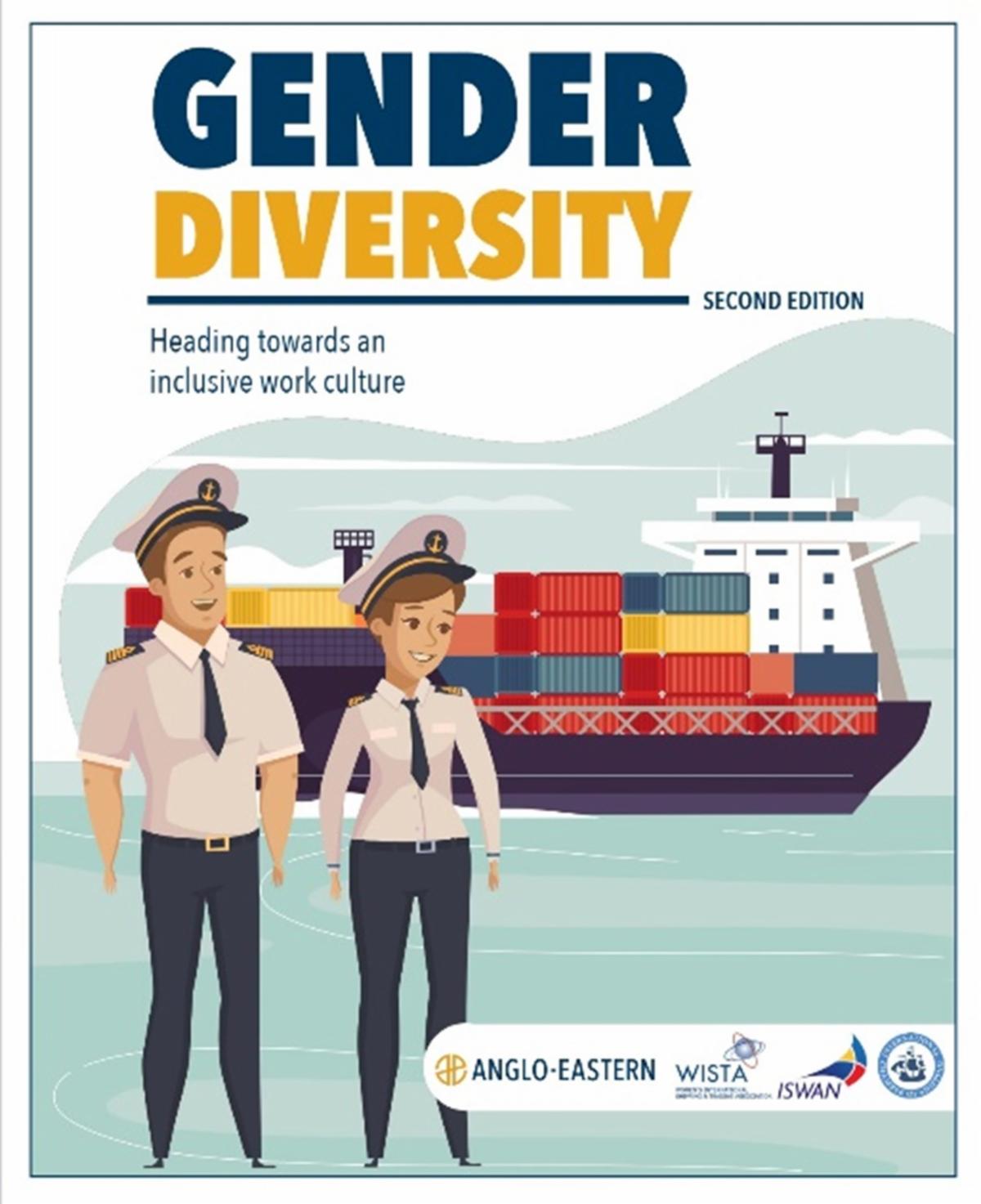
The first handbook on gender diversity’s launch in January 2018 received an impressive response to its survey. The recent one, also initiated by Sanjam Sahi Gupta, Founder of WISTA India and a WISTA International Executive Committee member from 2014-2021 – was completed by 1128 women from 78 countries. The Philippines (399) had the largest proportion, followed by the United States (98), the United Kingdom (57), South Africa (51), Brazil (47), India (41), Peru (36), Columbia (35) and Indonesia (35).
The majority of respondents, approximately 90%, work on cruise ships, with the remainder employed on cargo ships, gas and oil tankers, container ships (>8000 TEU), general cargo/geared vessels, chemical tankers, bulk carriers and tugs.
The survey also made it possible to collect data on company harassment and bullying policies, company and industry hotlines and the effect of the pandemic on women’s experiences at sea and provided insights into how businesses may operate in the sector to promote gender diversity and dispel prejudice.
Presence of Discrimination Onboard
The majority of respondents – 60% – reported encountering gender-based discrimination onboard, while just 40% of respondents said there was no such discrimination.
34% of the respondents acknowledged feeling alienated or neglected due to their gender, while 29% of the respondents had encountered harassment and bullying on board. A resounding 66% of the women seafarers concur that their male employees had turned to harassing and intimidating female co-workers.
Offensive Approaches via several media
13% of the surveyed seafarers have mentioned that they have been offensively approached via different media, while a majority 70% of these women seafarers claim that it was their male colleagues who perpetrated such offensive harassment onboard.
Onboard harassment with personal questions and other ways of intruding on privacy
25% of the respondents admitted to having encountered onboard harassment, including being approached with personal questions, overly familiar remarks or being invited to meet in the cabin on a private basis. This indicates a widespread issue with onboard harassment when the victim is subjected to numerous threats. The statistics show that the vast majority of those engaging in such crimes are male seafarers (88%), while other instances (11%) involve both men and women co-workers, and only about 1% involve women.
Uncomfortable Persuasion, Indecent Remarks and Body Shaming
In the shipping sector, physical and sexual harassment is common. According to 25% of respondents, it occurred on board and involved intrusions on their privacy, such as uncomfortable persuasion, inappropriate remarks and body shaming. Once more, an overwhelming 90% of those involved were male co-workers, while 8% were male and female and only 2% were female seafarers.
Harassment and Bullying Policy
97% of respondents agreed that the company had a harassment and bullying policy, though nearly 60% of the respondents acknowledged having experienced harassment. Therefore, organisations must ensure that their Company Harassment Policies are extensively publicised to increase their visibility, level of awareness, and stringent on-the-ground enforcement.
80% of the female seafarers reported that their immediate superiors had spoken with them about the company’s anti-harassment policy. Again, it is important to note that 60% of these acknowledged experiencing harassment while on board and admitted that they were unsure of what to do in such circumstances.
Incidence of Reporting Discriminatory Behaviour
Although 73% of the respondents felt comfortable escalating their concerns to their senior officers, only 13% reported such incidents to their superiors, while only 7% were satisfied with the outcomes. 59% of all the respondents have faced gender-based discrimination, while 66% felt ignored.
Regarding helplines, only 13% of respondents reported the harassment they had experienced. The efficiency of these helplines, their availability at all times and how the concerns of the seafarers are addressed at the source must all be seriously addressed.
Regarding the opportunities for training, although 82% of women seafarers agreed that they had received instruction on adapting to the ship’s environment, this percentage has to be far higher, given how vital adaptability to the ship’s environment is.
Sanjam Sahi Gupta, Founder of WISTA India and co-chair of the WISTA International Diversity Committee, declares:
“There is an urgent need to create a more diverse, inclusive and equitable maritime community, with women seafarers deserving a respectful and safe working environment. The recent report revealed unacceptable figures with women facing gender discrimination, harassment and bullying on the sea. The shipping sector is at risk due to a lack of new talent. Over the next decade, there will likely be an even greater need for qualified seafarers. One of the best and most effective strategies to stop the growing disparity is adopting gender-inclusive policies within a safe work culture”.
Despina Panayiotou Theodosiou, President of WISTA International, states: WISTA International, through its diversity committee, is working hard to highlight the need for the maritime sector to move from equality to equity. This is an essential distinction because equity ensures everyone has a fair opportunity to make the most of their lives and talents according to their circumstances. This should apply the same at sea as on land. These figures should be a wake-up call to the maritime sector and we will continue at every opportunity to raise the issues and bring about change.”
Ongoing campaigns from organisations, including IMO, ITF and ICS, could make a real difference in attempting to improve through in-depth research into the issue and by consistently engaging with employers and reputable maritime universities. The campaigns should promote the recruitment of more women seafarers while ensuring that women who are accepted on board will have conducive, safe and inclusive working environments.



Related News.
OL Shipping Group in Tokyo: Capt. Eberhard Koch calls for realistic solutions to Maritime Decarbonisation
An intensive and engaging couple of days in Tokyo brought together leading figures from the international maritime community, providing a valuable…
Regatta for Peace one of the largest ever in Cyprus
Cyprus will host the first European stop on a global sailing journey leading up to the 2027 America’s Cup in Naples. More than 120 sailors…
The propulsion technology powering the marine energy transition
The marine industry is under increasing pressure to future-proof fleets, balancing the need to reduce emissions and improve efficiency. Propulsion…
Signal Ocean acquires Lgmar
Signal Ocean announced the acquisition of Lgmar, the Athens-based company behind Telix, a maritime email and communication platform in daily use…

Canada clean power push challenged by interprovincial grid limits, says GlobalData
Canada is entering a pivotal phase of power-sector expansion as federal tax credits, the phase-out of coal-fired generation, and accelerating…

Maritime safety depends on human factors and leadership, not procedures alone
Interim survey findings point to a gap between seafarers’ perceptions of risk and injury data Seafarers may misjudge when and where they are most at…

New BIMCO contracts tackle ship recycling and energy-saving retrofits
BIMCO adopted two new contractual solutions designed to help you manage important operational and regulatory challenges: the revised…
Stena Line to acquire vessel and make changes to its network
Stena Line has reached an agreement to acquire the RoRo vessel Somerset from CLdN. Subject to closure and transfer, the vessel would begin operating…

DORIC WEEKLY INSIGHT 16 OCTOBER 2026
Please find below the DORIC Market Insight for the week ending 16th October 2026. Weekly Report 16.10.2026

Important information for port clients and freight carriers effective November 1, a new traffic overpass and port checkpoint will open for traffic to the Port of Riga on Kundziņsala
Starting November 1 of this year, a new traffic overpass connecting Tvaika Street to Kundziņsala will open to facilitate traffic to and from the Port…
Subscribe to our newsletter!
if you dont want to swim alone in the ocean of news, sign up for the newsletter, and you will receive daily all the important news of world shipping!
