
As emissions regulatory and policy decisions continue to “ramp up” across maritime, Clarksons Research is closely tracking uptake of “green” technology that will impact the shipping industry’s 851mt (2021: 822mt, 2008: 1,024mt) and 2.3% contribution to global CO2. Summarising the latest trends in technology uptake and fleet renewal from our Fuelling Transition report and monthly data series, Steve Gordon, Clarksons Research Managing Director, commented:
In January-September 2022, a record 59%* of all newbuild orders by tonnage has been alternative fuel capable (basis non-LNG carriers: 43% of tonnage), while 54% (288 orders of 27.0m GT) have been LNG dual fuelled), 2.9% methanol fuelled (19 orders of 1.4m GT), 0.7% ethane fuelled (8 orders of 0.4m GT) and 1.3% include battery hybrid propulsion. In addition, a further 12.7% of orders were “am-monia ready” (73 orders of 6.3m GT), 1.2% of orders were “LNG ready” (20 orders of 0.6m GT) and 0.1% of orders have been “hydro-gen ready” (3 orders of 15k GT). Please note these add up to excess 100% of the alternative fuels capable total: there is an increasing trend towards multiple fuels / fuel ready to provide future optionality. For context, in 2021 31.5% of newbuild tonnage ordered was for alternative fuel capable vessels (479 units), up from 211 orders in 2020 and 46 orders in 2016.
Uptake of alternative fuels has continued to progress, with 4.8%** (2021: 3.7%, 2017: 2.3%) of the fleet on the water and 43.8% (2021: 28.2%, 2017: 10.4%) of the orderbook in tonnage (GT) terms capable of using alternative fuels or propulsion.
Of the orderbook, 38.9% of tonnage is set to use LNG (781 units), 2.2% to use LPG (86 units) and 4.3% due to use other alternative fuels (c.260 units; including methanol (42), ethane (11), biofuels (5), hydrogen (12) and battery/hybrid propulsion (c.200)).
With future optionality over fuel choice continuing to gain traction, there are now over 320 “LNG ready” ships in the fleet and 99 on the orderbook, while there are 130 “ammonia ready” and 6 “hydrogen ready” vessels on order.
Scrubbers are now fitted to over 4,838 ships in the fleet (including pending retrofit), equivalent to 24.9% of total GT. While scrubber retrofitting activity has slowed (September 2020: ~120 per month, September 2022: ~15 per month), newbuild uptake grew slightly in 2021, while 60 scrubber fitted units have been ordered in 2022 so far. The current price differential between HSFO and VLSFO remains highly significant (Rotterdam/Singapore: $210/$320), having reached record highs earlier in the year.
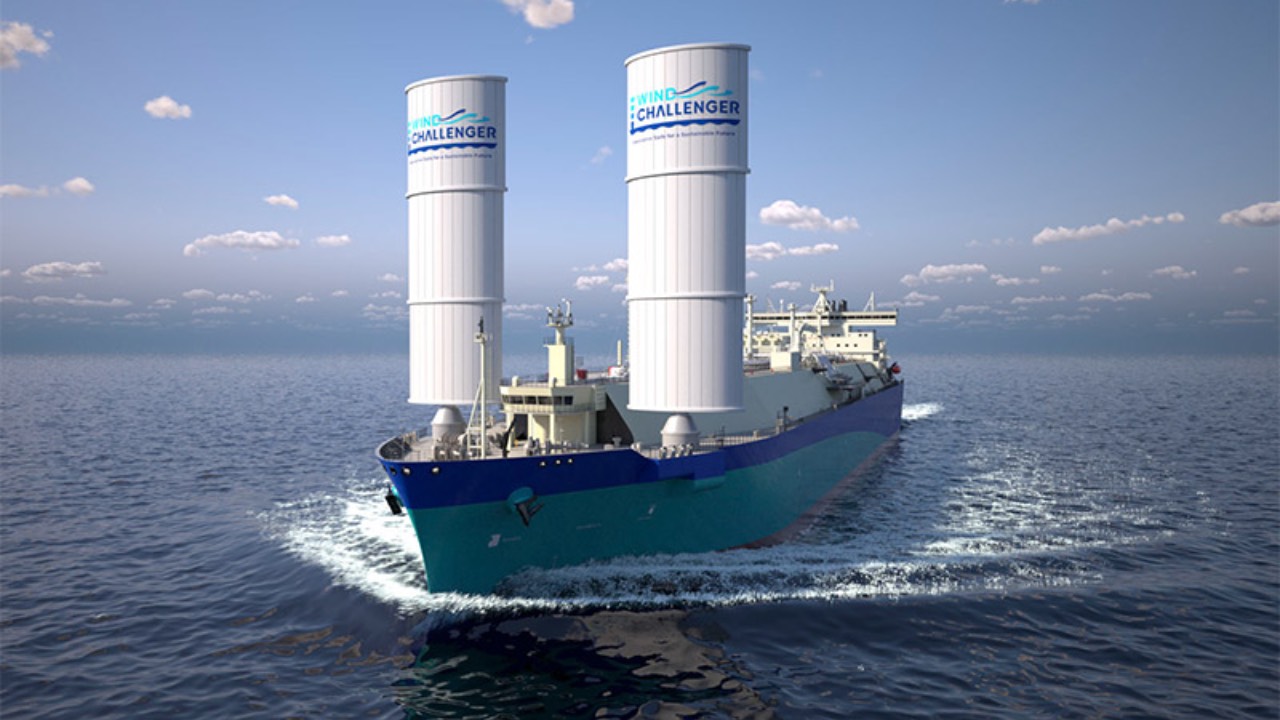
Energy saving technologies (ESTs) have been fitted on over 5,550 ships, accounting for 24.5% of fleet tonnage: this includes propeller ducts, rudder bulbs, Flettner rotors, wind kites, air lubrication systems and others.
‘Eco’ ships make up a growing share of the fleet (‘modern’ eco vessels now 28.9% of total GT) with implications for earning potential, asset values and increasingly “tiered” and complex charter markets. For context, we estimate that 26.6% of global tonnage was “eco” twelve months ago, and just 14.6% at start-2018.
The average age of the world fleet is increasing, standing at 12.2 years on a GT weighted basis (up from a low of 9.7 years in 2013). For the bulk carrier fleet, the average age is 11.5 years, for tankers it is 12.1 years and for the container fleet it is 14.2 years. Today, 28.1% of global tonnage is aged over 15 years. We estimated that under CII, around 40% of today’s tanker, bulkcarrier and container fleets will be D or E rated if they are still trading in 2026 and have not modified speed or specification.
The overall orderbook as a % of fleet capacity is ~10% – the figure is 27.2% for containers, 7.0% for bulkcarriers and 4.5% for tankers.
‘Green’ port infrastructure is continuing to expand: currently 154 active LNG bunkering ports (and 98 planned facilities), while over 1,700 vessels are fitted/set to be fitted with shore power connections; Clarksons Research are also collecting data on ammonia and hydrogen infrastructure.
BWMS retrofit programme ongoing: majority of fleet tonnage (70.6%) now BWMS-fitted.
*in number of vessels this is 33%.
**in number of vessels this is ~1.2%.
As pressures build globally to find solutions to moderate climate change, the Green Transition will cause fundamental change to shipping, trade, offshore and energy. We are committed to providing data and intelligence to help frame the critical decisions that stakeholders across our industry will need to make to facilitate the Green Transition. Clarksons Research will continue to support its clients to (i) un-derstand, in commercial terms, upcoming technical regulation (ii) track technology uptake by the shipping industry (iii) analyse the impact of environmental policy, regulation and technology on market supply / demand, asset values, vessel earnings and companies and (iv) project scenarios for required investment, including newbuildings.
Source: Clarksons Research



Related News.
Cyprus Maritime Innovation takes Centre Stage at SMM Hamburg 2026
Underscoring its expanding role as a premier international hub for cutting-edge maritime technology and sustainable shipping, the Republic of Cyprus…

Trump seeks to refill US oil reserve with Venezuela deal but faces long delay
U.S. President Donald Trump said on the 30th (local time) that he would refill the U.S. Strategic Petroleum Reserve, which has been depleted with…
US Navy Official visits South Korean Shipyards in private
With U.S. President Donald Trump pushing a plan to allow overseas construction of U.S. warships, attention is focusing on whether the building of…

SES and De Boer Marine expand collaboration with FlexMaritime deployment across Global Markets
SES, a leading space solutions company, and De Boer Marine, a leading provider of top-quality marine equipment and maritime connectivity services,…

New ESG guidance to help maritime industry turn sustainability into commercial advantage
New framework helps shipowners and ports align ESG strategy with access to capital, charterer expectations and long-term asset value. Maritime…

Britannia P&I Club analysis finds four in five crew deaths linked to illness rather than accidents
New report highlights cardiovascular disease as leading cause of fatalities and raises concerns over mental health risks among younger seafarers.…
The Swedish Club launches new Loss Prevention podcast, Knot Another Lesson
The Swedish Club has launched Knot Another Lesson, a new podcast exploring the practical lessons, emerging risks and operational challenges shaping…

Lloyd’s Register appoints Jens Grunenberg as Senior Representative for Germany
Lloyd’s Register has appointed Jens Grunenberg as its Senior Representative for Germany, effective 1 September. Based in Hamburg, Grunenberg will…

Indian Register of Shipping sets sights on Hamburg for European Expansion
Indian Register of Shipping, a leading international classification society and full member of the International Association of Classification…
MOL completes Merger of 6 Ship Management Companies
Unifying Management of Over 200 Vessels and Strengthening Safety Mitsui O.S.K. Lines, announced that it has completed the integration of the MOL…
Subscribe to our newsletter!
if you dont want to swim alone in the ocean of news, sign up for the newsletter, and you will receive daily all the important news of world shipping!
