World Ocean Council urged not to lose sight of ship emissions below the Waterline
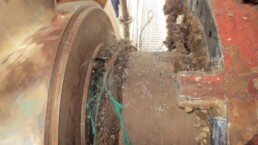

The global maritime industry is making significant progress in the fight to reduce ship greenhouse gasses and other ship-to-air emissions, but it should not lose sight of what’s going on below the waterline, Thordon Bearings’ Craig Carter said , addressing members of the World Ocean Council .
Speaking in Barcelona on the first day of the WOC’s Sustainable Ocean Summit, Thordon’s Vice-President of Business Development said: “There are today a number of initiatives looking at reducing emissions above the waterline, but not so many looking at preventing pollution below the waterline. This can be part of global policies to improve our oceans and seas under the United Nations’ Sustainable Development Goals, Number 14 – Life Below Water.”
In answer to a question raised during the Sustainable Ports and Shipping for the Blue Economy session, Carter said: “To further advance ocean sustainable development and put to sea truly zero-emissions ships, then we really do have to get rid of the oil-lubricated shaft line and replace it with one lubricated by seawater. From well to wake, the environmental impact of an oil-lubricated sterntube needs serious consideration.”
According to numerous environment data sources, Carter estimated conservatively that leaks from the global shipping fleet’s propeller shafts resulted last year in more than 60 million gallons of oil polluting the world’s seas and oceans.
“This is about the same as the Amoco Cadiz spill, but it’s happening year after year after year, he said. “Oil-lubricated propeller shafts are often considered to be sealed systems, but they’re not. If they were, then a ship’s oil header tank containing 2000-3000 litres of oil wouldn’t need topping up with oil every few years!”
While damaged and worn sterntube seals contribute massively to the constant flow of oil into our seas and oceans, a research paper carried out last year by Linnaeus University’s Kalmar Maritime Academy concluded that sterntube seals are not at all leak free, with oil leakage considered “normal” operating conditions.
Carter went on to explain that the advancements made in elastomeric polymer materials over the last decade not only offer a viable environmental and economic alternative to the oil-based system but seawater-lubricated shaft lines can also figure in the shipping industry’s CO2 emissions abatement plans.
“Initial research suggests that because a seawater-lubricated propeller shaft system operates with lower friction coefficient (resistance) compared to one operating oil-lubricated white metal bearings, less fuel is required to propel the vessel, resulting in a small but nonetheless important reduction in carbon emissions.
“This means it can form part of a ship manager’s Carbon Intensity Indicator (CII) measures, which becomes mandatory next year under MARPOL Annex VI.”
The Sustainable Ports and Shipping for the Blue Economy discussion followed keynotes from Simon Bennett, General Manager, Sustainable Development, Swire Shipping Pte Ltd., and Jordi Vila Martinez Head of Environmental Department, Autoritat Portuària De Barcelona.
Other panelists were Pau Guasch, Co-Founder and General Manager, GPA SeaBots; Cristina Alexendri, COO, Bound4Blue; Ana Pinela, Senior Project Manager, Atlantic Smart Ports – Blue Acceleration Network; and Gina Panayiotou, ESG Manager, West of England. The session was moderated by Emma Cobos, Director, Innovation and Business Strategy, Port of Barcelona.



Related News.

OL Shipping Group in Tokyo: Capt. Eberhard Koch calls for realistic solutions to Maritime Decarbonisation
An intensive and engaging couple of days in Tokyo brought together leading figures from the international maritime community, providing a valuable…
Regatta for Peace one of the largest ever in Cyprus
Cyprus will host the first European stop on a global sailing journey leading up to the 2027 America’s Cup in Naples. More than 120 sailors…
The propulsion technology powering the marine energy transition
The marine industry is under increasing pressure to future-proof fleets, balancing the need to reduce emissions and improve efficiency. Propulsion…
Signal Ocean acquires Lgmar
Signal Ocean announced the acquisition of Lgmar, the Athens-based company behind Telix, a maritime email and communication platform in daily use…

Canada clean power push challenged by interprovincial grid limits, says GlobalData
Canada is entering a pivotal phase of power-sector expansion as federal tax credits, the phase-out of coal-fired generation, and accelerating…

Maritime safety depends on human factors and leadership, not procedures alone
Interim survey findings point to a gap between seafarers’ perceptions of risk and injury data Seafarers may misjudge when and where they are most at…

New BIMCO contracts tackle ship recycling and energy-saving retrofits
BIMCO adopted two new contractual solutions designed to help you manage important operational and regulatory challenges: the revised…
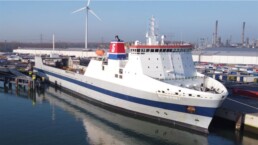
Stena Line to acquire vessel and make changes to its network
Stena Line has reached an agreement to acquire the RoRo vessel Somerset from CLdN. Subject to closure and transfer, the vessel would begin operating…
DORIC WEEKLY INSIGHT 16 OCTOBER 2026
Please find below the DORIC Market Insight for the week ending 16th October 2026. Weekly Report 16.10.2026

Important information for port clients and freight carriers effective November 1, a new traffic overpass and port checkpoint will open for traffic to the Port of Riga on Kundziņsala
Starting November 1 of this year, a new traffic overpass connecting Tvaika Street to Kundziņsala will open to facilitate traffic to and from the Port…
Subscribe to our newsletter!
if you dont want to swim alone in the ocean of news, sign up for the newsletter, and you will receive daily all the important news of world shipping!
