Joint UBC and Clear Seas study to provide path to zero-impact marine shipping
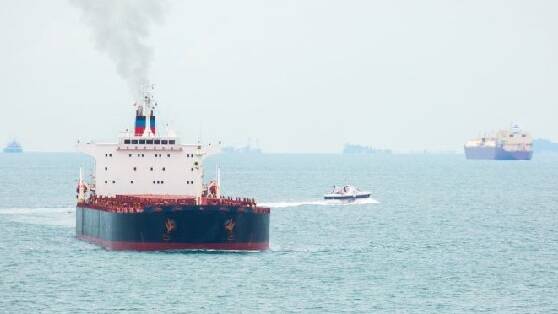

A joint research project between the University of British Columbia (UBC), the Clear Seas Centre for Responsible Marine Shipping (Clear Seas) and the National Research Council of Canada’s (NRC) Ocean, Coastal and River Engineering Research Centre aims to play a key role in reducing the environmental footprint of shipping, which accounts for nearly three per cent of global human-caused carbon emissions.
Funded by the National Research Council of Canada’s Ocean program and Mitac’s Accelerate Program, this multi-year project is led by Dr. Amanda Giang, Assistant Professor at UBC’s Institute for Resources, Environment, and Sustainability (IRES) and Department of Mechanical Engineering, and by Dr. Terre Satterfield, a Professor also from IRES.
“This research will see the development of a framework to assess and rank technological solutions to help reduce the overall environmental impact of marine shipping,” says Paul Blomerus, Executive Director, Clear Seas.
The study will highlight research and development efforts, support policy decisions, and recommend technologies that can be used to retrofit existing ships, and which can be incorporated into new ship designs, he says.
“This is an exciting opportunity to explore integrated planning that takes a more holistic perspective on environmental impact. With Clear Seas’ reach, we will be able to engage a wider range of marine stakeholders and rightsholders in this discussion,” says Giang.
When it comes to improving the environmental footprint of shipping, ship owners and marine architects are faced with a myriad of choices that they should consider. This includes options such as artificial intelligence and autonomous systems, alternative fuels, state-of-the-art materials for hulls, and what type of propulsion systems to use, ranging from next generation designs of propellers to assistance from wind-powered rotors. “We hope that the evaluation framework developed as part of this project can be a tool to support structured conversations around the trade-offs and opportunities that different technologies provide,” adds Giang.
Although marine shipping remains the most energy-efficient way to transport freight globally, as vessel traffic increases, there are increased concerns about its environmental impact, which extends beyond greenhouse gas emissions. Indeed, commercial ships must work to reduce and eliminate all forms of air pollution, discharges of waste into the water, releases of microplastics, underwater noise, and the transfer of invasive species, while preventing spills and accidents.
This collaborative research project between UBC, Clear Seas, and the NRC will allow for the development of an evaluation framework that aims to better account for a wider range of environmental effect of shipping and the extent different technologies may contribute to reducing all impacts including greenhouse gases (GHGs). Once completed, this framework will be publicly available and help identify and prioritize solutions that have the potential to reduce impacts across the full suite of environmental performance areas.



Related News.
Cyprus Maritime Innovation takes Centre Stage at SMM Hamburg 2026
Underscoring its expanding role as a premier international hub for cutting-edge maritime technology and sustainable shipping, the Republic of Cyprus…

Trump seeks to refill US oil reserve with Venezuela deal but faces long delay
U.S. President Donald Trump said on the 30th (local time) that he would refill the U.S. Strategic Petroleum Reserve, which has been depleted with…

US Navy Official visits South Korean Shipyards in private
With U.S. President Donald Trump pushing a plan to allow overseas construction of U.S. warships, attention is focusing on whether the building of…

SES and De Boer Marine expand collaboration with FlexMaritime deployment across Global Markets
SES, a leading space solutions company, and De Boer Marine, a leading provider of top-quality marine equipment and maritime connectivity services,…

New ESG guidance to help maritime industry turn sustainability into commercial advantage
New framework helps shipowners and ports align ESG strategy with access to capital, charterer expectations and long-term asset value. Maritime…

Britannia P&I Club analysis finds four in five crew deaths linked to illness rather than accidents
New report highlights cardiovascular disease as leading cause of fatalities and raises concerns over mental health risks among younger seafarers.…

The Swedish Club launches new Loss Prevention podcast, Knot Another Lesson
The Swedish Club has launched Knot Another Lesson, a new podcast exploring the practical lessons, emerging risks and operational challenges shaping…

Lloyd’s Register appoints Jens Grunenberg as Senior Representative for Germany
Lloyd’s Register has appointed Jens Grunenberg as its Senior Representative for Germany, effective 1 September. Based in Hamburg, Grunenberg will…
Indian Register of Shipping sets sights on Hamburg for European Expansion
Indian Register of Shipping, a leading international classification society and full member of the International Association of Classification…
MOL completes Merger of 6 Ship Management Companies
Unifying Management of Over 200 Vessels and Strengthening Safety Mitsui O.S.K. Lines, announced that it has completed the integration of the MOL…
Subscribe to our newsletter!
if you dont want to swim alone in the ocean of news, sign up for the newsletter, and you will receive daily all the important news of world shipping!
