How Leaders can inspire Career Trajectory in the “Great Resignation” by SAP


Eyebrow-raising statistics from multiple sources continue to point to a growing global technical skills gap in the market.
For example:
- By 2025, nearly 50% of the workforce will need new skills.
- By 2030, there will be a global shortage of more than 85 million technically trained professionals.
- More than 1 billion jobs are likely to be transformed by technology within the next eight years.
The post-pandemic economy will require new skills in the workforce. Certainly the leadership challenge before us is clear.
But do you know what I really like about challenges? They usually come with opportunities.
While we consider the impact of the world’s technical skills gap, we also have before us “the great resignation,” or the “great reorientation” as some prefer to call it. Whatever terminology one uses to refer to this time in our history, it is easy to see that many people are reflecting right now on their career trajectories.
This means there has never been a better time for leaders to influence people to learn new technical skills, and to encourage reskilling and upskilling among existing employees.
Three Priorities for Leaders
Government, industry, communities, and educational organizations must work together to address the far-reaching implications of the global skills gap. There is momentum in the market, but there is also much work still to be done.
In my view, there are three big priorities for leaders to encourage technical skills learning right now.
Understand the perceived barriers.
New research suggests that people can feel trepidation toward proactively acquiring new skills. Those reasons include mental health, daycare issues, transportation, not enough income, age, fear, language barriers, and disabilities, for example. Leaders must understand individual learners’ needs and then design strategies that set learners up for success. People of all ages and backgrounds need to be enabled to learn new skills.
Promote the “why.”
According to one study, purpose and opportunity are at the heart of the need for technical talent. Earlier this year while at the World Economic Forum in Davos, for example, clients told me that SAP technology will be vital to solving the world’s most urgent sustainability problems. Companies need technically trained people to develop clean energy, create solutions driven by artificial intelligence (AI) that detect bias in recruiting, and help get drones in the air to deliver medicine to hard-to-reach areas. These are just a few examples of the issues that are very much worth working on. And let’s not forget: the skills gap includes also includes critical thinking and problem-solving ability, beyond tech.
Stand behind traditional and non-traditional education and training.
We must look at different ways of bringing technical talent into the workforce. Jobs in areas such as AI, engineering, cloud, and product creation require certain skills. Traditional university degrees are no longer the only way for people to obtain those skills. Technical training, micro-credentials, digital badges, and certifications present opportunities to identify people with skills, verify those skills, and help close the skills gap. Leaders can support those different paths.
Finding a Path for Upskilling: SAP’s Example
I am proud of how SAP is building a skills development mindset into our cultural DNA. We encourage and incentivize our employees to complete at least 50 hours of learning per year. Employees have continuous access to platforms and content to suit their individual career ambitions.
We have also reduced the barriers to entry for others who wish to develop SAP technical skills. In 2021 we launched SAP Learning, a new site where anyone can start building their SAP technology skills for free. More than 180,000 students, military veterans, and other individuals have joined us on this platform. Thousands of people have upskilled as SAP users, developers, and consultants.
We have heard great feedback on how SAP Learning is giving people:
- New job opportunities, globally
- Increased earnings and promotion potential
- Heightened professional confidence
- More industry recognition from peers, colleagues, and clients
Research tells us the skills gap will persist as a priority for global leaders. All of us should work together to meet this challenge.
We are entering one of the most transformative times in our history. Together, we can encourage people to cultivate and expand skills and reap the rewards of learning.
The timing is certainly right!



Related News.
OL Shipping Group in Tokyo: Capt. Eberhard Koch calls for realistic solutions to Maritime Decarbonisation
An intensive and engaging couple of days in Tokyo brought together leading figures from the international maritime community, providing a valuable…

Regatta for Peace one of the largest ever in Cyprus
Cyprus will host the first European stop on a global sailing journey leading up to the 2027 America’s Cup in Naples. More than 120 sailors…

The propulsion technology powering the marine energy transition
The marine industry is under increasing pressure to future-proof fleets, balancing the need to reduce emissions and improve efficiency. Propulsion…
Signal Ocean acquires Lgmar
Signal Ocean announced the acquisition of Lgmar, the Athens-based company behind Telix, a maritime email and communication platform in daily use…

Canada clean power push challenged by interprovincial grid limits, says GlobalData
Canada is entering a pivotal phase of power-sector expansion as federal tax credits, the phase-out of coal-fired generation, and accelerating…

Maritime safety depends on human factors and leadership, not procedures alone
Interim survey findings point to a gap between seafarers’ perceptions of risk and injury data Seafarers may misjudge when and where they are most at…

New BIMCO contracts tackle ship recycling and energy-saving retrofits
BIMCO adopted two new contractual solutions designed to help you manage important operational and regulatory challenges: the revised…
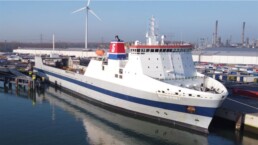
Stena Line to acquire vessel and make changes to its network
Stena Line has reached an agreement to acquire the RoRo vessel Somerset from CLdN. Subject to closure and transfer, the vessel would begin operating…
DORIC WEEKLY INSIGHT 16 OCTOBER 2026
Please find below the DORIC Market Insight for the week ending 16th October 2026. Weekly Report 16.10.2026

Important information for port clients and freight carriers effective November 1, a new traffic overpass and port checkpoint will open for traffic to the Port of Riga on Kundziņsala
Starting November 1 of this year, a new traffic overpass connecting Tvaika Street to Kundziņsala will open to facilitate traffic to and from the Port…
Subscribe to our newsletter!
if you dont want to swim alone in the ocean of news, sign up for the newsletter, and you will receive daily all the important news of world shipping!
