MOL holds naming/launching ceremonies for LNG-fueled ferry Sunflower Murasaki
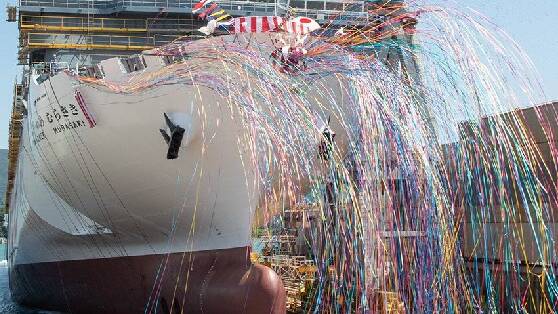

MOL announced that on August 30, naming and launching ceremonies for the second of Japan’s first two LNG-fueled ferries (Note 1), which were ordered from Mitsubishi Shipbuilding Co., Ltd. (President: Toru Kitamura; Headquarters: Nishi-ku, Yokohama-shi), were held at the Enoura Plant of Mitsubishi Heavy Industries, Ltd. Shimonoseki Shipyard & Machinery Works (Shimonoseki-shi, Yamaguchi Prefecture).
MOL Chairman Junichiro Ikeda named the vessel the “Sunflower Murasaki“. On hand for the rope-cutting honors was para-athlete Maya Nakanishi, who has ties to both Osaka and Oita Prefecture, homes to the ports the new ferry will serve. The vessel is a sister ship to the “Sunflower Kurenai,” which was named and launched in March of this year. After delivery from Mitsubishi Shipbuilding in March 2023, it is slated to enter service on the Osaka-Beppu route, as an alternative to the vessel currently in service (Note 1), operated by Ferry Sunflower Co., Ltd. (President: Mitsujiro Akasaka; Head Office: Oita-shi, Oita Prefecture).
Compared to the vessels currently in service, the new ferry will offer greater transport capacity and convenience for both cargo and passenger transport. In freight transport, the MOL Group will accelerate response to Japan’s Modal Shift by significantly increasing its truck transport capacity and expanding the driver’s rooms. For additional passenger comfort and convenience, the new ferry features interconnecting passenger rooms, which will be a first for a long-distance ferry, and quietness will be improved by state-of-the-art technology and uncompromised design (Note 2), to further enhance Sunflower Ferry’s “Casual Cruise Concept.” (Note 3)
The MOL Group has moved forward with an initiative to introduce clean alternative fuels in line with “MOL Group Environmental Vision 2.1” established in June 2021, with the aim of achieving net zero greenhouse gas (GHG) emissions by 2050.
LNG fuel is expected to achieve a significant reduction in GHG emissions, for example, about 25% less carbon dioxide (CO2) in comparison to conventional fuel oils, and it has been used as a marine fuel for many years. The MOL Group has promoted the introduction of LNG-fueled vessels as “a currently feasible initiative on reducing GHG emissions.” It aims at further reduction of GHG emissions by adopting LNG-fueled vessels as a transition towards the aim of Net Zero Emissions by 2050.
The MOL Group has already ordered four LNG-fueled ferries in the ferry business. It will construct two cutting-edge LNG-fueled ferries following the Sunflower Kurenai and “Sunflower Murasaki“. These vessels are slated to be launched on the Oarai-Tomakomai route, operated by MOL Ferry Co., Ltd. (President: Naotoshi Omoto; Headquarters: Chiyoda-ku, Tokyo) in 2025 as an alternative to ferries currently in service (Note 4). The group continually strives to achieve a low- and decarbonized society through its concerted efforts.
[Comparison with ferries in service]
| Kurenai/Murasaki (Newbuilding) |
Ivory/Cobalt (In service) |
|
|---|---|---|
| Passenger capacity | 716 | 710 |
| Truck loading capacity (Units) (converted to 13m) |
137 | 92 |
| Speed | 22.5 knots | 22.4 knots |
| LOA | 199.9m | 153.0m |
| Gross tonnage | About 17,300 tons | 9,245 tons |
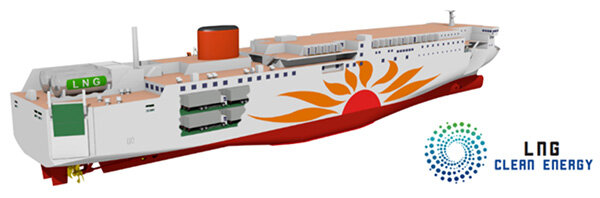
[Image of the Vessel]



Related News.
Cyprus Maritime Innovation takes Centre Stage at SMM Hamburg 2026
Underscoring its expanding role as a premier international hub for cutting-edge maritime technology and sustainable shipping, the Republic of Cyprus…

Trump seeks to refill US oil reserve with Venezuela deal but faces long delay
U.S. President Donald Trump said on the 30th (local time) that he would refill the U.S. Strategic Petroleum Reserve, which has been depleted with…
US Navy Official visits South Korean Shipyards in private
With U.S. President Donald Trump pushing a plan to allow overseas construction of U.S. warships, attention is focusing on whether the building of…
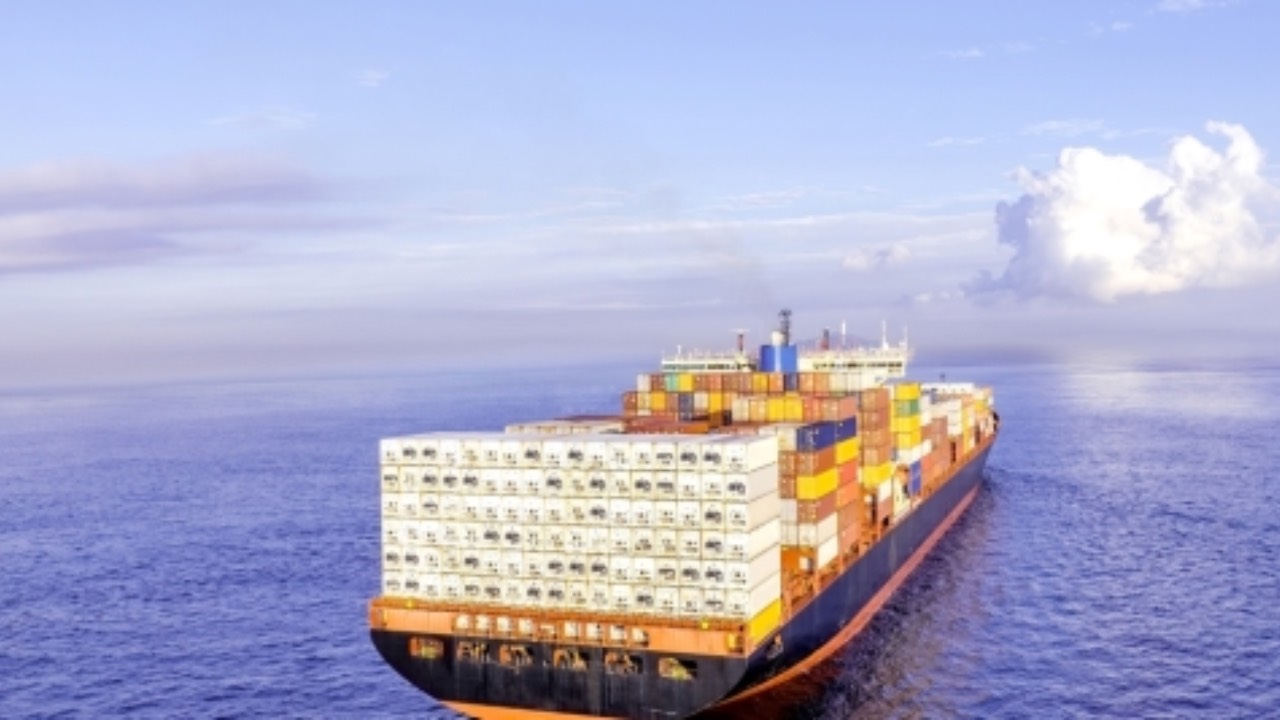
SES and De Boer Marine expand collaboration with FlexMaritime deployment across Global Markets
SES, a leading space solutions company, and De Boer Marine, a leading provider of top-quality marine equipment and maritime connectivity services,…
New ESG guidance to help maritime industry turn sustainability into commercial advantage
New framework helps shipowners and ports align ESG strategy with access to capital, charterer expectations and long-term asset value. Maritime…

Britannia P&I Club analysis finds four in five crew deaths linked to illness rather than accidents
New report highlights cardiovascular disease as leading cause of fatalities and raises concerns over mental health risks among younger seafarers.…
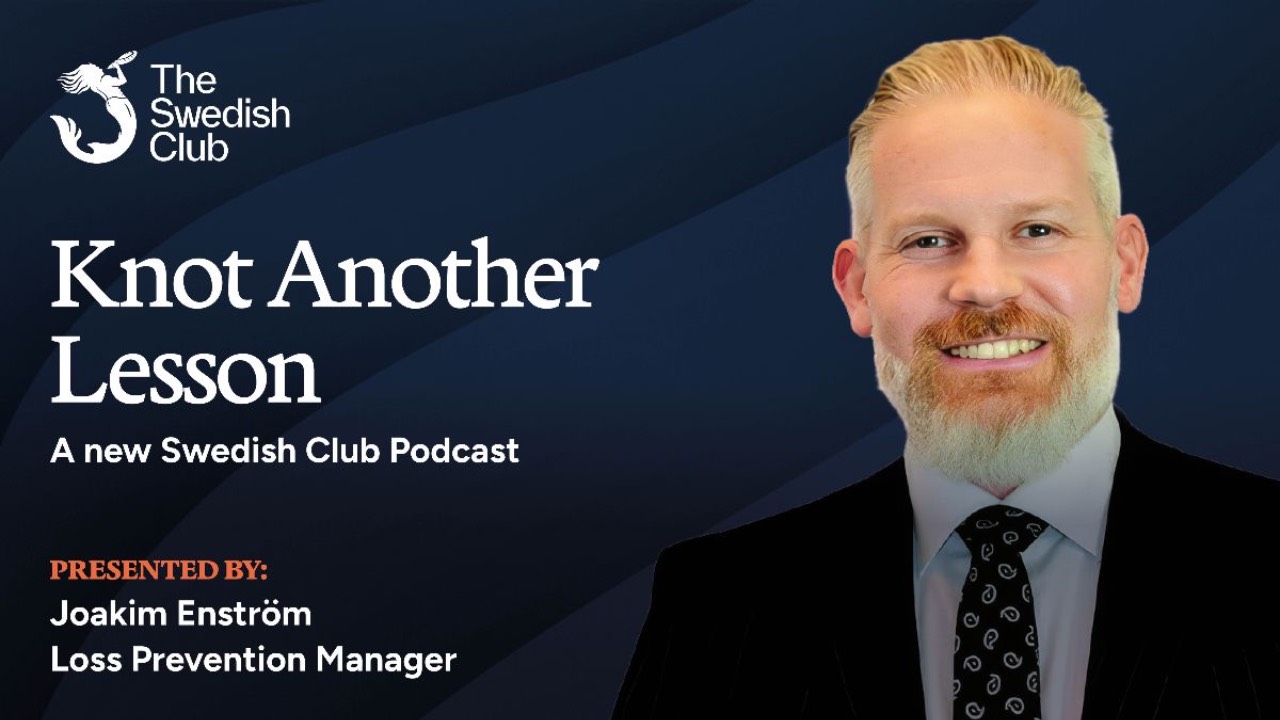
The Swedish Club launches new Loss Prevention podcast, Knot Another Lesson
The Swedish Club has launched Knot Another Lesson, a new podcast exploring the practical lessons, emerging risks and operational challenges shaping…
Lloyd’s Register appoints Jens Grunenberg as Senior Representative for Germany
Lloyd’s Register has appointed Jens Grunenberg as its Senior Representative for Germany, effective 1 September. Based in Hamburg, Grunenberg will…
Indian Register of Shipping sets sights on Hamburg for European Expansion
Indian Register of Shipping, a leading international classification society and full member of the International Association of Classification…
MOL completes Merger of 6 Ship Management Companies
Unifying Management of Over 200 Vessels and Strengthening Safety Mitsui O.S.K. Lines, announced that it has completed the integration of the MOL…
Subscribe to our newsletter!
if you dont want to swim alone in the ocean of news, sign up for the newsletter, and you will receive daily all the important news of world shipping!
