Harmonised System Nomenclature for the Classification of Goods (HS Codes)


The Club has received queries about the inclusion of Harmonized System Nomenclature for the classification of goods on the Bill of Lading and other shipping documentation presented by the Shipper.
Whilst the practice is not uncommon and a stipulated requirement by certain Custom and Excise Authorities, there have been incidents where the prefix lettering that references the coding system used on the documents has created uncertainty.
Shippers have placed reference lettering such as “UN” on documentation, creating an impression that the commodity has a dangerous cargo categorisation per the International Maritime Dangerous Goods (IMDG) Code when this is not the case. The intention of the letter prefix here was to reference the HS Codes within the United Nations Statistics Division (UNSD) lists. Another reference letter used is the placement of the letter acronym of the import country’s specific nomenclature system, i.e., NCM, which is the Mercosur Common Nomenclature established by the Brazilian Government.
Furthermore, when the Bill of Lading has the HS Coding applied, the contractual Carrier must be aware that they are responsible for verifying the accuracy of the code stipulated. This verification can be through the appointed protective Agency or by checking the import country’s specific HS coding list.
The content below provides background and informational reference points on the coding system to provide an understanding of the coding system.
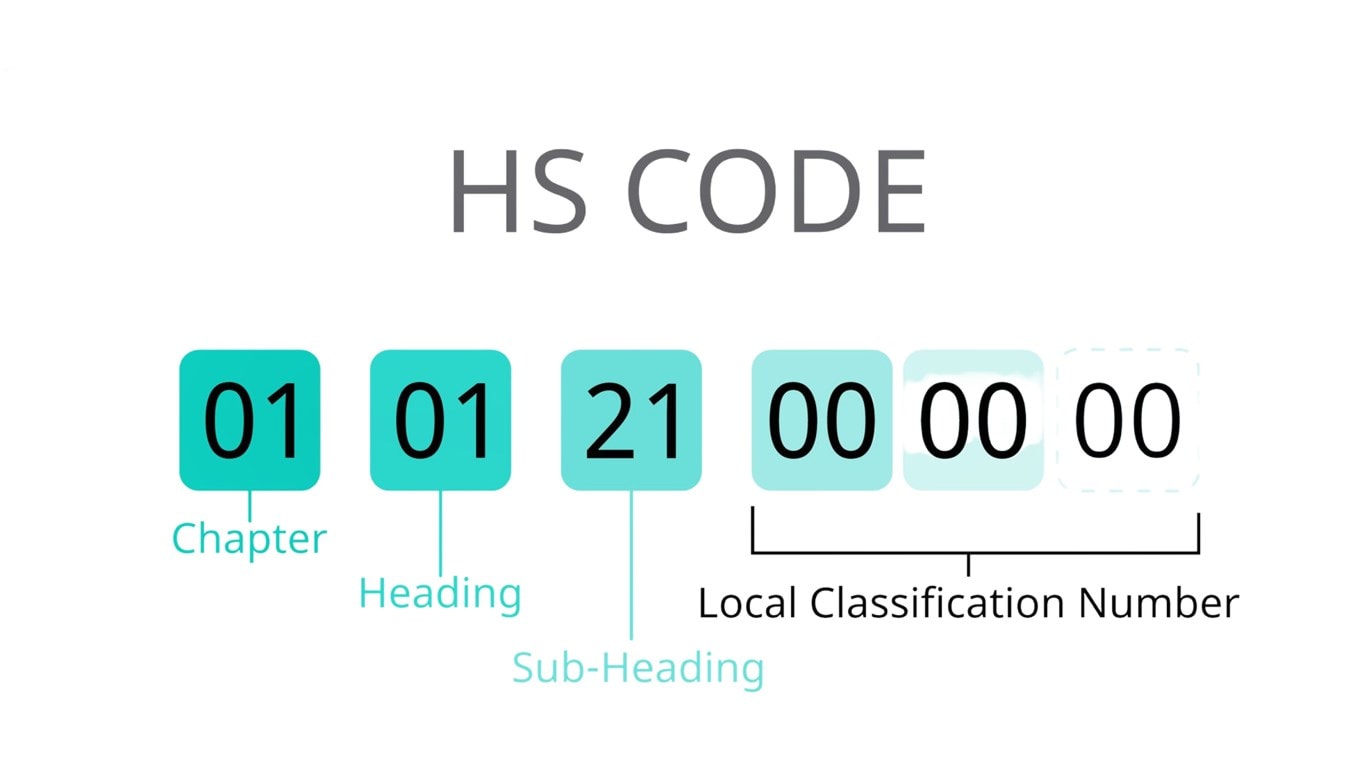
The Harmonized Commodity Description and Coding System is generally referred to as the “Harmonized System” or simply “HS”. It is a multipurpose international product classification list developed by the World Customs Organization (WCO).
The WCO defines it as comprising more than 5,000 commodity groups based on a hierarchy of sections, chapters, headings and subheadings, forming the six-digit identification HS Code. More than 200 countries and economies use the system. It classifies international shipments and assesses which taxes, duties, and restrictions may apply to the shipped product. The countries that apply the HS coding system are listed here.
Developed in the early 70’s and reviewed every five years, it is now in its 7th Edition, which came into force on the 1st of January 2022. Over 98% of all merchandise shipped in international trade is classified in terms of HS, making it straightforward for a Shipper to identify the HS Code for a given product.
In addition, individual countries may add additional numbers to the base six-digit HS Code increasing the code’s length to eight to ten digits.
Example – Soya Beans.
Section II: Vegetable Products.
Chapter 12: Oils seeds and oleaginous fruits; miscellaneous grains, seeds and fruit; industrial or medical plants; straw and fodder.
Heading 01: Soya Beans, whether or not broken.
Subheading 10: Seed.
HS Code: 12 01 10
Chapter Heading Subheading
UK Commodity Code = 1201 1000 00
US Schedule B Number = 1201.10.0000



Related News.
Cyprus Maritime Innovation takes Centre Stage at SMM Hamburg 2026
Underscoring its expanding role as a premier international hub for cutting-edge maritime technology and sustainable shipping, the Republic of Cyprus…

Trump seeks to refill US oil reserve with Venezuela deal but faces long delay
U.S. President Donald Trump said on the 30th (local time) that he would refill the U.S. Strategic Petroleum Reserve, which has been depleted with…
US Navy Official visits South Korean Shipyards in private
With U.S. President Donald Trump pushing a plan to allow overseas construction of U.S. warships, attention is focusing on whether the building of…
SES and De Boer Marine expand collaboration with FlexMaritime deployment across Global Markets
SES, a leading space solutions company, and De Boer Marine, a leading provider of top-quality marine equipment and maritime connectivity services,…

New ESG guidance to help maritime industry turn sustainability into commercial advantage
New framework helps shipowners and ports align ESG strategy with access to capital, charterer expectations and long-term asset value. Maritime…

Britannia P&I Club analysis finds four in five crew deaths linked to illness rather than accidents
New report highlights cardiovascular disease as leading cause of fatalities and raises concerns over mental health risks among younger seafarers.…
The Swedish Club launches new Loss Prevention podcast, Knot Another Lesson
The Swedish Club has launched Knot Another Lesson, a new podcast exploring the practical lessons, emerging risks and operational challenges shaping…

Lloyd’s Register appoints Jens Grunenberg as Senior Representative for Germany
Lloyd’s Register has appointed Jens Grunenberg as its Senior Representative for Germany, effective 1 September. Based in Hamburg, Grunenberg will…

Indian Register of Shipping sets sights on Hamburg for European Expansion
Indian Register of Shipping, a leading international classification society and full member of the International Association of Classification…

MOL completes Merger of 6 Ship Management Companies
Unifying Management of Over 200 Vessels and Strengthening Safety Mitsui O.S.K. Lines, announced that it has completed the integration of the MOL…
Subscribe to our newsletter!
if you dont want to swim alone in the ocean of news, sign up for the newsletter, and you will receive daily all the important news of world shipping!
