The USV “Pamela” collects microplastic from the sea
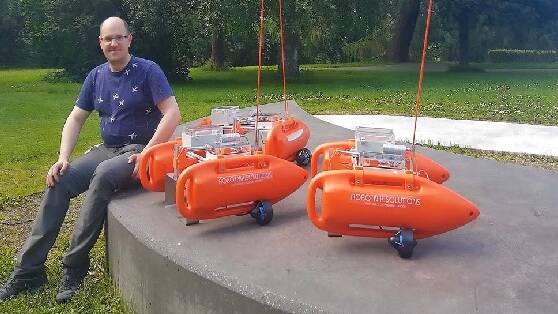

Biologists and cyberneticians at NTNU have built a smart robot, quick and inexpensive to operate, that can, among other things, take samples of microplastics and measure the density of salmon lice.
The unmanned surface vessel (USV), named “Pamela”, is the result of an interdisciplinary collaboration between doctoral candidate Andrea Faltynkova from the Department of Biology and Artur Zolich, a postdoctoral fellow at the Department of Technical Cybernetics.
Studying microplastics becomes easier with “Pamela”
Faltynkova studies microplastics in the ocean. Microplastics are pieces of plastic smaller than 5 millimeters. Microplastics is known to have negative effects on marine and freshwater life, but we know less about how it affects human health.
Studying microplastics is tricky because it comes in so many varieties and is smaller than five millimeters.
– Microplastics are so heterogeneous. It is a large, diverse group of particles. In addition, it is also unevenly distributed in the water bodies, says Faltynkova.
– Microplastics are not like other types of dissolved pollutants that we can detect even if we only look at small amounts of water or soil. If you take a liter of seawater and there is no plastic in it, can you conclude that there is no plastic in the sea? she asks.
A common procedure today is to go out by boat and collect samples a few times, from which the researchers try to draw conclusions based on how much plastic has been collected.
– But we really have no way of knowing how good the estimates are, says Faltynkova.
Uses hyperspectral imaging
Faltynkova’s main research project is to adapt and develop a technique called hyperspectral imaging to identify and count microplastics. This technology was developed in the mid-1980s to study the Earth from aircraft or space. Today, it is used for everything from studying shipwrecks to identifying different types of tissue in humans. The recycling industry uses this technology to separate plastics. This makes it a perfect tool for studying microplastics.
With a hyperspectral camera, Faltynkova takes a picture of the samples. NTNU’s supercomputer Idun then processes large amounts of data to determine what types of plastic are captured in a sample.
Combines fast analysis with a fast collection
Collecting microplastics usually means dragging a net behind a boat at a very low speed. This is both expensive and inefficient. But Faltynkova can study many samples because Pamela collects them so quickly, easily, and efficiently. Pamela doesn’t cost much and can work independently.
– I am trying to connect rapid analysis using hyperspectral imaging with a method that makes it possible to collect samples quickly, says Faltynkova.
– Together, this will give us a greater opportunity to map and monitor plastic pollution effectively.
Can follow the planned route
Pamela is held up by two orange buoys, just like those from the popular TV series Baywatch.
– Pamela can follow a pre-programmed route without scientists having to accompany or control the vessel while it does its job, says Zolich, who invented the robot.
Pamela is designed to meet the needs of those who will use it, and the robot continues to be modified – based on the response of the first users. The advanced machine uses inexpensive, readily available components where possible, and uses prototype components for parts that must be customized specifically for the robot. This means that it is both easy to use and easy to improve. Among the other advantages of the vessel is that it can be controlled from a distance and operate independently of a boat.
– The vessel is built up of modules, so that it can be adapted and specialized in several ways depending on what the researchers want to collect, Zolich explains.
The collaboration between Faltynkova and Zolich was initiated by NTNU biologist Geir Johnsen, and has been supported by Tor Arne Johansen at the Department of Technical Cybernetics. Johnsen and Johansen are both key researchers at the Center for Autonomous Marine Operations and Systems (AMOS) at NTNU.
This article was first published by Gemini.no



Related News.
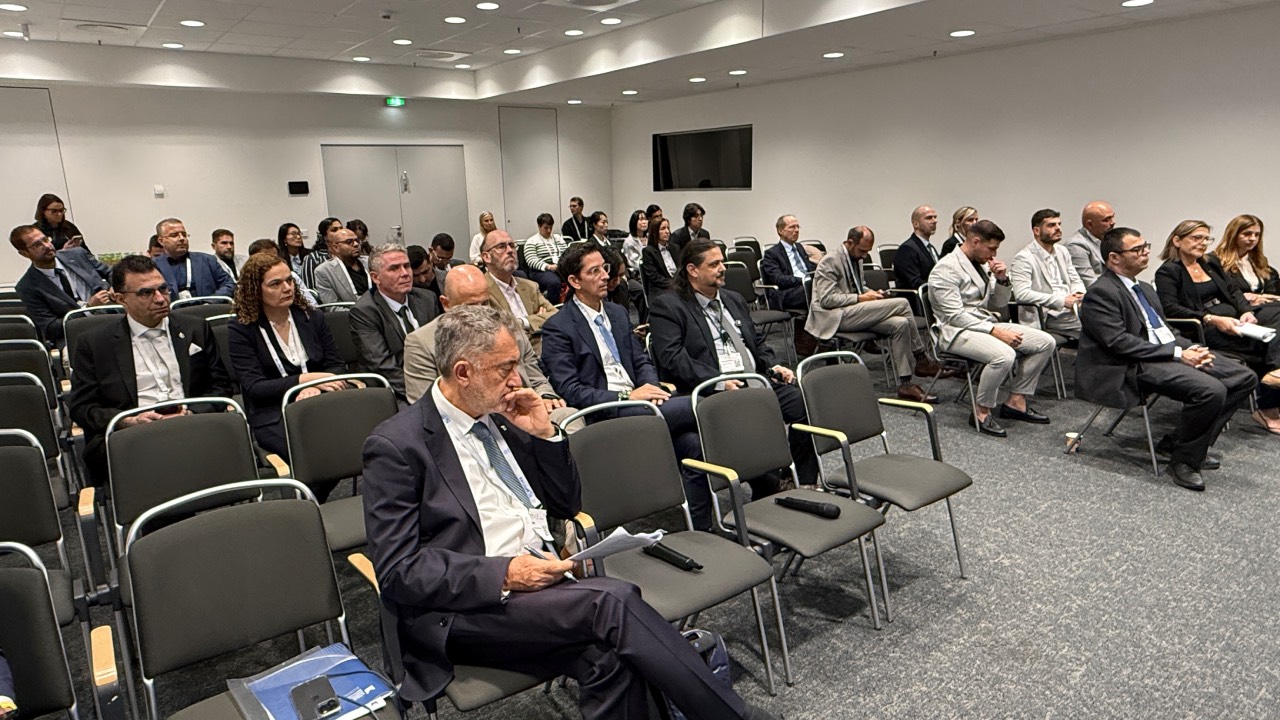
Cyprus Maritime Innovation takes Centre Stage at SMM Hamburg 2026
Underscoring its expanding role as a premier international hub for cutting-edge maritime technology and sustainable shipping, the Republic of Cyprus…

Trump seeks to refill US oil reserve with Venezuela deal but faces long delay
U.S. President Donald Trump said on the 30th (local time) that he would refill the U.S. Strategic Petroleum Reserve, which has been depleted with…

US Navy Official visits South Korean Shipyards in private
With U.S. President Donald Trump pushing a plan to allow overseas construction of U.S. warships, attention is focusing on whether the building of…

SES and De Boer Marine expand collaboration with FlexMaritime deployment across Global Markets
SES, a leading space solutions company, and De Boer Marine, a leading provider of top-quality marine equipment and maritime connectivity services,…
New ESG guidance to help maritime industry turn sustainability into commercial advantage
New framework helps shipowners and ports align ESG strategy with access to capital, charterer expectations and long-term asset value. Maritime…

Britannia P&I Club analysis finds four in five crew deaths linked to illness rather than accidents
New report highlights cardiovascular disease as leading cause of fatalities and raises concerns over mental health risks among younger seafarers.…
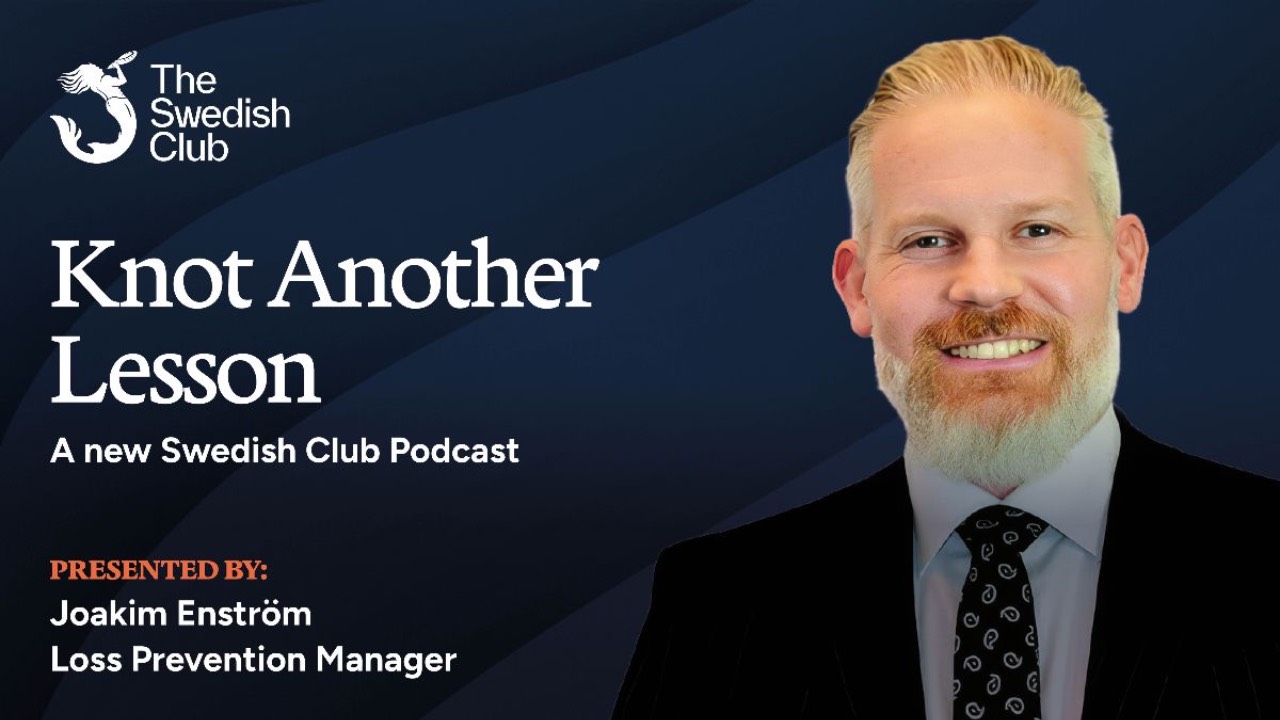
The Swedish Club launches new Loss Prevention podcast, Knot Another Lesson
The Swedish Club has launched Knot Another Lesson, a new podcast exploring the practical lessons, emerging risks and operational challenges shaping…

Lloyd’s Register appoints Jens Grunenberg as Senior Representative for Germany
Lloyd’s Register has appointed Jens Grunenberg as its Senior Representative for Germany, effective 1 September. Based in Hamburg, Grunenberg will…
Indian Register of Shipping sets sights on Hamburg for European Expansion
Indian Register of Shipping, a leading international classification society and full member of the International Association of Classification…
MOL completes Merger of 6 Ship Management Companies
Unifying Management of Over 200 Vessels and Strengthening Safety Mitsui O.S.K. Lines, announced that it has completed the integration of the MOL…
Subscribe to our newsletter!
if you dont want to swim alone in the ocean of news, sign up for the newsletter, and you will receive daily all the important news of world shipping!
