Panama Canal calls on ships to protect marine life as nearby annual migration begins
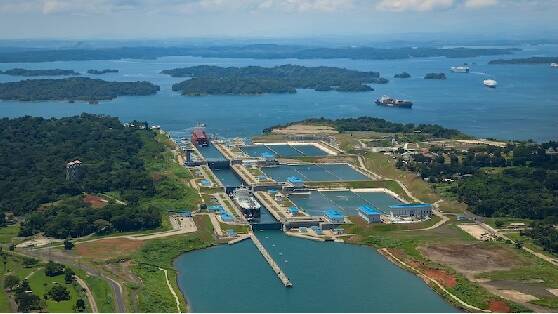

Starting August 1, 2022, through November 30, 2022, the Panama Canal is calling on vessels to follow annual speed and navigational measures to prevent collisions with whales, dolphins, and other large aquatic mammals beginning their seasonal migration nearby the waterway.
Vessels sailing to and from the Canal during this period are asked to stay within designated navigation areas known as Traffic Separation Schemes (TSS), which minimize areas of overlap between vessels and migrating marine life. The annual measures set by the International Maritime Organization (IMO) also require that vessels entering or exiting the Canal via the Pacific Ocean keep their speed at or below 10 knots, a practice known as Vessel Speed Reduction (VSR).
“As facilitators of global maritime trade, it is our responsibility to minimize the environmental impacts of our operations,” said Panama Canal Administrator Ricaurte Vásquez Morales. “These measures represent some of the simple, yet critical ways the Panama Canal and shipping lines must work together to ensure a more sustainable future for world commerce.”
Since the TSS measures were introduced in 2014, the likelihood of serious incidents has decreased considerably for vessels and marine life, including for humpback whales, which migrate from northern and southern latitudes during their winter season to Panama’s warm waters to give birth and to raise their calves. According to the Smithsonian Tropical Research Institute (STRI), ship strikes are among the most concerning human threats to whale populations, though lowering vessel speed can give the mammals sufficient time to respond and avoid collisions with vessels, while also allowing vessels to stop or maneuver accordingly. A STRI study confirmed that fatal accidents between whales and vessels were 38 percent lower between 2017 and 2019 when compared between 2009 and 2011, before the TSS measures were implemented.
The TSS policies have also been found to bolster maritime safety and reductions of greenhouse gas (GHG) emissions. Data obtained by the Panama Canal from vessels’ automatic identification systems (AIS) individual automatic ship identification systems found that those who followed these measures between 2017 and 2021 saved more than 30,000 tons of CO2 in total, though results vary by vessel type, size, and fuel.
“The annual TSS program shows how making a few small changes can lead to outsized benefits when it comes to sustainability,” said Maxim Rebolledo, Environmental Specialist at the Panama Canal. “We appreciate our customers for their partnership on this issue and the Panama Canal’s broader efforts to safeguard the environment.”
As the only major waterway that relies on freshwater, and a leader in global trade and the maritime industry, the Panama Canal implements initiatives to maximize environmental and operations efficiencies with a positive impact on the reduction of GHG. Since its inception, the Panama Canal has reduced over 850 million tons of CO2. Today, the Panama Canal continues being a strong supporter of, and an active participant in, the creation of the IMO’s industry-wide regulations.



Related News.

Cyprus Maritime Innovation takes Centre Stage at SMM Hamburg 2026
Underscoring its expanding role as a premier international hub for cutting-edge maritime technology and sustainable shipping, the Republic of Cyprus…

Trump seeks to refill US oil reserve with Venezuela deal but faces long delay
U.S. President Donald Trump said on the 30th (local time) that he would refill the U.S. Strategic Petroleum Reserve, which has been depleted with…
US Navy Official visits South Korean Shipyards in private
With U.S. President Donald Trump pushing a plan to allow overseas construction of U.S. warships, attention is focusing on whether the building of…
SES and De Boer Marine expand collaboration with FlexMaritime deployment across Global Markets
SES, a leading space solutions company, and De Boer Marine, a leading provider of top-quality marine equipment and maritime connectivity services,…

New ESG guidance to help maritime industry turn sustainability into commercial advantage
New framework helps shipowners and ports align ESG strategy with access to capital, charterer expectations and long-term asset value. Maritime…

Britannia P&I Club analysis finds four in five crew deaths linked to illness rather than accidents
New report highlights cardiovascular disease as leading cause of fatalities and raises concerns over mental health risks among younger seafarers.…

The Swedish Club launches new Loss Prevention podcast, Knot Another Lesson
The Swedish Club has launched Knot Another Lesson, a new podcast exploring the practical lessons, emerging risks and operational challenges shaping…

Lloyd’s Register appoints Jens Grunenberg as Senior Representative for Germany
Lloyd’s Register has appointed Jens Grunenberg as its Senior Representative for Germany, effective 1 September. Based in Hamburg, Grunenberg will…
Indian Register of Shipping sets sights on Hamburg for European Expansion
Indian Register of Shipping, a leading international classification society and full member of the International Association of Classification…
MOL completes Merger of 6 Ship Management Companies
Unifying Management of Over 200 Vessels and Strengthening Safety Mitsui O.S.K. Lines, announced that it has completed the integration of the MOL…
Subscribe to our newsletter!
if you dont want to swim alone in the ocean of news, sign up for the newsletter, and you will receive daily all the important news of world shipping!
