Be careful with lines under tension
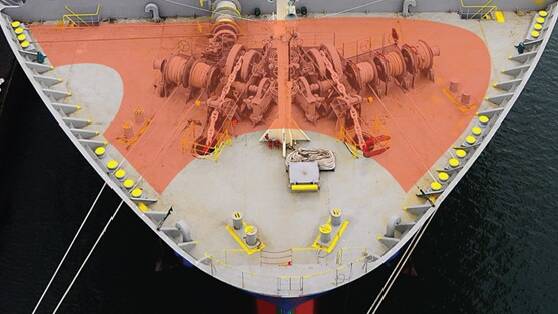

Mooring deck fatalities as a result of snap-back continue to occur despite well published guidance on the hazard, warns the UK MAIB.
Parting of tensioned mooring lines has been associated with some of the worst human injuries, and loss of life registered in Gard’s claims portfolio. Use of worn mooring lines, overtightening of the brakes, or sudden movements of the ship are among the main reasons for ropes straining beyond their breaking limits and parting.
In a safety reminder published in July 2022, the UK Marine Accident Investigation Branch (MAIB) highlights that such incidents continue to occur despite well published guidance on the subject. Even though there have been many advances in technology and automation in the shipping industry, mooring decks remain a place where people need to work in proximity to heavy lines under tension and interaction is unavoidable. For this reason, it is important that the safety guidance is followed, says the UK MAIB, and emphasizes the following three key components for safer mooring operations:
- Equipment: Making sure the right equipment is used and then maintained in good condition is essential to keeping safe on mooring decks. Mooring lines need to be regularly inspected to make sure that wear and tear has not degraded the line, there are no hard spots on synthetic lines and no signs of contamination by oils and greases. The lead of each mooring line needs to be considered carefully to avoid placing additional stress on the lines or introducing chafe points. Inappropriate or poorly maintained equipment has previously contributed to incidents where lines have parted or released under tension and struck crew members, therefore meticulously checking equipment for anything untoward is critical for the safety of the crew.
- Planning and Briefing: Planning is important when conducting any mooring deck operations. The risk assessment and control measures should be reviewed for each new operation and planning should take account of the expected mooring configuration, paying particular attention to the potential risk of snapback. Areas where mooring deck operations take place need to be kept tidy and mooring lines should be closely monitored on all berths – this is vitally important when there is a large range of tide. Planning effectively also involves making sure that all seafarers are adequately briefed on the mooring configurations, that they know what to do, and that they are positioned on parts of the deck that are less dangerous. Enough crew should be on deck to conduct the job safely, but too many crew should be avoided as it can unnecessarily place others at risk.
- Communication: Finally, crew communication is of the utmost importance when working on mooring decks, because it has the potential to be extremely hazardous if people are not able to interact clearly. Everybody involved in an operation needs to communicate effectively but must also consider the number of circuits in use. Too many voices on the same circuit can cause confusion and risk over-talking, however, using separate circuits can leave some crew in the dark. Ultimately, effective communication can be the difference between being safe and putting people at risk, therefore it is important that the mooring plan ensures that good communications can be maintained between all parties involved in the mooring operation.
For UK-flagged ships, Chapter 26 of the Maritime and Coastguard Agency’s Code of Safe Working Practices for Merchant Seafarers provides advice on the matter. Other flag states may have similar recommendations. Section 19 of the ILO’s Code of practice for accident prevention on board ship at sea and in port also provides practical recommendations and guidance related to mooring and unmooring operations.
Further information and recommendations
It is worth noting that Safe Mooring is also on the IMO’s agenda. The safety of mooring operations is addressed in SOLAS Reg.II-1/3-8 and amendments entering into force on 1 January 2024 explicitly require occupational safety to be considered when designing mooring arrangements and selecting equipment. Furthermore, the amendments include requirements for inspection and maintenance of the mooring equipment and guidelines are provided in:
- MSC.1/Circ.1175/Rev.1 and MSC.1/Circ.1619 on the design of mooring arrangements and the selection of appropriate mooring equipment, lines and fittings, and
- MSC.1/Circ.1620 for inspection and maintenance of mooring equipment including lines.
Ship managers are advised to review their mooring procedures and, if necessary, revise them to ensure they prevent unsafe and unhealthy work situations during mooring operations. Moreover, it is important to ensure that procedures are fully understood and followed, and that seafarers are given proper onboard training to help them recognise, evaluate, and control hazards associated with mooring operations.
Gard regularly publishes Case Studies for safety meetings focusing on the risk assessment process and identification of the chain of errors that led to an incident. One of our Case Studies addresses Mooring Operations and we encourages masters to use it as part of their training – for comparison, analysis and discussion among officers and crew onboard their ships.
Source: GARD



Related News.
Cyprus Maritime Innovation takes Centre Stage at SMM Hamburg 2026
Underscoring its expanding role as a premier international hub for cutting-edge maritime technology and sustainable shipping, the Republic of Cyprus…
Trump seeks to refill US oil reserve with Venezuela deal but faces long delay
U.S. President Donald Trump said on the 30th (local time) that he would refill the U.S. Strategic Petroleum Reserve, which has been depleted with…
US Navy Official visits South Korean Shipyards in private
With U.S. President Donald Trump pushing a plan to allow overseas construction of U.S. warships, attention is focusing on whether the building of…
SES and De Boer Marine expand collaboration with FlexMaritime deployment across Global Markets
SES, a leading space solutions company, and De Boer Marine, a leading provider of top-quality marine equipment and maritime connectivity services,…

New ESG guidance to help maritime industry turn sustainability into commercial advantage
New framework helps shipowners and ports align ESG strategy with access to capital, charterer expectations and long-term asset value. Maritime…
Britannia P&I Club analysis finds four in five crew deaths linked to illness rather than accidents
New report highlights cardiovascular disease as leading cause of fatalities and raises concerns over mental health risks among younger seafarers.…
The Swedish Club launches new Loss Prevention podcast, Knot Another Lesson
The Swedish Club has launched Knot Another Lesson, a new podcast exploring the practical lessons, emerging risks and operational challenges shaping…

Lloyd’s Register appoints Jens Grunenberg as Senior Representative for Germany
Lloyd’s Register has appointed Jens Grunenberg as its Senior Representative for Germany, effective 1 September. Based in Hamburg, Grunenberg will…

Indian Register of Shipping sets sights on Hamburg for European Expansion
Indian Register of Shipping, a leading international classification society and full member of the International Association of Classification…
MOL completes Merger of 6 Ship Management Companies
Unifying Management of Over 200 Vessels and Strengthening Safety Mitsui O.S.K. Lines, announced that it has completed the integration of the MOL…
Subscribe to our newsletter!
if you dont want to swim alone in the ocean of news, sign up for the newsletter, and you will receive daily all the important news of world shipping!
