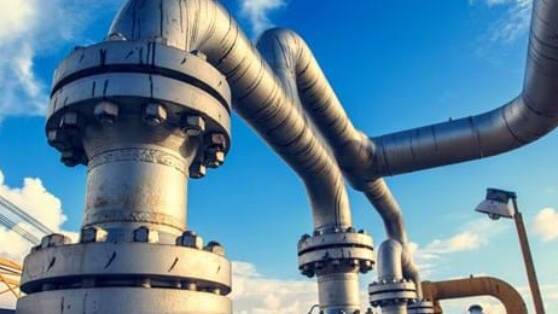

War in Ukraine is transforming the outlook for the supply, demand and price of hydrocarbons and the pace and cost of the energy transition. While the precise timing and implementation of future bans on Russian commodity imports are difficult to predict, a rewriting of energy trade flows is now underway.
With the global economy on a knife edge and energy prices structurally higher, there is a real risk of some global supply being lost. Europe’s push for more liquified natural gas (LNG) as it looks to reduce Russian pipeline gas has pushed spot prices to record levels and is supporting strong demand for coal. At the same time, supply-chain risks are growing, and inflation is increasing costs across the energy sector.
These are the latest insights from new analysis by Wood Mackenzie, a Verisk business (Nasdaq:VRSK), which also found that against this backdrop and with coal currently more resilient, further advancing the energy transition could be more expensive and potentially prove more carbon intensive.
Massimo Di-Odoardo, Vice President of Gas and LNG Research at Wood Mackenzie, said: “It is inconceivable that Europe will abandon its diversification strategies and return to any meaningful dependence on Russia.” Based on the assumption that Europe bans all Russian commodities by the end of 2024, Wood Mackenzie’s new analysis considers the impact on commodities over the next decade, as well as for investment, the energy transition and geopolitics.
Di-Odoardo said: “While prices will be structurally higher and a ban on Russian gas will be more challenging than that of other commodities, the ‘west’ can live without Russian commodity exports and we are already seeing a new trade balance taking shape. Increasing domestic coal production in China and India will compensate lower seaborne availability. While perhaps the biggest risk to Russian oil production is in the long term and relates to the loss of access to western partners, technologies and services”
The research by Wood Mackenzie emphasises that a future ban on Russian gas will see competition for LNG intensifying as Europe competes with Asia for limited supply growth through to around 2026. Across all hydrocarbons, LNG looks the most compelling investment option over the next few years.
“A huge increase in LNG project investment is being supported by a rapid increase in European LNG demand, with US developers already looking to fill the space,” said Di-Odoardo. “As a result, there is a potential for 50 million tonnes per annum of new US LNG capacity that will take final investment decisions over the next two years – and this could double if Europe bans imports from Russia by 2024.”
Di-Odoardo further commented: “But despite disruptions to Russian exports, global supply chains are now emerging as the biggest concern. Rising costs could delay investment in necessary energy supply and delay the pace of investment in clean energy needed to meet decarbonisation goals.
“The most successful governments, companies and investors will be those who best navigate these complex market conditions to accelerate the energy transition.”
Wood Mackenzie’s latest report underlines the need for a rapid response by Governments, investors and companies:
Governments – Countries with domestic hydrocarbon and critical mineral resources will need a twin-track approach: maximising production of their resources in the short term while stepping up investment in low-carbon energy supply to meet future demand in the long term.
Investors – Energy transition investment will be more expensive but remains competitive due to higher commodity and power prices. European renewables will increase rapidly. Energy security priorities will ensure returns remain attractive for hydrocarbons and, increasingly, critical infrastructure. LNG looks the most attractive investment option, but even that could prove limited in time if Europe and other countries accelerate on net zero goals.
Companies – Hydrocarbons will be tremendous money spinners for some time to come. Attractive opportunities for low-cost, low-carbon supply of oil and gas from the national oil companies (NOCs) will continue. But large-scale investment by international oil companies (IOCs) in traditional oil and gas projects, as well as international miners in coal projects, will increasingly be displaced by growing investment in low-carbon energy projects. Metals could be the next growth areas for cash-rich IOCs.
Some European governments have already accelerated their decarbonisation strategies in response to the war. Others will follow, along with increased policy support for investment in the emerging technologies needed to accelerate the energy transition.
But this is heaping pressure on already stretched global supply chains. Renewable costs are already being driven up, though by less the pace of increase in coal and gas prices. We are also seeing a scramble for the metals to build out electrification, potentially compounded by reduced exports from Russia. The pace of the energy transition might be getting bolder, but it is also getting more expensive.
There is also a risk that an accelerated energy transition could prove more carbon intensive. But Wood Mackenzie’s analysis shows that upward pressures on emissions will likely be offset by the slower economic growth and renewed focus on low carbon investments, with CO2 emissions reducing by up to 15% by 2035, compared with 2021.
It is scant consolation when emissions can be curbed only by restricting improvements in global prosperity and living standards.
Source: Wood Mackenzie



Related News.

Cyprus Maritime Innovation takes Centre Stage at SMM Hamburg 2026
Underscoring its expanding role as a premier international hub for cutting-edge maritime technology and sustainable shipping, the Republic of Cyprus…

Trump seeks to refill US oil reserve with Venezuela deal but faces long delay
U.S. President Donald Trump said on the 30th (local time) that he would refill the U.S. Strategic Petroleum Reserve, which has been depleted with…
US Navy Official visits South Korean Shipyards in private
With U.S. President Donald Trump pushing a plan to allow overseas construction of U.S. warships, attention is focusing on whether the building of…
SES and De Boer Marine expand collaboration with FlexMaritime deployment across Global Markets
SES, a leading space solutions company, and De Boer Marine, a leading provider of top-quality marine equipment and maritime connectivity services,…

New ESG guidance to help maritime industry turn sustainability into commercial advantage
New framework helps shipowners and ports align ESG strategy with access to capital, charterer expectations and long-term asset value. Maritime…

Britannia P&I Club analysis finds four in five crew deaths linked to illness rather than accidents
New report highlights cardiovascular disease as leading cause of fatalities and raises concerns over mental health risks among younger seafarers.…

The Swedish Club launches new Loss Prevention podcast, Knot Another Lesson
The Swedish Club has launched Knot Another Lesson, a new podcast exploring the practical lessons, emerging risks and operational challenges shaping…

Lloyd’s Register appoints Jens Grunenberg as Senior Representative for Germany
Lloyd’s Register has appointed Jens Grunenberg as its Senior Representative for Germany, effective 1 September. Based in Hamburg, Grunenberg will…

Indian Register of Shipping sets sights on Hamburg for European Expansion
Indian Register of Shipping, a leading international classification society and full member of the International Association of Classification…
MOL completes Merger of 6 Ship Management Companies
Unifying Management of Over 200 Vessels and Strengthening Safety Mitsui O.S.K. Lines, announced that it has completed the integration of the MOL…
Subscribe to our newsletter!
if you dont want to swim alone in the ocean of news, sign up for the newsletter, and you will receive daily all the important news of world shipping!
