Energy executives expect more extreme cyber-attacks but defensive action is lagging, new DNV research reveals
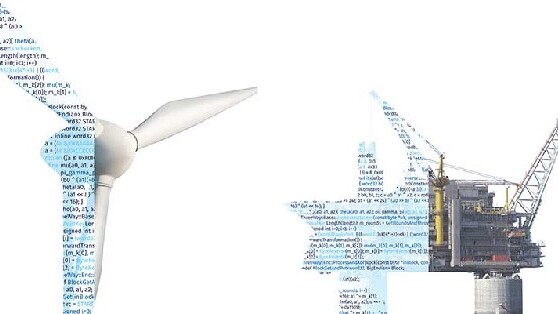

New research published by DNV reveals that energy executives anticipate life, property, and environment-compromising cyber-attacks on the sector within the next two years. But defensive action appears to lag.
- Energy professionals believe that cyber-attacks on the industry are likely to cause harm to life, property and the environment in the next two years. 84% expect physical damage to assets and 57% anticipate loss of life
- Less than half (47%) believe that the security of their operational technologies (OT) – the control systems managing, monitoring and controlling industrial operations – is as robust as their IT security
- Just 28% of energy professionals working with OT say their company is making the cyber security of their supply chain a high priority for investment
- Fewer than a third (31%) of energy professionals assert confidently that they know exactly what to do if they were concerned about a potential cyber risk or threat
- Less than half (44%) of the industry’s C-suite sees the need for urgent improvements to prevent a serious attack on their business, despite emerging threats.
New research published by DNV, the independent risk management and quality assurance provider, reveals that energy executives anticipate life, property, and environment-compromising cyber-attacks on the sector within the next two years.
The Cyber Priority, a research report exploring the state of cyber security in the energy sector, finds that more than four-fifths of professionals working in the power, renewables, and oil and gas sectors believe a cyber-attack on the industry is likely to cause operational shutdowns (85%) and damage to energy assets and critical infrastructure (84%). Three quarters (74%) expect an attack to harm the environment while more than half (57%) anticipate it will cause loss of life.
DNV’s research is based on a survey of more than 940 energy professionals around the world and in-depth interviews with industry executives.
Rising fears over new and more extreme consequences of cyber-attacks follow a series of high-profile security breaches in the energy industry in recent years.1 DNV’s research also indicates that concern about emerging threats has grown following Russia’s invasion of Ukraine. Two-thirds (67%) of energy professionals say that recent cyber-attacks on the industry have driven their organizations to make major changes to their security strategies and systems.

“Energy companies have been tackling IT security for several decades. However, securing operational technology (OT) – the computing and communications systems that manage, monitor and control industrial operations – is a more recent and increasingly urgent challenge for the sector,” said Trond Solberg, Managing Director, Cyber Security, DNV.
“As OT becomes more networked and connected to IT systems, attackers can access and control systems operating critical infrastructure such as power grids, wind farms, pipelines and refineries. Our research finds the energy industry is waking up to the OT security threat, but swifter action must be taken to combat it. Less than half (47%) of energy professionals believe their OT security is as robust as their IT security,” Solberg added.
Action lags as some companies hope for the best
Six in ten C-suite level respondents to DNV’s survey acknowledge that their organization is more vulnerable to an attack now than it has ever been. However, there are signs that some companies are taking a ‘wait, see and hope for the best’ approach to address the threat.
Less than half (44%) of C-suite respondents believe they need to make urgent improvements in the next few years to prevent a serious attack on their business, and more than a third (35%) of energy professionals say their company would need to be impacted by a serious incident before investing in their defences.
One explanation for some companies’ apparent hesitance to invest in cyber security may be that most respondents believe that their organization has so far avoided a major cyber-attack. Less than a quarter (22%) suspect their organization has been subject to a serious breach in the last five years.
“It is concerning to find that some energy firms may be taking a ‘hope for the best’ approach to cyber security rather than actively addressing emerging cyber threats. This draws distinct parallels to the gradual adoption of physical safety practices in the energy industry over the past 50 years,” said Solberg.
“It took tragic events such as the Piper Alpha incident in 1988 and the Macondo disaster in 2010 for the industry to prioritize and institutionalize global safety protocols, and for tighter regulation to come into place. Our research gives a strong signal that the industry needs to make urgent investments to ensure that cyber security does not become the cause of future damage to life, property and the environment,” Solberg added.
Supply chain blind spots cause concern
DNV recommends that the first step to strengthen defences is to identify where critical infrastructure is vulnerable to attack. The Cyber Priority reveals that, while many organizations are investing in vulnerability discovery, these efforts are not being sufficiently extended to include companies they partner with and procure from.
Just 28% of energy professionals working with OT say their company is making the cyber security of their supply chain a high priority for investment. This contrasts with the 45% of OT-operating respondents who say expenditure in IT system upgrades is a high investment priority.

“Energy companies can have complete oversight of their own vulnerabilities and have all the right measures in place to manage the risk, but that won’t make a difference if there are undiscovered vulnerabilities in their supply chain. Our research identifies ‘remote access to OT systems’ among the top three methods for potential cyber-attacks on the energy industry. We would urge the sector to pay greater attention to assuring that equipment vendors and suppliers demonstrate compliance with security best practice from the earliest stages of procurement,” said Jalal Bouhdada, Founder and CEO at Applied Risk, an industrial cyber-security firm acquired by DNV in 2021.
More workforce training is needed
Despite emerging cyber security threats, DNV’s research reveals that less than a third (31%) of energy professionals assert confidently that they know exactly what to do if they were concerned about a potential cyber risk or threat on their organization. This finding points to a need for energy companies to invest in training employees to spot instances of criminal attempts to gain access to their systems. Less than six in 10 (57%) of energy professionals say their employer’s cyber security training is effective.
“A company’s workforce is its first line of defence against cyber-attacks. Effective workforce training, combined with ensuring you have the right cyber security expertise in place, can make all the difference to safeguarding critical infrastructure. Our research shows a clear need for companies to carefully evaluate their investments in keeping their people well informed of how to identify and respond to incidents in a timely manner,” said Bouhdada.



Related News.

Cyprus Maritime Innovation takes Centre Stage at SMM Hamburg 2026
Underscoring its expanding role as a premier international hub for cutting-edge maritime technology and sustainable shipping, the Republic of Cyprus…

Trump seeks to refill US oil reserve with Venezuela deal but faces long delay
U.S. President Donald Trump said on the 30th (local time) that he would refill the U.S. Strategic Petroleum Reserve, which has been depleted with…

US Navy Official visits South Korean Shipyards in private
With U.S. President Donald Trump pushing a plan to allow overseas construction of U.S. warships, attention is focusing on whether the building of…

SES and De Boer Marine expand collaboration with FlexMaritime deployment across Global Markets
SES, a leading space solutions company, and De Boer Marine, a leading provider of top-quality marine equipment and maritime connectivity services,…

New ESG guidance to help maritime industry turn sustainability into commercial advantage
New framework helps shipowners and ports align ESG strategy with access to capital, charterer expectations and long-term asset value. Maritime…

Britannia P&I Club analysis finds four in five crew deaths linked to illness rather than accidents
New report highlights cardiovascular disease as leading cause of fatalities and raises concerns over mental health risks among younger seafarers.…

The Swedish Club launches new Loss Prevention podcast, Knot Another Lesson
The Swedish Club has launched Knot Another Lesson, a new podcast exploring the practical lessons, emerging risks and operational challenges shaping…

Lloyd’s Register appoints Jens Grunenberg as Senior Representative for Germany
Lloyd’s Register has appointed Jens Grunenberg as its Senior Representative for Germany, effective 1 September. Based in Hamburg, Grunenberg will…

Indian Register of Shipping sets sights on Hamburg for European Expansion
Indian Register of Shipping, a leading international classification society and full member of the International Association of Classification…

MOL completes Merger of 6 Ship Management Companies
Unifying Management of Over 200 Vessels and Strengthening Safety Mitsui O.S.K. Lines, announced that it has completed the integration of the MOL…
Subscribe to our newsletter!
if you dont want to swim alone in the ocean of news, sign up for the newsletter, and you will receive daily all the important news of world shipping!
