The Ocean’s best kept carbon capture secret
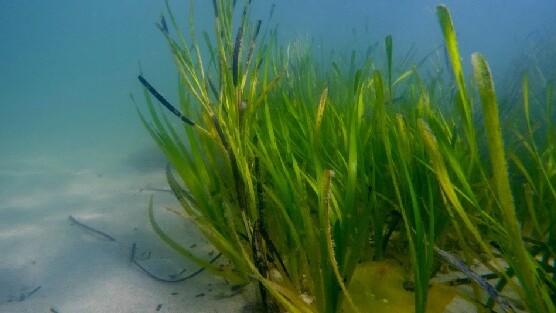

Seagrass plays an essential role in carbon sequestration, promoting biodiversity and supporting the local ecosystem. But with as much as 92% of the UK’s seagrass having been lost, restoration is priority. Here we explore the role that remote technologies could play in accelerating the restoration process.
Seagrasses are the unsung heroes of our coastal seas. Not only do they contribute massively to ecosystems around the globe, but they also have direct and indirect impacts on human wellbeing. They provide vital nutrition for close to 3 billion people and half of animal protein to 400 million people in the third world. In the UK, seagrasses are thought to support 50 million fish, many of which have commercial importance, such as juvenile whiting, cod, plaice and pollack. Moreover, seagrass ecosystems rank amongst the most efficient natural carbon sinks on earth, as they sequester carbon dioxide through photosynthesis and store organic carbon beneath their soils. In fact, it is thought that they do this at a rate much higher than the soils of tropical rainforests, demonstrating their critical role in mitigating climate change.
Seagrass restoration: mechanising the process
It is now accepted that restoring seagrass is vital for ocean health, but unfortunately, as much as 92% of the UK’s seagrass has been lost. Possible reasons for this huge decline include coastal contamination, poor water quality, urban sprawl and historic industrial activities. Project Seagrass is a charity devoted to seagrass conservation in ecosystems around the UK. Together with WWF and Swansea University, they have set themselves the ambitious target of restoring 30 km2 of seagrass by 2030. To achieve this, a range of potential sites need to be assessed for their suitability for seagrass planting, but such surveys are typically challenging.
Richard Unsworth, Project Seagrass, comments “Seagrass lives across a range of locations and environments. Some are intertidal and simple to survey; others are in deeper turbid waters and in places that are difficult to access. We use drones and satellite, as well as surveys on foot, but when you can’t see the seagrass through turbid water, you need a new approach that not even satellites will solve. The use of remote sonar surveys of the seabed helps overcome some of these challenges.”
Another major bottleneck for conducting seagrass restoration at scale in the UK is the lack of mechanisation in the process. Collecting and planting seeds by hand requires huge numbers of volunteers and can take thousands of hours of hard work. It’s an enormously time intensive activity that is also limited to a specific seed collection window. Therefore, if there is the potential to scale some of the processes through an engineering solution, it could be the key to a large-scale seagrass restoration solution.
Richard Unsworth: “We’re still very much at the beginning of the seagrass restoration mechanisation journey. We hope that by mechanising our operations, we’ll be able to make the restoration much more efficient, enabling far greater amounts of restoration to occur.”
One of Ocean Infinity’s priorities is to provide innovative solutions to protect our environment. In the beginning of December in 2021 we supported Project Seagrass by using a remotely operated vessel, the SeaWorker 8, to acquire seabed data in the Solent region in support of seagrass restoration. The vessel, fitted with an Edgetech 6205 for the collection of bathymetry, backscatter and Side Scan Sonar (SSS) data, collected seabed morphology data from three sites in the Solent to map the relevant seabed characteristics.

Ann Till, Chief Vessel Operator at Ocean Infinity said “This survey was conducted using a remote vessel that was controlled entirely from another vessel, with no personnel onboard. Combined with advanced sensors, as well some out-the-box thinking, this was certainly a project that had innovation at heart.”
After nine days of operations, the team was able to capture high quality morphology-based data from nearly 10 km2 of seabed. This was a hugely exciting outcome, as it was the first seagrass survey using remote operated vessels in the Solent. Moreover, by utilising the Seaworker 8 USV, the area was surveyed two times faster at a much higher resolution than if it were done manually, with significantly fewer human resources.
What does this mean for the future of seagrass restoration?
Richard Unsworth, Project Seagrass, said “We needed to assess the seabed in a range of areas where, previously, intertidal access has been difficult and the area has been too big for conventional camera type operations. The data provided by Ocean Infinity which provides an extensive and detailed analysis of the seafloor, will enable us to identify suitable areas for seagrass restoration. Without this survey,we’d be resorting to laborious and much slower methods of data collection. A comparable manual survey would take a team of four around 20 days, and even then the resolution would be significantly lower. I’m delighted that we can now move forward with our restoration plans which will not only protect biodiversity in the Solent, but mark a big first step for restoration in the area”.
Not only did this survey produce an abundance of useful data, but several other lessons were learnt throughout.
Ann Till: “There were of course a number of challenges that we had to face and there were times when the strength, resourcefulness and diversity of skills in the team were really used to the maximum. From last minute technical issues to inclement weather – there was plenty to keep us on our toes. The one abiding challenge that will be etched in my memory is from our survey in the Beaulieu River. Being a mariner, knowing we have a sufficient amount of water under the keel is something that I get quite a lot of comfort from – my personal challenge at times was to keep my heart rate down as I was glued to the echo sounder readings indicating water depth under the remote vessel.”
Stina Palmeby: “I too would say the shallow water depths was what put most pressure on the performance of the operation. The intention of the survey was to cover areas where seagrass is likely to thrive, which means the uppermost metres of seabed. This meant that the planning had to consider when spring tide was due and during the survey the vessel operators carefully monitored the water depths under the remote vessel, to achieve as much data coverage as possible without compromising safety.”
Overcoming these challenges, along with dramatically increasing the resolution and speed at which shallow seabed surveys can be carried out, is hugely promising for the future of seagrass restoration.
Ocean Infinity is excited to continue to help enhance restoration methods in the future through state-of-the-art technology and innovative solution finding. This is why we have joined forces with Sky Ocean Rescue, WWF, Cardiff University, Swansea University, Pembrokeshire Coastal Forum and Project Seagrass to become technology partners of Seagrass Ocean Rescue. One of the main goals of this collaborative undertaking is to develop a mechanised restoration approach that will enable the considerable uptake of future plantings. Ocean Infinity is proud to play a crucial role in this and contribute towards a sustainable seagrass restoration model that can be rolled out across the UK.
Source: Ocean Infinity



Related News.
Cyprus Maritime Innovation takes Centre Stage at SMM Hamburg 2026
Underscoring its expanding role as a premier international hub for cutting-edge maritime technology and sustainable shipping, the Republic of Cyprus…

Trump seeks to refill US oil reserve with Venezuela deal but faces long delay
U.S. President Donald Trump said on the 30th (local time) that he would refill the U.S. Strategic Petroleum Reserve, which has been depleted with…
US Navy Official visits South Korean Shipyards in private
With U.S. President Donald Trump pushing a plan to allow overseas construction of U.S. warships, attention is focusing on whether the building of…

SES and De Boer Marine expand collaboration with FlexMaritime deployment across Global Markets
SES, a leading space solutions company, and De Boer Marine, a leading provider of top-quality marine equipment and maritime connectivity services,…
New ESG guidance to help maritime industry turn sustainability into commercial advantage
New framework helps shipowners and ports align ESG strategy with access to capital, charterer expectations and long-term asset value. Maritime…

Britannia P&I Club analysis finds four in five crew deaths linked to illness rather than accidents
New report highlights cardiovascular disease as leading cause of fatalities and raises concerns over mental health risks among younger seafarers.…

The Swedish Club launches new Loss Prevention podcast, Knot Another Lesson
The Swedish Club has launched Knot Another Lesson, a new podcast exploring the practical lessons, emerging risks and operational challenges shaping…

Lloyd’s Register appoints Jens Grunenberg as Senior Representative for Germany
Lloyd’s Register has appointed Jens Grunenberg as its Senior Representative for Germany, effective 1 September. Based in Hamburg, Grunenberg will…
Indian Register of Shipping sets sights on Hamburg for European Expansion
Indian Register of Shipping, a leading international classification society and full member of the International Association of Classification…
MOL completes Merger of 6 Ship Management Companies
Unifying Management of Over 200 Vessels and Strengthening Safety Mitsui O.S.K. Lines, announced that it has completed the integration of the MOL…
Subscribe to our newsletter!
if you dont want to swim alone in the ocean of news, sign up for the newsletter, and you will receive daily all the important news of world shipping!
