Lockdowns and war create China-Europe cargo bottlenecks – Hans Rook, Chairman, IPCSA
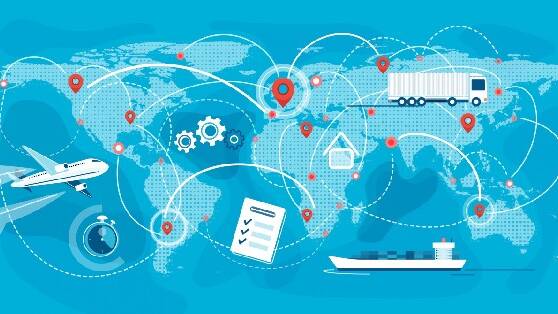

Being accustomed to an abundance of messages from e-commerce multinationals in the Far East, it struck me that things have become rather quiet in recent weeks. I then realised the connection with the alarming messages from China about the most recent lockdowns in which entire cities and, therefore, ports have been closed.
Reading transport and logistic magazines taught me that – like the rules for athletes during the Olympic games – port workers in the cities affected are not allowed to leave their work area, but must stay there 24/7.
Domestic traffic also suffers greatly under these circumstances. There are strict controls when collecting and delivering containers in the port area and from/to manufacturers that are closed due to the lockdown.
There is no need to emphasise that this will put the brakes on the supply chain, with all the obvious consequences of such a slowdown. Look at the maps and you will find large queues of vessels waiting to be loaded or discharged.
So, is this an opportunity to use the “silk road” for transport between China and Europe? Well, there were hopes for large volumes of cargo – but, yet again, it is not IT but human factors that have brought this to a full stop.
The conflict between Russia and Ukraine has effectively blocked the paths for train to transit, consequently blocking the ability to deliver the goods to and from Europe overland.
So, we are left with air freight. It feels a bit monotonous to keep saying this, but that is also not a feasible solution. Lockdowns are also hampering the delivery of goods at China’s airports. In addition, capacity is limited by existing landing rights and available freighters, not to mention that long-term contracts leave little room for additional air freight. On of all these factors there are, of course, the high prices to consider and the detours that aircraft have had to make because of the war in Ukraine.
During ‘normal’ times, on average the movement of cargo from buyer to seller takes about 50 days. Due to the current situation, that has increased to more than 100 days. So, international traders have real problems with in-time delivery to consumers. In some cases, delivery is impossible. Where the retail industry could normally depend on sold-out items being restocked quickly, we now see ‘run out’ notices.
We have ended up with huge obstructions to transport between China and Europe. We all know that this is not only about the shock of the obstructions themselves but also about how long it will take for the supply chain to recover and, from a business point of view, whether you have the time to wait for any recovery. Increasingly we are seeing international traders seeking other opportunities, whether deviating via other trade lanes or seeking other sources for the cargoes – materials, components and finished goods – they need.
Personally, I believe that the present situation will change the supply chain for many years to come. I will be watching closely the impact on transport and logistics if traders find other sources for their cargoes.
Source: IPSCA



Related News.
Cyprus Maritime Innovation takes Centre Stage at SMM Hamburg 2026
Underscoring its expanding role as a premier international hub for cutting-edge maritime technology and sustainable shipping, the Republic of Cyprus…

Trump seeks to refill US oil reserve with Venezuela deal but faces long delay
U.S. President Donald Trump said on the 30th (local time) that he would refill the U.S. Strategic Petroleum Reserve, which has been depleted with…
US Navy Official visits South Korean Shipyards in private
With U.S. President Donald Trump pushing a plan to allow overseas construction of U.S. warships, attention is focusing on whether the building of…
SES and De Boer Marine expand collaboration with FlexMaritime deployment across Global Markets
SES, a leading space solutions company, and De Boer Marine, a leading provider of top-quality marine equipment and maritime connectivity services,…

New ESG guidance to help maritime industry turn sustainability into commercial advantage
New framework helps shipowners and ports align ESG strategy with access to capital, charterer expectations and long-term asset value. Maritime…

Britannia P&I Club analysis finds four in five crew deaths linked to illness rather than accidents
New report highlights cardiovascular disease as leading cause of fatalities and raises concerns over mental health risks among younger seafarers.…

The Swedish Club launches new Loss Prevention podcast, Knot Another Lesson
The Swedish Club has launched Knot Another Lesson, a new podcast exploring the practical lessons, emerging risks and operational challenges shaping…

Lloyd’s Register appoints Jens Grunenberg as Senior Representative for Germany
Lloyd’s Register has appointed Jens Grunenberg as its Senior Representative for Germany, effective 1 September. Based in Hamburg, Grunenberg will…

Indian Register of Shipping sets sights on Hamburg for European Expansion
Indian Register of Shipping, a leading international classification society and full member of the International Association of Classification…
MOL completes Merger of 6 Ship Management Companies
Unifying Management of Over 200 Vessels and Strengthening Safety Mitsui O.S.K. Lines, announced that it has completed the integration of the MOL…
Subscribe to our newsletter!
if you dont want to swim alone in the ocean of news, sign up for the newsletter, and you will receive daily all the important news of world shipping!
