Investigation into Methane escaping from ’green’ gas-powered ships fuelling climate crisis
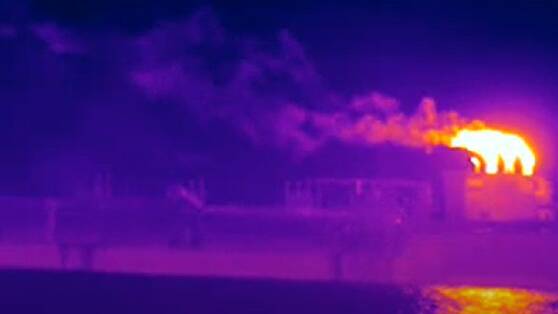

Investigation into so-called ‘green’ liquid natural gas (LNG) ships uncovers significant amounts of invisible methane being released into the atmosphere, exposing Europe’s dirty secret at sea.
Infrared images show unburned methane – a potent greenhouse gas – being released from supposedly ‘green’ LNG ships, a damning new investigation by Transport & Environment (T&E) shows. European politicians are playing with fire in their support for LNG, says T&E, with methane over 80 times more climate warming than carbon dioxide over a 20-year period.
Delphine Gozillon, shipping officer at T&E, said: “Europe has a dirty secret at sea. In promoting LNG ships, European policymakers are locking us into a future of fossil gas.The ships may be painted green, but, beneath the surface, the truth is that most LNG ships on the market today are more damaging for the climate than the fossil ships they’re supposed to replace.”
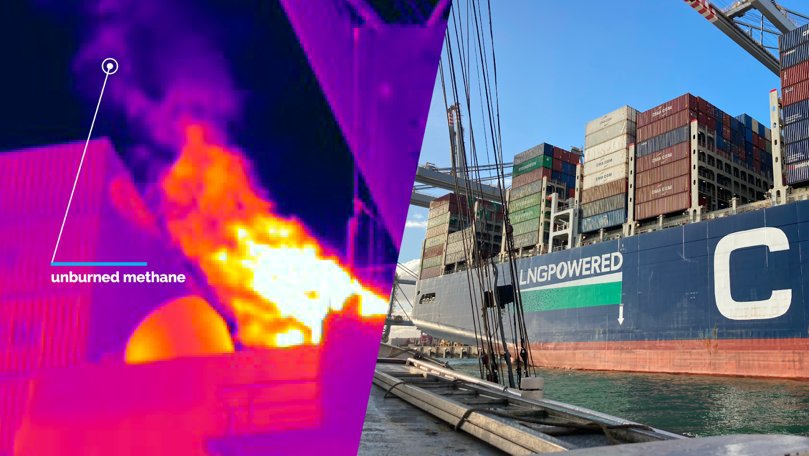
These images show heat and gas emissions from the exhaust stack of ship engines. The bright light near the exhaust stack indicates a heat source. As the plume moves away from the heated exhaust stack, we are able to observe uncombusted hydrocarbon emissions.
Leaks and slips occur throughout the natural gas supply chain. The use of fossil LNG as a maritime fuel is particularly problematic because slips occur from ship engines. According to data from the International Maritime Organisation (IMO), depending on the engine, it has been estimated that between 0.2% to over 3% of fossil gas slips from the combustion process and is released directly to the atmosphere.
For this reason, about 80%[2] of LNG today is burned in an engine with worse total greenhouse gas emissions than traditional engines running on dirty fuel oil [3]. Emission plumes that go up in the sky and remain there for a long time are an indication of this.
T&E carried out the investigation on a clear November day at the port of Rotterdam – Europe’s largest – using a state of the art infrared camera, with a special filter to detect hydrocarbon gases[4]. As LNG is typically 90% methane, any unburnt fuel that slips through the engine will also be primarily composed of the climate warming gas.
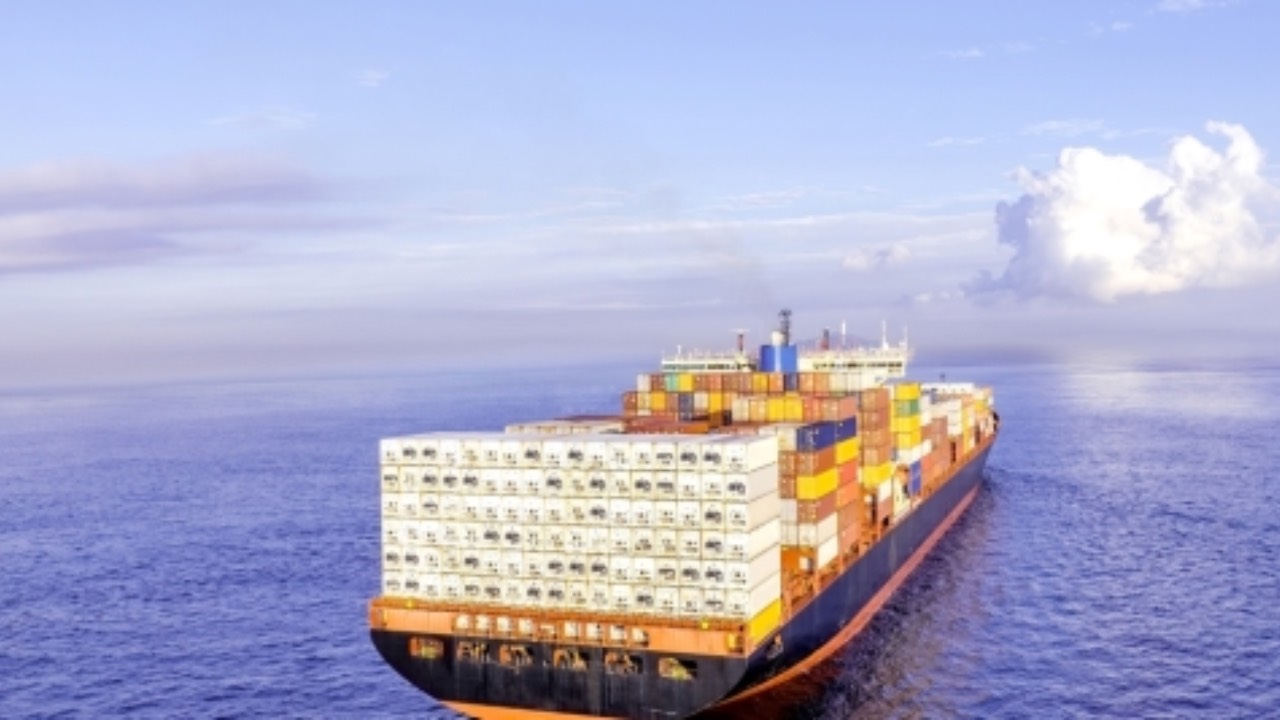
T&E was able to clearly observe significant methane emissions from two ships. The first of these was an LNG-powered container ship, the ‘Louvre’, owned by French shipping company CMA-CGM.
According to a peer review of the images carried out by TCHD Consulting, an optical gas imaging consultancy, the images from the Louvre are evidence that intense uncombusted hydrocarbon emissions were being released from the three exhaust vents into the atmosphere above the ship and outside the frame of the video.
According to CMA CGM, its LNG ships enable a significant reduction in CO2emissions per container and the company is investing heavily in LNG. Its website claims, “LNG is the best solution currently available to reduce the environmental impact of shipping.” There is no mention in any of its communication of methane, or how much methane typically slips from its vessels.
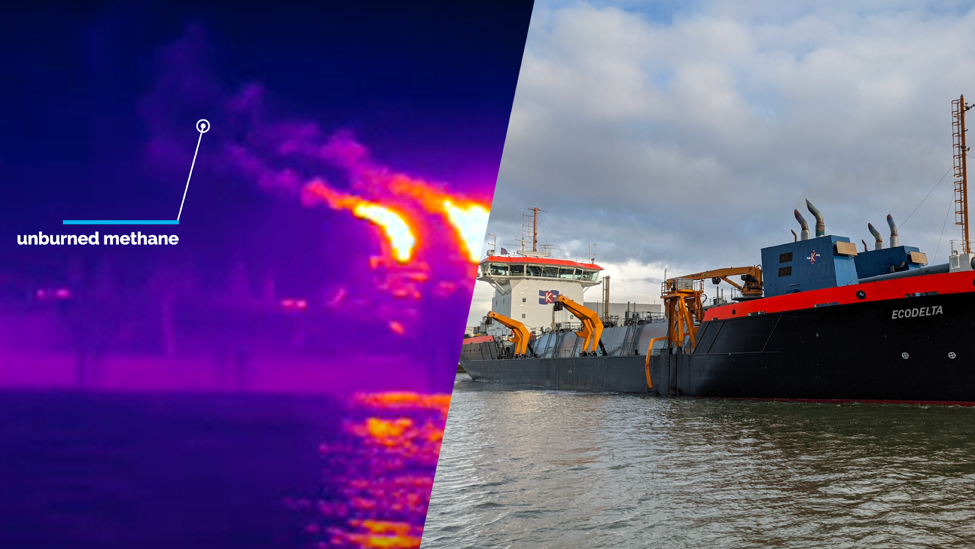
The second LNG-powered ship that T&E was able to track was the ‘Eco-Delta’, a dredger used to clear shipping lanes by pulling up sand from the sea bed. Again, uncombusted and partially combusted emissions were documented, with methane being released from two hot exhaust stacks on the front of the ship.
Shipowners commissioned more gas-fuelled vessels in 2021 than the four previous years combined, with LNG ships promoted as a clean alternative to traditional fuels. The fossil gas industry continues to lobby for LNG as a green shipping solution, pointing to low methane slippage based on their own data in what T&E says is increasingly looking like a ‘methane-gate’.
Last year, the EU proposed carbon intensity targets for marine fuels which would force shipowners to move away from residual fuel oil, the most widely used shipping fuel today.
However, T&E has warned that without sustainability safeguards this will simply lock in LNG as the cheapest alternative. Recent T&E analysis shows that over two-thirds of new ships could be powered with LNG from 2025. This would raise the share of fossil LNG from an estimated 6% today to over one-fifth of all marine fuels in Europe by 2030 and lock-in fossil fuel use into the 2040s.
Delphine Gozillon concluded: “We are in a climate crisis. We cannot afford to put more methane into the atmosphere. Our investigation is just a small sample, but it should act as a warning to policymakers. In promoting LNG, it is betting on the wrong horse. We should be focusing on genuinely green hydrogen-based solutions instead.”
For now, T&E’s investigation has been limited to two ships due to the complexity of carrying out such an investigation. LNG ships were located and tracked by matching marine traffic data and IHS data that specifies the engine and fuel type of ships.



Related News.

Cyprus Maritime Innovation takes Centre Stage at SMM Hamburg 2026
Underscoring its expanding role as a premier international hub for cutting-edge maritime technology and sustainable shipping, the Republic of Cyprus…

Trump seeks to refill US oil reserve with Venezuela deal but faces long delay
U.S. President Donald Trump said on the 30th (local time) that he would refill the U.S. Strategic Petroleum Reserve, which has been depleted with…
US Navy Official visits South Korean Shipyards in private
With U.S. President Donald Trump pushing a plan to allow overseas construction of U.S. warships, attention is focusing on whether the building of…
SES and De Boer Marine expand collaboration with FlexMaritime deployment across Global Markets
SES, a leading space solutions company, and De Boer Marine, a leading provider of top-quality marine equipment and maritime connectivity services,…

New ESG guidance to help maritime industry turn sustainability into commercial advantage
New framework helps shipowners and ports align ESG strategy with access to capital, charterer expectations and long-term asset value. Maritime…

Britannia P&I Club analysis finds four in five crew deaths linked to illness rather than accidents
New report highlights cardiovascular disease as leading cause of fatalities and raises concerns over mental health risks among younger seafarers.…

The Swedish Club launches new Loss Prevention podcast, Knot Another Lesson
The Swedish Club has launched Knot Another Lesson, a new podcast exploring the practical lessons, emerging risks and operational challenges shaping…

Lloyd’s Register appoints Jens Grunenberg as Senior Representative for Germany
Lloyd’s Register has appointed Jens Grunenberg as its Senior Representative for Germany, effective 1 September. Based in Hamburg, Grunenberg will…

Indian Register of Shipping sets sights on Hamburg for European Expansion
Indian Register of Shipping, a leading international classification society and full member of the International Association of Classification…
MOL completes Merger of 6 Ship Management Companies
Unifying Management of Over 200 Vessels and Strengthening Safety Mitsui O.S.K. Lines, announced that it has completed the integration of the MOL…
Subscribe to our newsletter!
if you dont want to swim alone in the ocean of news, sign up for the newsletter, and you will receive daily all the important news of world shipping!
