NOAA’s GOES-T Weather Satellite, built by Lockheed Martin, successfully launches
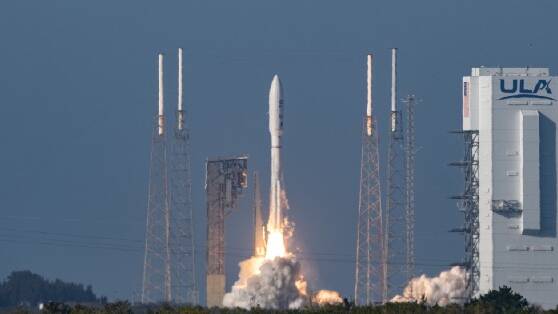

Space and Earth weather forecasting across the Western Hemisphere just got a little boost thanks to the Geostationary Operational Environmental Satellite (GOES-T), an advanced weather satellite built by Lockheed Martin [NYSE: LMT] for the National Oceanic and Atmospheric Administration (NOAA). The satellite successfully launched from Florida’s Space Coast at 4:38 p.m. ET.
“GOES-T’s launch is the culmination of innovative engineering, science and strong teamwork between NASA, NOAA and Lockheed Martin,” said Jagdeep Shergill, Lockheed Martin’s GOES-R chief engineer and program manager. “With the impact climate change has on weather patterns around the world, the work of satellites like GOES-T is more crucial than ever before, to help keep people safe now and in the future.”
GOES-T will be renamed GOES-18 when it reaches geostationary orbit. Once operational, GOES-18 will take GOES-17’s place tracking atmospheric rivers, floods, wildfires, drought, and other severe weather and climate phenomena over the West Coast of the United States.
Advanced Monitoring of Weather, Oceans and Climate
As climate change continues to drive more frequent and severe environmental impacts, the GOES-R satellite series – of which GOES-T is the third – uses sophisticated technology to put information in the hands of those who need it most, when they need it.
Before it starts collecting and sharing critical weather data, the satellite’s journey to space began in Littleton, Colorado, where it was designed and built by Lockheed Martin engineers.
Based on Lockheed Martin’s novel A2100 satellite bus design, the spacecraft features two high-tech instruments built by the company’s Advanced Technology Center in Palo Alto, California:
- Geostationary Lightning Mapper (GLM), which is a first-of-its-kind operational lightning mapper flown into its orbit, tracking lightning across the U.S. in real-time. By collecting data on the frequency, location and extent of lightning discharges, GLM allows meteorologists to quickly identify intensifying storms and take appropriate action. In 2020, GLM captured a lightning megaflash nearly 500 miles long that broke the world record for longest lightning flash.
- Solar Ultraviolet Imager (SUVI), focuses on space weather and measures the sun in extreme ultraviolet wavelength range and provides solar images. SUVI is essential to understanding active areas on the sun and predicting solar events that may disrupt power utilities, communication or navigation systems here on Earth.
Over its 10-year operational lifetime, GOES-T can produce over a terabyte of data per day and monitors severe weather continuously, supporting NOAA’s mission to provide weather data to save lives.
What’s After Lift Off?
Now that it’s in space, GOES-T will undergo an on-orbit checkout of its instruments and systems before beginning official operations in January 2023.
In addition to severe weather monitoring, it will do things like:
- Identify volcanic eruptions, even ones under the ocean, like the recent event near Tonga
- Measure land and sea surface temperatures to track drought conditions and warming oceans
- Provide early alerts to emergency responders for wildfires, including those caused by lightning strikes
- Observe solar flares that could impact telecommunication on and around Earth
With three of the four GOES-R weather satellites now launched, GOES-U, the last satellite in the series, is in production and planned for a 2024 launch.
Beyond the GOES-R series, Lockheed Martin looks forward to continued partnership with NASA and NOAA as they look ahead to future weather and climate missions.
More About the Mission
For over 50 years, Lockheed Martin has built and launched more than 120 weather and environmental spacecraft for our government’s civil and military agencies. NOAA’s present-day GOES-R Series is a collaborative acquisition and development effort between NOAA and the National Aeronautics and Space Administration (NASA) to develop, launch and operate weather satellites. NOAA operates the GOES satellites and produces and distributes data and information to users worldwide, while NASA oversees the acquisition of the spacecraft and instruments, in addition to the management of the launch through NASA’s Launch Services Program. Lockheed Martin is designing, building, testing, flying and envisioning advanced spacecraft that will enable future mission success and inspire the next generation of explorers.
Check out additional GOES-T facts, imagery and b-roll.
Source: Lockheed Martin



Related News.

Cyprus Maritime Innovation takes Centre Stage at SMM Hamburg 2026
Underscoring its expanding role as a premier international hub for cutting-edge maritime technology and sustainable shipping, the Republic of Cyprus…

Trump seeks to refill US oil reserve with Venezuela deal but faces long delay
U.S. President Donald Trump said on the 30th (local time) that he would refill the U.S. Strategic Petroleum Reserve, which has been depleted with…

US Navy Official visits South Korean Shipyards in private
With U.S. President Donald Trump pushing a plan to allow overseas construction of U.S. warships, attention is focusing on whether the building of…

SES and De Boer Marine expand collaboration with FlexMaritime deployment across Global Markets
SES, a leading space solutions company, and De Boer Marine, a leading provider of top-quality marine equipment and maritime connectivity services,…

New ESG guidance to help maritime industry turn sustainability into commercial advantage
New framework helps shipowners and ports align ESG strategy with access to capital, charterer expectations and long-term asset value. Maritime…

Britannia P&I Club analysis finds four in five crew deaths linked to illness rather than accidents
New report highlights cardiovascular disease as leading cause of fatalities and raises concerns over mental health risks among younger seafarers.…

The Swedish Club launches new Loss Prevention podcast, Knot Another Lesson
The Swedish Club has launched Knot Another Lesson, a new podcast exploring the practical lessons, emerging risks and operational challenges shaping…

Lloyd’s Register appoints Jens Grunenberg as Senior Representative for Germany
Lloyd’s Register has appointed Jens Grunenberg as its Senior Representative for Germany, effective 1 September. Based in Hamburg, Grunenberg will…

Indian Register of Shipping sets sights on Hamburg for European Expansion
Indian Register of Shipping, a leading international classification society and full member of the International Association of Classification…

MOL completes Merger of 6 Ship Management Companies
Unifying Management of Over 200 Vessels and Strengthening Safety Mitsui O.S.K. Lines, announced that it has completed the integration of the MOL…
Subscribe to our newsletter!
if you dont want to swim alone in the ocean of news, sign up for the newsletter, and you will receive daily all the important news of world shipping!
