Methanol as marine fuel moves into the era of practical, affordable engine retrofits
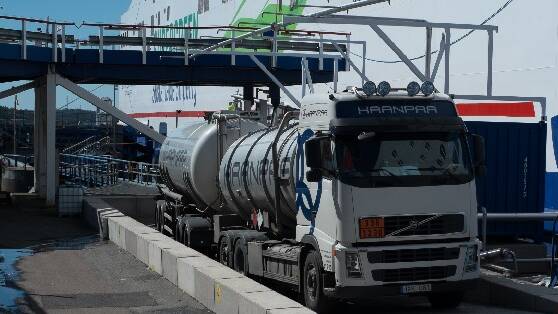

Increasing the retrofit options for two and four stroke engines reduces the investment risk for owners writes Chris Chatterton, Chief Operating Officer, The Methanol Institute
Pressure to reduce carbon emissions means shipowners must evaluate the use of future fuels before many of them are fully available. This has created uncertainty in the timing of newbuilding orders and around the engine choices available to buyers.
The latest developments in the OEM space suggest that the shipping industry is moving into an era when retrofits and conversions to alternative fuels become both possible and practical.
With the installed base of Methanol-dual fuel marine engines growing, the news that Wartsila has released a Methanol-capable version of its Wartsila 32 four-stroke platform has significant implications for shipowners and shipbuilders.
In addition, Wartsila has announced that it can retrofit electronically-controlled two-stroke engines to Methanol fuel in future. Minor modification makes possible a short conversion timeline and engines can be further adapted to use Ammonia in future.
As one of the two confirmed alternative fuel options available today Methanol can now be used in a broader range of newbuildings and vessel applications. In the longer term, the ability to convert conventionally-fuelled engines to Methanol provides an additional level of future proofing.
With the potential to build, as well as convert and retrofit to Methanol for both two and four-stroke engines, owners can make decisions with an increased degree of optionality and flexibility, knowing that conversion to Methanol will be a realistic option in future.
Beginning with the Carbon Intensity Indicator which will assign an emissions performance rating to all ships and require improvement for the poorest performing vessels, the ability to undertake conversions with relative simplicity and a short lead time means that owners can make decisions at the most optimal point in the cycle for their fleets and co-ordinate their strategy with regulatory timelines.
This includes incremental blending of carbon neutral methanol in progressive stages to further reduce CO2eq emissions, in line with national and international policies and thus allowing vessels to remain competitive.
In its Innovation Outlook: Renewable Methanol, the International Renewable Energy Agency (IRENA) concluded that for Methanol to play a role in the global energy transition, systemic investment throughout the value chain, including technology development, infrastructure and deployment is needed. The industry is responding to that challenge.
IRENA also noted that increasing production of renewable Methanol will provide the platform needed to support cost effective decarbonization. This expanded production will increasingly co-ordinate with regulatory developments, with the IMO MEPC looking at extending its measurement of emissions to cover the complete lifecycle.
In the longer term, the conversion of a two or four stroke engine to Methanol may not be the final stop on the journey as onward fuel flexibility increases and OEMs enable shipowners to look at other net carbon neutral fuels as they become available.
Methanol is already a powerful option. It has been proven as a safe, practical and viable marine fuel on vessels from the Stena ropax Germanica to multiple product tankers. New applications – from tugboats and crew transfer vessels, to windfarm installation vessels and containerships – demonstrate that owners can place orders with confidence that their choice is a sustainable one.
The Methanol Institute will take part in a webinar focussing on Methanol engines and conversions on 22 March. To register, click here.



Related News.
Cyprus Maritime Innovation takes Centre Stage at SMM Hamburg 2026
Underscoring its expanding role as a premier international hub for cutting-edge maritime technology and sustainable shipping, the Republic of Cyprus…

Trump seeks to refill US oil reserve with Venezuela deal but faces long delay
U.S. President Donald Trump said on the 30th (local time) that he would refill the U.S. Strategic Petroleum Reserve, which has been depleted with…
US Navy Official visits South Korean Shipyards in private
With U.S. President Donald Trump pushing a plan to allow overseas construction of U.S. warships, attention is focusing on whether the building of…

SES and De Boer Marine expand collaboration with FlexMaritime deployment across Global Markets
SES, a leading space solutions company, and De Boer Marine, a leading provider of top-quality marine equipment and maritime connectivity services,…

New ESG guidance to help maritime industry turn sustainability into commercial advantage
New framework helps shipowners and ports align ESG strategy with access to capital, charterer expectations and long-term asset value. Maritime…

Britannia P&I Club analysis finds four in five crew deaths linked to illness rather than accidents
New report highlights cardiovascular disease as leading cause of fatalities and raises concerns over mental health risks among younger seafarers.…

The Swedish Club launches new Loss Prevention podcast, Knot Another Lesson
The Swedish Club has launched Knot Another Lesson, a new podcast exploring the practical lessons, emerging risks and operational challenges shaping…

Lloyd’s Register appoints Jens Grunenberg as Senior Representative for Germany
Lloyd’s Register has appointed Jens Grunenberg as its Senior Representative for Germany, effective 1 September. Based in Hamburg, Grunenberg will…
Indian Register of Shipping sets sights on Hamburg for European Expansion
Indian Register of Shipping, a leading international classification society and full member of the International Association of Classification…
MOL completes Merger of 6 Ship Management Companies
Unifying Management of Over 200 Vessels and Strengthening Safety Mitsui O.S.K. Lines, announced that it has completed the integration of the MOL…
Subscribe to our newsletter!
if you dont want to swim alone in the ocean of news, sign up for the newsletter, and you will receive daily all the important news of world shipping!
