The biggest threat to climate transition comes from waiting until it is too late

At its plenary session on 24 February, the European Economic and Social Committee (EESC) presented its opinion entitled ‘Fit for 55’: delivering the EU’s 2030 Climate Target on the way to climate neutrality. The EESC has put forward concrete proposals to help accelerate the energy transition so as to enable the EU to reduce net greenhouse gas emissions by at least 55% by 2030.
Since 1880, the Earth’s average surface temperature has been rising by 0.07°C every decade. Previously we did not know what was causing this increase. Nowadays we have no excuse.
“We must not underestimate the sacrifices the Green Deal entails in order to reduce emissions to pre-industrial levels. We literally have to change the way we live, work, produce and consume”, stressed rapporteur Stefano Mallia, “and if Europe does not match expectations by taking the lead, someone else will come along and take its place”, he concluded.
Moreover, reaching the revised 2030 targets, as proposed in the Fit for 55 package, will unevenly affect regions, communities and individuals across Europe.
To address those concerns, the EESC recommends that the European Commission undertake granular mapping of the impact the transition will have on employment and skills in the different countries, regions and sectors, including on subcontractors and downstream value chains.
The rapid shift towards a decarbonised economy will entail massive challenges, especially for those most reliant on carbon-intensive sectors and industries. But the transition to green industry will create opportunities for others.
There is no one-size-fits-all solution. Measures aimed at driving the transition will have to be tailor-made, reflecting the different circumstances across Europe, bearing in mind the need for a level-playing field and Member States’ different starting points. At the same time, we have to ensure complementarity between the green and digital transitions, as well as across our climate, energy, transport, building, land-use and forestry measures, stressing the considerable need for policy coherence and recognising the interlinked nature of the climate and biodiversity crises.
“It is of utmost importance that adequate solidarity mechanisms are properly designed and adequately financed, towards a socially fair, competitive and green transition”, emphasised rapporteur Cillian Lohan.
Leaving no one behind also means including everyone
The transition to climate-zero, leaving no one behind, also means taking everyone on board and, most importantly, letting stakeholders take ownership of the process. Social partners and key civil society organisations have a critical role to play and must be involved in both the planning and implementation phases of the Fit for 55 package.
Therefore, “the EESC supports the establishment of tripartite ‘Just Transition Commissions’ to allow regional authorities, social partners and civil society organisations to participate in the implementation of the national and regional Just Transition plans”, stressed Mr Lohan.
The EU institutions should also develop additional proposals to mobilise massive public and private investment at European and national levels to support the transition in those sectors and regions that will need to be radically transformed. The Just Transition Fund represents a step in the right direction, but its size and scope should be significantly increased to match the massive low-carbon investment required.
Addressing climate change will have huge financial, social and environmental implications. “This is why we need to make sure that the Fit for 55 package is an important stepping-stone, rather than a stumbling-block, towards a net-zero European economy by 2050,” added Mr Mallia.
A model that results in a thriving economy
We need to embark on a model that results in a prosperous, sustainable and competitive economy. That is why the EESC is recommending that all the legislative proposals submitted within the framework of Fit for 55 undergo a competitiveness checkso that the full implications for enterprise are properly understood.
If we want the EU to be a frontrunner emulated by the rest of the world, we should aim to shape the most successful model – one that is just and sustainable from an economic, social and environmental viewpoint.
The EU today produces only 6.4% of global emissions; China produces 27%, the US 11%, and Russia’s emissions are on the rise. China has set the goal of reaching carbon neutrality by 2060; India’s goal is as far off as 2070.
Now, more than ever, it is essential to strengthen Europe’s energy independence.
EU climate diplomacy will play an important part in promoting the European approach, as Europe cannot do this alone.
The EESC opinion ‘Fit for 55’: delivering the EU’s 2030 Climate Target on the way to climate neutrality will shortly be availablehere.



Related News.
Cyprus Maritime Innovation takes Centre Stage at SMM Hamburg 2026
Underscoring its expanding role as a premier international hub for cutting-edge maritime technology and sustainable shipping, the Republic of Cyprus…

Trump seeks to refill US oil reserve with Venezuela deal but faces long delay
U.S. President Donald Trump said on the 30th (local time) that he would refill the U.S. Strategic Petroleum Reserve, which has been depleted with…
US Navy Official visits South Korean Shipyards in private
With U.S. President Donald Trump pushing a plan to allow overseas construction of U.S. warships, attention is focusing on whether the building of…
SES and De Boer Marine expand collaboration with FlexMaritime deployment across Global Markets
SES, a leading space solutions company, and De Boer Marine, a leading provider of top-quality marine equipment and maritime connectivity services,…
New ESG guidance to help maritime industry turn sustainability into commercial advantage
New framework helps shipowners and ports align ESG strategy with access to capital, charterer expectations and long-term asset value. Maritime…
Britannia P&I Club analysis finds four in five crew deaths linked to illness rather than accidents
New report highlights cardiovascular disease as leading cause of fatalities and raises concerns over mental health risks among younger seafarers.…
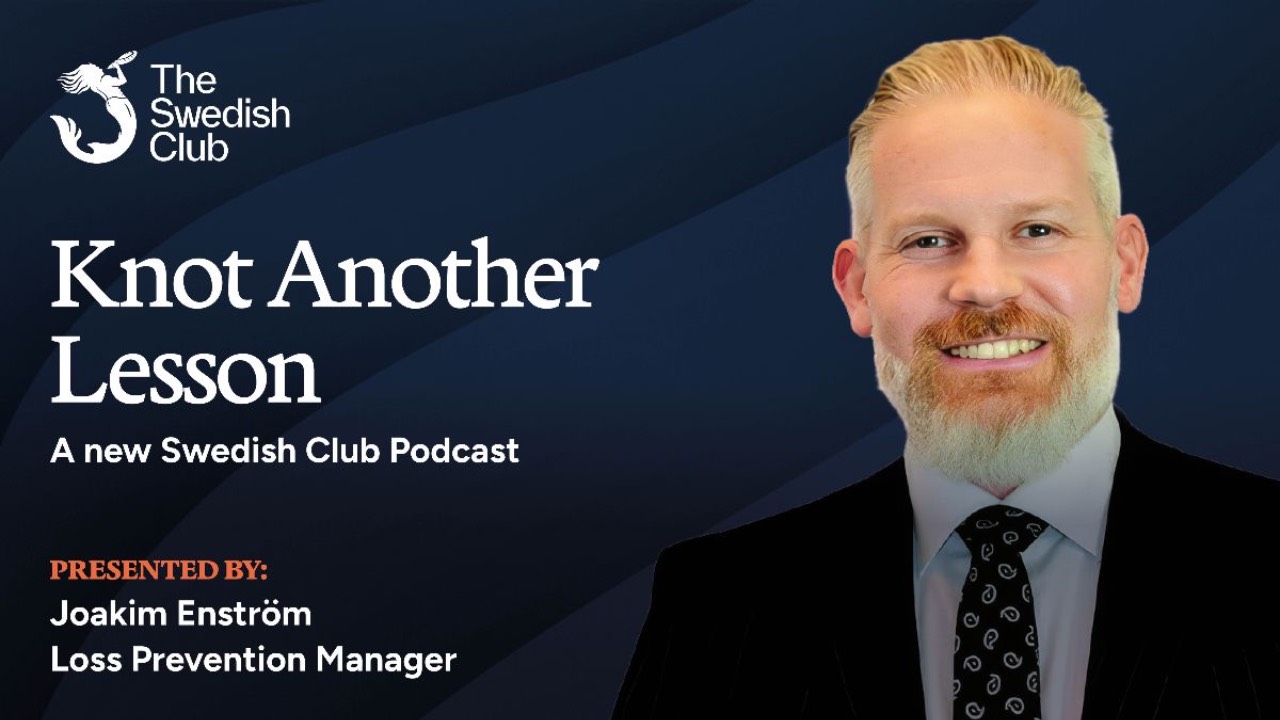
The Swedish Club launches new Loss Prevention podcast, Knot Another Lesson
The Swedish Club has launched Knot Another Lesson, a new podcast exploring the practical lessons, emerging risks and operational challenges shaping…

Lloyd’s Register appoints Jens Grunenberg as Senior Representative for Germany
Lloyd’s Register has appointed Jens Grunenberg as its Senior Representative for Germany, effective 1 September. Based in Hamburg, Grunenberg will…
Indian Register of Shipping sets sights on Hamburg for European Expansion
Indian Register of Shipping, a leading international classification society and full member of the International Association of Classification…
MOL completes Merger of 6 Ship Management Companies
Unifying Management of Over 200 Vessels and Strengthening Safety Mitsui O.S.K. Lines, announced that it has completed the integration of the MOL…
Subscribe to our newsletter!
if you dont want to swim alone in the ocean of news, sign up for the newsletter, and you will receive daily all the important news of world shipping!
