IMO Sub-Committee on Carriage of Cargoes and Containers, 7th session (CCC 7)
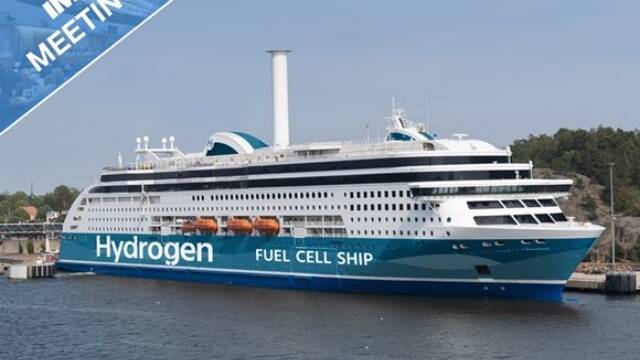

Fuel cells, fuel flashpoints, draft amendments to the IMDG and IMSBC Codes and more, were on the agenda for the 7th session of IMO’s Sub-Committee on Carriage of Cargoes and Containers (CCC 7), which was held 6-10 September 2021.
Draft interim guidelines for ships using fuel cells agreed by Sub-Committee
Draft interim guidelines aimed at providing provide international standard provisions for ships using fuel cell power installations have been agreed by IMO’s Sub-Committee on Carriage of Cargoes and Containers (CCC 7).
The draft interim guidelines cover issues including fire systems and gas/vapour detection. The guidelines and are intended to ensure the safe and reliable delivery of electrical and/or thermal energy through the use of fuel cell technology.
A fuel cell is a source of electrical power in which the chemical energy of a fuel cell fuel is converted directly into electrical and thermal energy by electrochemical oxidation. Fuel cells can operate using hydrogen (which has the potential to be explosive) as the fuel source.
The draft interim guidelines will be forwarded to the Maritime Safety Committee (MSC) for approval at its 105th session, scheduled to meet in April 2022.
The development of these interim guidelines for safety of ships using fuel cells is part of the important work being carried out by the Sub-Committee in the context of shipping’s need for new fuels and propulsion systems to meet decarbonisation ambitions set out in the Initial IMO GHG Strategy.
Matters related to newer types of fuel are considered under the agenda item on the International Code of Safety for Ships using Gases or other Low-flashpoint Fuels (IGF Code). The IGF Code, which entered into force in 2017, aims to minimize the risk to ships, their crews and the environment, given the nature of the fuels involved. It has initially focused on liquefied natural gas (LNG), but work is now underway to consider other relevant fuel types.
Interim guidelines for the safety of ships using methyl/ethyl alcohol as fuel have already been developed by the Sub-Committee and were approved by the MSC in 2020. (MSC.1/Circ.1621).
Amendments to guidelines relating to low flashpoint fuels requiring low temperatures
The Sub-Committee agreed various draft amendments to guidelines and Codes in relation to ships using or carrying fuels such as liquefied natural gas (LNG), which is cooled to very low (cryogenic) temperatures for carriage. The draft amendments relate to the utilization of high manganese austenitic steel, including corrosion testing for ammonia compatibility.
The Sub-Committee agreed:
- draft amendments to revise the guidelines for the acceptance of alternative metallic materials for cryogenic service in ships carrying liquefied gases in bulk and ships using gases or other low-flashpoint fuels (MSC.1/Circ.1622);
- draft amendments to IGF and the International Gas Carrier (IGC) Codes for incorporating high manganese austenitic steel into the Code as a suitable material;
- draft amendments to interim guidelines on the application of high manganese austenitic steel for cryogenic service (MSC.1/Circ.1599/Rev.1)
Austenitic steels, known to resist corrosion, are non-magnetic stainless steels that contain high levels of chromium and nickel and low levels of carbon.
Development of guidelines for the safety of ships using hydrogen as fuel initiated
The Sub-Committee considered a proposal to develop guidelines for the safety of ships using hydrogen as fuel. With overwhelming support from the Member States and international organizations, the Sub-Committee agreed to initiate the development of guidelines for the safety of ships using hydrogen as fuel.
Updated work plan to address new low flash-point fuels agreed
The Sub-Committee agreed an updated work plan for the development of safety provisions for new low-flashpoint fuels under the IGF Code, for consideration by MSC 105 (scheduled to meet in April 2022).
The work plan envisages, among other items, the development of guidelines for ships using hydrogen as fuel; the development of guidelines for ships using liquefied petroleum gas as fuel, the possible development of guidelines for ships using ammonia as fuel; and the development of draft amendments to the IGF Code for ships using natural gas.
The work plan also envisages future discussions on the development of mandatory instruments regarding the use of methyl/ethyl alcohols as fuel and the development of mandatory instruments regarding fuel cells.
Draft amendments to the IMDG and IMSBC Codes agreed
The Sub-Committee agreed the next set of draft amendments to the International Maritime Dangerous Goods (IMDG) Code and the International Maritime Solid Bulk Cargoes Code (IMSBC Code), which will be submitted to MSC 105 for adoption, following finalization by the Editorial and Technical (E&T) Group.
The draft amendments to the IMDG Code include those required to take account of changes to the United Nations Recommendations on the Transport of Dangerous Goods which sets the basic requirements for all transport modes.
The matters related to safe transport of charcoal and reviewing on maritime special provisions will be continued intersessionally by a correspondence group established by the Sub-Committee.
The draft amendments to the IMSBC Code include
- The reclassification of ammonium nitrate-based fertilizer, including draft new individual schedules for AMMONIUM NITRATE BASED FERTILIZER MHB and AMMONIUM NITRATE BASED FERTILIZER. These follow consideration of following up the recommendations of the report of the incident of the bulk carrier Cheshire, which suffered a fire while carrying a cargo of ammonium nitrate in 2017;
- Addition of new definitions relating to the phenomenon of “dynamic separation”, which means the means the phenomenon of forming a liquid slurry (water and fine solids) above the solid material, resulting in a free surface effect which may significantly affect the ship’s stability. Cargoes which may undergo dynamic separation are cargoes which contain a certain proportion of fine particles and a certain amount of moisture and may undergo dynamic separation if shipped at a moisture content in excess of their transportable moisture limit. This follows research into dangers related to the carriage of bauxite.
- Addition of new individual schedule for CLAM SHELL. This cargo of whole calm shells is a by-product generated in the process of clam farming.
- Addition of new individual schedule for LEACH RESIDUE CONTAINING LEAD, which is an intermediate by-product formed as a result of the hydrometallurgical production of zinc and/or zinc-compounds.
Revised inspection programmes for cargo transport units agreed
The Sub-Committee agreed the revised Inspection programmes for cargo transport units carrying dangerous goods (MSC.1/Circ.1442, as amended by MSC.1/Circ.1521), in order to broaden the inspection programmes for CTUs.
The objective of the Guidelines is to assist in the implementation of a uniform and safe inspection programme for the inspection of CTUs) carrying goods for international transport by sea, and to provide guidance relating to such inspections in accordance with applicable IMO instruments, such as the International Convention for the Safety of Life at Sea (SOLAS), the IMDG Code, the International Convention for Safe Containers (CSC) and related recommendations including the IMO/ILO/UNECE Code of Practice for Packing Cargo Transport Units (CTU Code).
The guidelines cover various aspects of inspection, including: documentation; structural safety; cargo, including marking and packaging; targeting methodology to identifying undeclared or misdeclared dangerous goods; general safety and pest contamination considerations.
The revised guidelines will be submitted to MSC 105 for approval.
Draft unified interpretations of the IGC Code agreed
The Sub-Committee agreed draft unified interpretations of the IGC Code, for submission to MSC 105 for approval.



Related News.
Cyprus Maritime Innovation takes Centre Stage at SMM Hamburg 2026
Underscoring its expanding role as a premier international hub for cutting-edge maritime technology and sustainable shipping, the Republic of Cyprus…

Trump seeks to refill US oil reserve with Venezuela deal but faces long delay
U.S. President Donald Trump said on the 30th (local time) that he would refill the U.S. Strategic Petroleum Reserve, which has been depleted with…
US Navy Official visits South Korean Shipyards in private
With U.S. President Donald Trump pushing a plan to allow overseas construction of U.S. warships, attention is focusing on whether the building of…

SES and De Boer Marine expand collaboration with FlexMaritime deployment across Global Markets
SES, a leading space solutions company, and De Boer Marine, a leading provider of top-quality marine equipment and maritime connectivity services,…

New ESG guidance to help maritime industry turn sustainability into commercial advantage
New framework helps shipowners and ports align ESG strategy with access to capital, charterer expectations and long-term asset value. Maritime…

Britannia P&I Club analysis finds four in five crew deaths linked to illness rather than accidents
New report highlights cardiovascular disease as leading cause of fatalities and raises concerns over mental health risks among younger seafarers.…
The Swedish Club launches new Loss Prevention podcast, Knot Another Lesson
The Swedish Club has launched Knot Another Lesson, a new podcast exploring the practical lessons, emerging risks and operational challenges shaping…

Lloyd’s Register appoints Jens Grunenberg as Senior Representative for Germany
Lloyd’s Register has appointed Jens Grunenberg as its Senior Representative for Germany, effective 1 September. Based in Hamburg, Grunenberg will…
Indian Register of Shipping sets sights on Hamburg for European Expansion
Indian Register of Shipping, a leading international classification society and full member of the International Association of Classification…
MOL completes Merger of 6 Ship Management Companies
Unifying Management of Over 200 Vessels and Strengthening Safety Mitsui O.S.K. Lines, announced that it has completed the integration of the MOL…
Subscribe to our newsletter!
if you dont want to swim alone in the ocean of news, sign up for the newsletter, and you will receive daily all the important news of world shipping!
