Carriage of Iron Ore Fines Cargoes – Liquefaction Risk
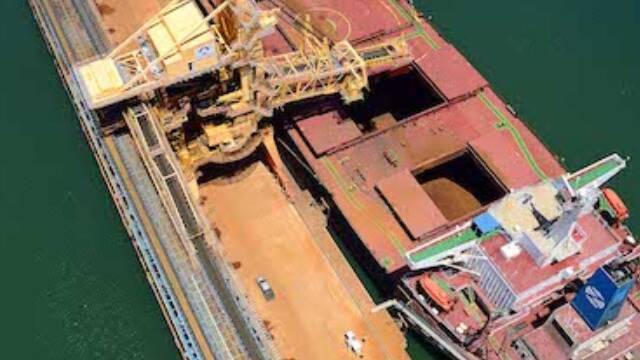

The International Group Clubs have recently issued a Circular referring Members to previous circulars and the risks arising from the carriage of mineral ores from certain jurisdictions, including possible liquefaction of such cargoes and the lack of a regulatory oversight at the loading ports. Iron ore fines are of increasing concern, particularly shipments from Sierra Leone arising from a phased restart of iron mines in the region and with vessels loading such cargoes in the port of Pepel.
The International Group understands that some cargoes of iron ore fines intended for shipment from the port of Pepel have been stockpiled outdoors uncovered for a prolonged period posing a particular risk of liquefaction during the wet season. It is also understood that some cargoes intended for shipment from Pepel have previously been considered too low grade for export and have been left in uncovered stockpiles for prolonged periods. They are now being blended with higher grade materials for export.
Club Members should be aware that iron ore fines shipped from Pepel with a high moisture content may liquefy. When the moisture content is above 14% the risk of liquefaction is very high. Typically, iron ore fines from the region will display moisture contents of between 13% and 16% during the wet season. In addition, it is normal for the upper surfaces of any stockpiled material to appear relatively dry during the dry season period but wet at increasing depths throughout the stockpiled material. It is important therefore that shippers carefully monitor, identify and separate those materials that require stockpiling and draining from those materials that are safe to ship.
Club Members should also be aware that anomalies and inconsistencies have been seen in declarations and test certificates provided by shippers for iron ore fines cargoes loaded for shipment from Pepel. That would suggest that some shippers are not adequately assessing or understanding the safety characteristics of the material intended for loading. Check tests run on such materials (by means of the can test) may also provide misleading results if not correctly interpreted. Club Members are reminded that the presence, or not, of surface water in the can should not be relied upon as a sole basis for acceptance of any such cargo for loading.
It is essential therefore that Club Members loading iron ore fine cargoes from Pepel, Sierra Leone obtain current, valid and accurate information from the shipper on the physical and chemical properties of the cargo presented for shipment. It is the shipper’s responsibility to ensure that the requirements and procedures for testing and analyzing the moisture content and transportable moisture limit of cargoes which may liquefy are complied with. Club Members are referred to previous circulars for the responsibilities of both shippers and the Master.
Early identification of any documentary discrepancies or concerns is key to providing a timely resolution before loading and therefore minimizing delays. Club Members should also ensure that they receive the shipper’s declaration and test certificates well in advance of loading in order to address any issues in good time. Club Members should seek further guidance from their Club if there are any concerns when loading iron ore fines cargoes when presented for shipment at the port of Pepel, Sierra Leone.
Carriage of Solid Bulk Cargoes – Liquefaction risk
Club Members are also advised that liquefaction of mineral ore cargoes continues to be a major concern across other exporting jurisdictions. Club Members are referred to previous circulars identifying the risks arising from the liquefaction of mineral ore cargoes from certain jurisdictions and the measures that Members should take when loading such cargoes for shipment, in particular:
- That the Master should be aware of his obligations under the IMSBC Code to only allow safe and compliant cargoes to be loaded and members should follow the ‘recommended precautions’ listed in the 2011 IG circular for all cargoes that contain fine particles, irrespective of the cargo group declared by the Shipper, and
- Members are reminded to comply with the ‘notification requirements’ of the 2012 IG circular, namely that members who plan to fix or charter a ship to load nickel ore from ports in Indonesia and the Philippines, or where under an existing fixture a ship is ordered to load such cargo, must notify the Club at the earliest opportunity.
If Club Members are in any doubt, then it is recommended that they contact their Club.
All Clubs in the International Group have issued similar circulars.



Related News.
Cyprus Maritime Innovation takes Centre Stage at SMM Hamburg 2026
Underscoring its expanding role as a premier international hub for cutting-edge maritime technology and sustainable shipping, the Republic of Cyprus…

Trump seeks to refill US oil reserve with Venezuela deal but faces long delay
U.S. President Donald Trump said on the 30th (local time) that he would refill the U.S. Strategic Petroleum Reserve, which has been depleted with…
US Navy Official visits South Korean Shipyards in private
With U.S. President Donald Trump pushing a plan to allow overseas construction of U.S. warships, attention is focusing on whether the building of…

SES and De Boer Marine expand collaboration with FlexMaritime deployment across Global Markets
SES, a leading space solutions company, and De Boer Marine, a leading provider of top-quality marine equipment and maritime connectivity services,…

New ESG guidance to help maritime industry turn sustainability into commercial advantage
New framework helps shipowners and ports align ESG strategy with access to capital, charterer expectations and long-term asset value. Maritime…

Britannia P&I Club analysis finds four in five crew deaths linked to illness rather than accidents
New report highlights cardiovascular disease as leading cause of fatalities and raises concerns over mental health risks among younger seafarers.…
The Swedish Club launches new Loss Prevention podcast, Knot Another Lesson
The Swedish Club has launched Knot Another Lesson, a new podcast exploring the practical lessons, emerging risks and operational challenges shaping…

Lloyd’s Register appoints Jens Grunenberg as Senior Representative for Germany
Lloyd’s Register has appointed Jens Grunenberg as its Senior Representative for Germany, effective 1 September. Based in Hamburg, Grunenberg will…
Indian Register of Shipping sets sights on Hamburg for European Expansion
Indian Register of Shipping, a leading international classification society and full member of the International Association of Classification…

MOL completes Merger of 6 Ship Management Companies
Unifying Management of Over 200 Vessels and Strengthening Safety Mitsui O.S.K. Lines, announced that it has completed the integration of the MOL…
Subscribe to our newsletter!
if you dont want to swim alone in the ocean of news, sign up for the newsletter, and you will receive daily all the important news of world shipping!
