Initiatives to reduce hull marine growth are essential to reach Klaveness Combination Carriers short-term decarbonization targets
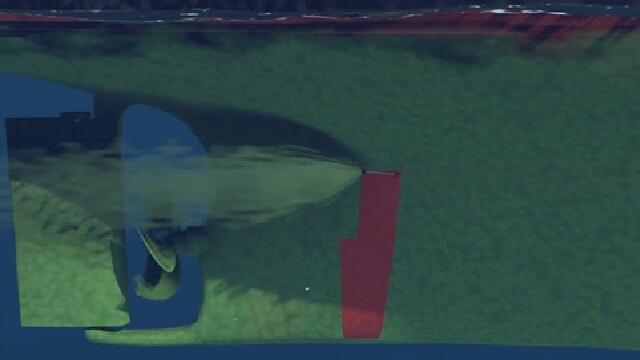

Klaveness Combination Carriers (KCC) are working determinedly to improve the energy efficiency of the combination carriers to reach their 2022 target of a 15% reduction in CO2 emission per vessel. An important part of this work is the ongoing focus on minimizing marine growth on the underwater hull of the vessels to reduce hull friction resistance.
Lower hull friction leads to lower fuel consumption and thereby reduced greenhouse gas emissions. KCC have initiated a number of projects focusing on marine growth to seek easier ways to monitor and inspect the state of hull growth, to prevent marine life to start growing on ships in the first place, and to remove existing hull growth – monitor, prevent and remove.
Propelling a combination carrier through the water requires a lot of energy, which is why the hull of our ships must be (as far as possible) kept free of marine growth. Biofouling, or hull marine growth, has bothered both ship owners and boat enthusiasts throughout history, and despite the gamut of today’s technologies, algae and barnacles will invariably continue to grow on rudders and hulls, increasing the additional emission of greenhouse gases by well over 10%. Reducing the growth of marine organisms on hulls is therefore, a “low hanging fruit” ship efficiency measure to reach the short term strategy target of reducing average absolute fuel consumption and CO2 emissions per vessel by a minimum of 15% within 2022.
Better monitoring to keep the ships free of marine growth
In addition to monitoring the ship’s performance closely by analyzing the vessel’s performance speed and fuel consumption, KCC have increased the frequency of performing hull inspections in port. This enables them to better select the right timing for the ship to undergo a manual hull cleaning and propeller polishing. To reduce time and costs of hull inspections they are currently piloting an underwater drone from Blueye on two of the vessels. With Blueeye’s technology they perform more frequent hull inspections and make better visually informed decisions on the vessel’s need for hull/propeller cleaning. In addition, KCC are also involved in a research project to use machine learning to predict the state of hull growth based on the type of coating, time since last cleaning, sea water conditions etc. By looking at the increased fuel consumption after idling they can predict the growth rate of marine organisms, and by adding the sea water temperature as a parameter they can see the change in growth rates between arctic, temperate and tropical waters.
Preventing the initial growth of biofilm, the basis of all biofouling and marine growth
KCC are also currently testing the use of an ultrasound device to prevent the initial growth of biofilm on the propeller. They use the Blueye drone to document the effectiveness of the ultrasound device to keep the propeller free of marine growth.
Ultrasound is not the only technical measure to prevent marine growth on hulls. Hull paints and marine coating systems have over the last decades revolutionized the fight against algae and other marine organisms, Development of advanced, high-tech coating solutions that not only consist of several layers of materials with different purposes, but also contain slow-releasing biocides that prevents biofouling. They are now testing out several different advanced silicone-based hull coatings. If applied correctly, this hull coating might eliminate the need for manual hull cleaning between dry docks entirely, keeping the hull smooth and emissions down.
Efficient and environmentally friendly removal of hull growth
Unfortunately, hull coatings wear off. Some are eroded when sailing through sandy waters, while others lose their antifouling properties with time. Life always finds a way to grow, and at the end, biofouling and eventually marine growth is inevitable and must at some point be removed. Manually cleaning the hull using divers in ports may not be possible in some of the ports, partly due to environmental concerns. KCC are therefore testing out novel technologies developed by the Norwegian company Shipshave AS making it possible to remove the biofouling while the vessel is sailing. Shipshave’s In-Transit Cleaning of Hull (ITCH) is a semi-autonomous hull cleaning robot, tethered to a winch on the foredeck of the vessel. The robot cleans the hull using soft brushes that move up and down the side hull, traveling with a defined pattern with controlled brush forces. Removed growth falls into the deep and creates no harm to the ecological system either. The focus of the ITCH is to remove the initial layer of biofilm to prevent growth of harder biofouling such as barnacles, but it is also proven to remove settled fouling.
There is yet much to learn, and as the fleet is growing by the month, so is KCC’s focus on this type of growth.



Related News.
Cyprus Maritime Innovation takes Centre Stage at SMM Hamburg 2026
Underscoring its expanding role as a premier international hub for cutting-edge maritime technology and sustainable shipping, the Republic of Cyprus…

Trump seeks to refill US oil reserve with Venezuela deal but faces long delay
U.S. President Donald Trump said on the 30th (local time) that he would refill the U.S. Strategic Petroleum Reserve, which has been depleted with…
US Navy Official visits South Korean Shipyards in private
With U.S. President Donald Trump pushing a plan to allow overseas construction of U.S. warships, attention is focusing on whether the building of…
SES and De Boer Marine expand collaboration with FlexMaritime deployment across Global Markets
SES, a leading space solutions company, and De Boer Marine, a leading provider of top-quality marine equipment and maritime connectivity services,…
New ESG guidance to help maritime industry turn sustainability into commercial advantage
New framework helps shipowners and ports align ESG strategy with access to capital, charterer expectations and long-term asset value. Maritime…

Britannia P&I Club analysis finds four in five crew deaths linked to illness rather than accidents
New report highlights cardiovascular disease as leading cause of fatalities and raises concerns over mental health risks among younger seafarers.…
The Swedish Club launches new Loss Prevention podcast, Knot Another Lesson
The Swedish Club has launched Knot Another Lesson, a new podcast exploring the practical lessons, emerging risks and operational challenges shaping…

Lloyd’s Register appoints Jens Grunenberg as Senior Representative for Germany
Lloyd’s Register has appointed Jens Grunenberg as its Senior Representative for Germany, effective 1 September. Based in Hamburg, Grunenberg will…
Indian Register of Shipping sets sights on Hamburg for European Expansion
Indian Register of Shipping, a leading international classification society and full member of the International Association of Classification…
MOL completes Merger of 6 Ship Management Companies
Unifying Management of Over 200 Vessels and Strengthening Safety Mitsui O.S.K. Lines, announced that it has completed the integration of the MOL…
Subscribe to our newsletter!
if you dont want to swim alone in the ocean of news, sign up for the newsletter, and you will receive daily all the important news of world shipping!
