Feeding the energy hungry industries


As the energy intensive industries face challenges in order to mitigate CO2 emissions, breakthrough technologies can contribute to their decarbonisation
Around 25% of all global greenhouse gas (GHG) emissions are produced by industry. However, today, investments in zero-emission technologies are rapidly catching up with investments in fossil fuel energy.
The energy-hungry or so-called energy intensive industries (EII) face important challenges in order to mitigate their CO2 emissions: the application of best available technologies (BATs) will only be able to reduce emissions by 15–30%. Reductions beyond this limit will require new investment and fundamental changes in the core processes used. Furthermore, the latter will be based on new ‘breakthrough technologies’ that need further development to become both technically and commercially viable.
RINA has been a pioneer in alternative iron ore reduction, and hydrogenbased steel production. In the 1980s, it designed and realised one of the first plasma-based reducing furnaces in Europe which it still operates today. Today RINA is a leading technological innovator in the reduction of energy consumption and carbon dioxide emissions by the energy intensive industries (EII). Among the many projects RINA is involved in, we can mention:
- GreenEAF: (EU-funded project) this is focused on the application of char from biomass as a fossil coal substitute in steelmaking. This brings significant reductions in CO2 emissions, and will stimulate the development of new business opportunities (15% of CO2 emission reduction is achieved through biomass utilization);
- LowCarbonFuture: (EU-funded project) this is a dissemination project aimed at defining a road map for industry decarbonisation (up to 95%, according to ongoing innovative European projects);
- Polynspire: (EU funded project) this project is aimed at the exploitation of low-grade plastics (representing more than 350,000 tons per year in Italy); such materials, which are discharged from the recycling route, can be used as carbon bearing materials replacing fossil coal (an example of industrial symbiosis and the circular economy).
Industry decarbonisation, and the application of breakthrough technologies, will require the following: optimization of production cycles and efficiency improvements, waste heat recovery, the utilization of renewable sources, the application of carbon capture and storage, and the utilization of green hydrogen as a substitute to fossil fuel materials.
RINA is able to support the EII in developing and implementing technological solutions to reduce CO2. This support can range from analysis of available technologies, to the definition of alternative technological solutions. It is also able to use Digital Twin processes to assess new technological solutions, carry out R&D activities on behalf of the EII on new technologies, identify the most suitable funding schemes, and prepare research proposals. RINA can also assist with full industrial process digitalization with 4.0 solutions, coupled with Machine Learning and Big Data Analysis.
Source: RINA



Related News.
Columbia Group calls for greater focus on retaining women at sea as second She Beyond Conference takes place
Columbia Group has called on the maritime industry to create a future where women can thrive, progress and lead at sea, as it celebrated the second…
Neptune Group Welcomes “NIKOS TRAVLOS”
The new vessel proudly bears the name of Neptune's founder, who laid the foundation for the creation and enduring evolution of the Group. Her…

Wildcat Defense enters into exclusive agreement to acquire Fraser Shipyards
American family firm takes the next step in its strategy to rebuild U.S. shipbuilding and repair capacity, following its offer for Austal USA.…
Kawasaki signs strategic partnership MOU with Romania’s Transgaz for Onshore Hydrogen Gas Transport
Establishing a model for large-scale hydrogen supply and transport via pipelines Kawasaki Heavy Industries, announced at the Romania–Japan…

UK P&I Club and TT Club secure regulatory approval for Thomas Miller acquisition
The UK P&I Club and TT Club announce the successful completion of their joint acquisition of the Thomas Miller Holdings group, marking a major…
Valenciaport presents its Sandbox at PEIC’26 as a tool to bridge the gap between innovation and implementation
The opening session featured a discussion between Valenciaport President Mar Chao and Valenciaport Foundation Director Antonio Torregrosa. The…

Major investments strengthen Gothenburg RoRo Terminal
Expanded terminal areas, new rail connections and modernised quays are among the investments that have strengthened Gothenburg RoRo Terminal in…

ABP appoints key roles in the Humber
Associated British Ports has made two key appointments at its container terminals strengthening its unitised operations at the ports of Immingham…
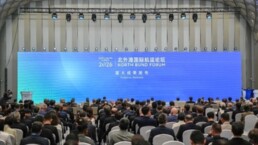
Xinhua Silk Road 2026 North Bund Forum unveils 20 shipping-related achievements
The 2026 North Bund Forum opened in Shanghai on October 20 with 20 key shipping-related achievements spanning international cooperation, green…

Ports encouraged to prepare now for advanced nuclear in maritime and clean energy
New joint Lloyd’s Register and British Ports Association paper sets out a practical readiness pathway for ports considering nuclear-powered vessels,…
Subscribe to our newsletter!
if you dont want to swim alone in the ocean of news, sign up for the newsletter, and you will receive daily all the important news of world shipping!
