Wallenius Marine AB joins International Windship Association
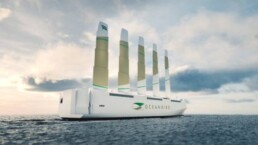

Oceanbird is like no other cargo vessel. Mostly because of its 80 metres high wings, which gives the ship enough power to transport 7,000 cars across the ocean.
Evolution equipped birds with wings to enable them to harness the power of the wind. It’s the same with Oceanbird. But instead of feathers, the wings are made of steel and composite materials. Thanks to a telescopic function, the wings can be reduced to a quarter of its length – from 80 to 20 metres. This function is key for several reasons, most important being:
- Being able to pass under bridges.
- Reducing the maximum air draft of the ship in port.
- Reducing rig forces in strong winds.
- Enable maintenance of wings.
- Improve performance in wider wind range.
Why telescopic?
The team behind Oceanbird considered a folding rig earlier in the project. A telescopic solution where you can adjust the height of the sails by pushing sections up and down, have many advantages. The construction is more robust, it´s possible to quickly get rid of wind power and it also saves space upon deck. You don’t have to expose the whole sailing area if you just need a small amount of power. The telescopic solution is also more efficient from a sailing performance point of view.

Soft vs hard sails
It is close at hand to compare Oceanbird with traditional sailboats, but there is a lot that differentiates them. The most prominent is the sails. For Oceanbird to efficiently carry 7,000 cars across the Atlantic the vessel is equipped with five rigid wing sails, rather than traditional soft sails.
“The rigid wing sails have the advantage of providing both superior performance and durability compared to soft sails” says Mikael Razola, project leader at Wallenius Marine.
Aerodynamic ship design
Designing Oceanbird, we have to pay much more attention to the aerodynamics than we normally do. Not only do the wings have more in common with airplane wings than traditional sails, they also interact with the hull in a very complex way. We have spent significant effort in designing all the different parts of Oceanbird exposed to the wind as an integrated system. This means that we can actually harness the power of wind in a very efficient way, where the different parts of the hull and wings are working closely together, boosting the vessel performance.
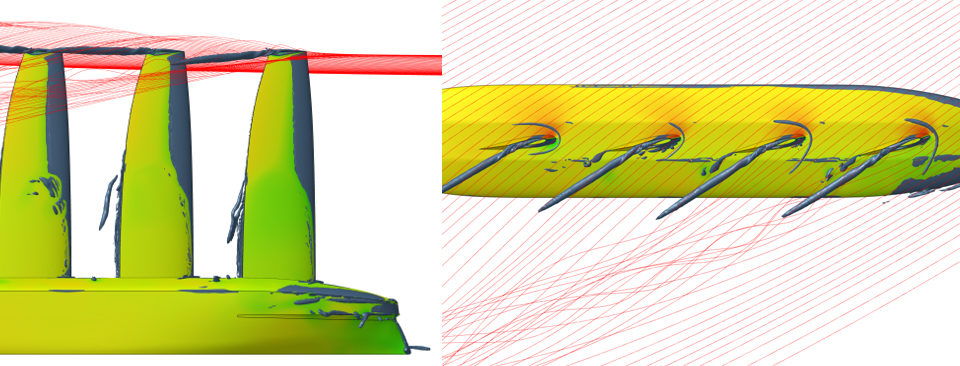
Wings can turn 360 degrees
The wings will be able to turn 360 degrees, and all five can be in different positions.
“For optimal performance the wings are not synchronized in the way that they are all aligned in the same direction. Rather, there are variations along the length of the ship. A control system that monitor for example wind direction and wing loads, will determine the optimal positioning.”
Building Oceanbird
One question that we have received after the launch of Oceanbird, is if existing ship yards have the capability to build this complex design.
“Absolutely. High-quality shipyards have great competence in familiarizing themselves with new constructions. The wings may be a different story as they, at least initially, will need some extraordinary production skills. ”



Related News.

OL Shipping Group in Tokyo: Capt. Eberhard Koch calls for realistic solutions to Maritime Decarbonisation
An intensive and engaging couple of days in Tokyo brought together leading figures from the international maritime community, providing a valuable…
Regatta for Peace one of the largest ever in Cyprus
Cyprus will host the first European stop on a global sailing journey leading up to the 2027 America’s Cup in Naples. More than 120 sailors…
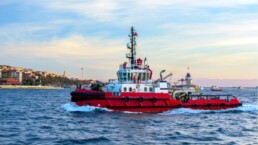
The propulsion technology powering the marine energy transition
The marine industry is under increasing pressure to future-proof fleets, balancing the need to reduce emissions and improve efficiency. Propulsion…
Signal Ocean acquires Lgmar
Signal Ocean announced the acquisition of Lgmar, the Athens-based company behind Telix, a maritime email and communication platform in daily use…

Canada clean power push challenged by interprovincial grid limits, says GlobalData
Canada is entering a pivotal phase of power-sector expansion as federal tax credits, the phase-out of coal-fired generation, and accelerating…

Maritime safety depends on human factors and leadership, not procedures alone
Interim survey findings point to a gap between seafarers’ perceptions of risk and injury data Seafarers may misjudge when and where they are most at…

New BIMCO contracts tackle ship recycling and energy-saving retrofits
BIMCO adopted two new contractual solutions designed to help you manage important operational and regulatory challenges: the revised…
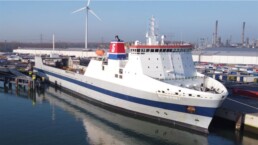
Stena Line to acquire vessel and make changes to its network
Stena Line has reached an agreement to acquire the RoRo vessel Somerset from CLdN. Subject to closure and transfer, the vessel would begin operating…
DORIC WEEKLY INSIGHT 16 OCTOBER 2026
Please find below the DORIC Market Insight for the week ending 16th October 2026. Weekly Report 16.10.2026

Important information for port clients and freight carriers effective November 1, a new traffic overpass and port checkpoint will open for traffic to the Port of Riga on Kundziņsala
Starting November 1 of this year, a new traffic overpass connecting Tvaika Street to Kundziņsala will open to facilitate traffic to and from the Port…
Subscribe to our newsletter!
if you dont want to swim alone in the ocean of news, sign up for the newsletter, and you will receive daily all the important news of world shipping!
