Guide to Nickel Ore Cargo Philippines 2020
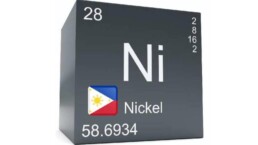

The UK Club is pleased to share the below guide from Club correspondents PANDIMAN PHILIPPINES. The guide outlines the potential dangers related to Nickel ore cargo, locations of loading areas, the importance of sampling and certification and additional local guidance.
Nickel Ore Cargo from the Philippines
The potential danger from a cargo of nickel ore liquefying can not be stressed enough, tragically high-lighted by the unnecessary loss of life onboard three vessels which sank in late 2010, two in late 2011, one early 2015 and recently late 2017. Strict adherence to good industry practice for the analysis, monitoring and loading of a cargo of nickel ore in compliance with IMSBC Code is paramount. The nickel ore trade in the Philippines is one of the busiest in the world and there are clear documented concerns as to the veracity of the loading certificates being provided the local mines “in-house” laboratories. This has been based on comparison analysis of cargo undertaken at independent laboratories. That analysis protocol being undertaken for the determination of the moisture content, Flow Moisture Point (FMP) is not in line with the IMSBC Code.
There are additional concerns, mines stock pile nickel ore in open conditions on or near the foreshore, there are no actual piers or port facilities at the locations and the ore is loaded offshore at anchor via barges. The ore is unprocessed and is obtained from open cast mining and therefore exposed to the elements, especially rain during monsoon seasons, however in recent years the clear demarcation between dry and wet seasons has diminished and rain can be experienced any time of the year.
There is an unwillingness by the local mines to allow a joint survey by independent experts on behalf of the ship owner. This has resulted in vessels being withdrawn and sail without loading the cargo of nickel ore. The primary consideration being the safety of the crew and the vessel as the cargo could not be scientifically proved to be safe for carriage under the IMSBC Code.
A major concern for ship owners and their P&I Clubs is the property of the nickel ore, which when carried in bulk, can liquefy through the motion of the ship in a seaway or vibration of the ship through main engine/on board machinery. This ability of the cargo to transform from an apparent solid state to a liquid one when the cargo has a high moisture content can have serious and catastrophic effects to the vessels stability and has resulted in vessels capsizing and sinking within minutes. This property of the cargo should not be mistaken with free surface effect (sloshing), the cargo during liquefaction undergoes a metamorphosis between a solid to a liquid, changing between these states unexpectedly and is a dynamic shift. Once the cargo has shifted it will not come back, this shift resulting in the loss of the vessels stability with resulting list or capsizing.
The full guide can be downloaded below.
Source: UK P&I



Related News.

OL Shipping Group in Tokyo: Capt. Eberhard Koch calls for realistic solutions to Maritime Decarbonisation
An intensive and engaging couple of days in Tokyo brought together leading figures from the international maritime community, providing a valuable…
Regatta for Peace one of the largest ever in Cyprus
Cyprus will host the first European stop on a global sailing journey leading up to the 2027 America’s Cup in Naples. More than 120 sailors…
The propulsion technology powering the marine energy transition
The marine industry is under increasing pressure to future-proof fleets, balancing the need to reduce emissions and improve efficiency. Propulsion…
Signal Ocean acquires Lgmar
Signal Ocean announced the acquisition of Lgmar, the Athens-based company behind Telix, a maritime email and communication platform in daily use…

Canada clean power push challenged by interprovincial grid limits, says GlobalData
Canada is entering a pivotal phase of power-sector expansion as federal tax credits, the phase-out of coal-fired generation, and accelerating…

Maritime safety depends on human factors and leadership, not procedures alone
Interim survey findings point to a gap between seafarers’ perceptions of risk and injury data Seafarers may misjudge when and where they are most at…

New BIMCO contracts tackle ship recycling and energy-saving retrofits
BIMCO adopted two new contractual solutions designed to help you manage important operational and regulatory challenges: the revised…
Stena Line to acquire vessel and make changes to its network
Stena Line has reached an agreement to acquire the RoRo vessel Somerset from CLdN. Subject to closure and transfer, the vessel would begin operating…
DORIC WEEKLY INSIGHT 16 OCTOBER 2026
Please find below the DORIC Market Insight for the week ending 16th October 2026. Weekly Report 16.10.2026

Important information for port clients and freight carriers effective November 1, a new traffic overpass and port checkpoint will open for traffic to the Port of Riga on Kundziņsala
Starting November 1 of this year, a new traffic overpass connecting Tvaika Street to Kundziņsala will open to facilitate traffic to and from the Port…
Subscribe to our newsletter!
if you dont want to swim alone in the ocean of news, sign up for the newsletter, and you will receive daily all the important news of world shipping!
