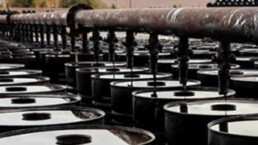

As U.S. shale oil boomed last decade, an oil pipeline company pitched an ambitious multi-billion-dollar export port off the Texas coast to ship domestic crude to buyers in Europe and Asia.
In April, Enterprise Products Partners’ EPD.N SPOT became the first project to receive a license from the U.S. maritime regulator for a deepwater port that could load two supertankers, each of which can carry up to 2 million barrels of oil at a time.
But multi-year regulatory delays, a loss of commercial backers and slowing U.S. shale production has left SPOT, or Sea Port Oil Terminal, and its three rival projects without any secured customers, energy industry executives say.
“There are a lot of gray areas right now with export projects,” said Zack Van Everen, an oil analyst at energy investment banker Tudor Pickering Holt & Co.
Enterprise declined to make an executive available for an interview, but said it continues to develop the project.
Shale producers and traders rely on ports to get their oil to market and are balking at the higher-than-expected loading fees for new projects even if they are able to fully load supertankers, executives said.
HIGHER COSTS
SPOT, proposed for a point 30 miles off the Gulf coast in 2019, is the only Texas deepwater project with its government approvals. But its cost has soared to about $3 billion, two industry experts said, from an original estimate of $1.85 billion for Enterprise.
It has no long-term customer contracts, or joint venture partners,stalling a financial green light from the company, sources said. The project, if approved, is currently expected to start up in 2027.
A customer willing to commit the largest volume is being offered a $1 per barrel rate by Enterprise to load at SPOT oil transferred from its Houston storage terminal, three people familiar the terms said. Clients with smaller loads have been offered an about $1.20 a barrel fee.
That compares with the all-in cost of about 75 cents per barrel to load in Corpus Christi, Texas, the top U.S. oil export port, a source familiar with export operations said.
To sweeten the deal, Enterprise is offering preferential terms for loading schedules, and may bundle some of its other services to make the price more competitive, two of the people said.
Enterprise disputed the fees, but declined to provide the project’s cost and the per barrel terms.
A deepwater port allows customers to load oil directly onto a supertanker, eliminating the additional cost of loading the oil on smaller ships at shallower ports and then transferring the crude from the smaller vessels to larger ones.
But it has lost Chevron CVX.N as an early backer because of the regulatory delays to secure a license, and Canadian oil pipeline operator Enbridge has released its option to take a stake in SPOT, Enterprise said.
Chevron declined to comment on commercial matters.
An Enbridge spokesperson said it views SPOT “as a valuable option for our Canadian heavy crude customers to be able to access the project,” but declined further comment.
LESS NEED FOR DEEPWATER PORTS
U.S. exports of crude rose to a peak of 5.6 million bpd in February 2023, and existing facilities can handle as much as another 1.5 million barrels, though port congestion could limit that number, according to RBN Energy. Russia’s invasion of Ukraine also has shifted global flows with more U.S. vessels going to Europe instead of Asia, which were primarily geared to using supertankers.
“The short-term dynamic is less need for big ship capacity, which actually fits the current U.S. export capacity a lot better,” Colin Parfitt, Chevron’s vice president of midstream, said in an interview in March.
Changing flows and slowing shale output gains have created uncertainty for shippers. “That’s changed the dynamic a little about how people want these (deepwater ports),” Parfitt said. “If you get one built, it is going to crowd out the others.”
Currently, there is one U.S. offshore port – called the Louisiana Offshore Oil Port – that can fully load supertankers. However it primarily handles oil produced in the Gulf of Mexico and has few pipes that link to the top U.S. shale field, the Permian, in West Texas.
SPOT’s largest target would be moving shale oil, and those output gains have slowed dramatically. U.S production is expected to rise 280,000 barrels per day to 13.21 million bpd this year, according to the U.S. Energy Information Administration. That compared with a one-year gain of 1.6 million bpd in 2018.
Enterprise said this month that it projects growth in and around the Permian basin past 2030.
Consolidation among top shale players, like Exxon Mobil’s XOM.N recent purchase of Pioneer Natural Resources PXD.N, also took away customers for Enterprise and other players, with some of the largest shale drillers already holding long-term contracts with existing export facilities.
Of the three other deepwater port projects along the Texas coast, private-equity backed Sentinel Midstream, oil refiner Phillips 66 PSX.N and pipeline operator Energy Transfer ET.N each have sought U.S. approvals for offshore ports. So far, none have received licenses.
“Between the current dock capacity along the U.S. Gulf Coast, and the most aggressive production projections, it appears that one, at most two,” could proceed, said oil export consultant Brett Hunter of Energy Hunter LLC.
Source: Reuters reported by Arathy Somasekhar in Houston and edited by Gary McWilliams and Anna Driver



Related News.

RINA’s Hellenic Technical Committee puts energy-efficient newbuilding design and AI in focus
Project Mermaid, battery integration and practical AI applications highlight opportunities for more efficient ship design and fleet operations…
From mine to market – NORDEN connects Comilog’s manganese ore with global markets
NORDEN’s dedicated transhipment operation in Gabon, run under a long term contract with long-standing customer Comilog, has loaded more than 54…
Oldendorff reflags two capesize vessels to Germany
Oldendorff Carriers is reflagging two of its Capesize bulk carriers to Germany, underlining the company’s long standing ties to the country and its…

AskChief surpasses 100-vessel milestone in under a year and opens its specialised maritime AI to the wider market
Putting each company’s own knowledge to work for maritime Technical and HSQE teams. AskChief, Specialised AI for maritime Technical and HSQE…

Dalian Maritime University’s Yu Jiajia receive 2027 IMO Gender Equality Award
From the bridge to the classroom, Ms Yu has helped build a more inclusive maritime sector in China, serving as a role model for the global maritime…
“K” LINE releases video update on forecasts for FY2026 and progress of the medium-term management plan
Kawasaki Kisen Kaisha, has released a video on its official website explaining its forecasts for FY2026 and progress of its Medium-Term Management…
 …
MOL and MOL CAREER sign 3-way deal with Nagasaki Prefecture to promote recruitment and retention of foreign workers
Mitsui O.S.K. Lines, and MOL CAREER, have entered into a tripartite partnership agreement with Nagasaki Prefecture to promote the revitalization of…
Hapag-Lloyd completes acquisition of 25% stake in APM Terminals Maasvlakte II
Transaction successfully completed following antitrust approval Investment strengthens Hapag-Lloyd’s terminal portfolio and position in Rotterdam…

11th chainPORT annual meeting at Tanger Med Focuses on scaling AI in ports
Representatives from leading ports around the world gathered in Tangier, Morocco, on 29 and 30 October for the 11th chainPORT Annual Meeting, hosted…
Subscribe to our newsletter!
if you dont want to swim alone in the ocean of news, sign up for the newsletter, and you will receive daily all the important news of world shipping!
