Loss prevention remains a vital element in ensuring the insurability of maritime risk

The International Union of Marine Insurance’s (IUMI) two-week online conference continued today with a comprehensive loss prevention workshop chaired by Uwe-Peter Schieder, from German Insurance Association, GDV and Mariella Dauphinee from Intact Insurance Company.
Both were keen to highlight the role of loss prevention managers and their role in identifying, quantifying and mitigating risk as an enabler of the underwriting process. Schieder explained:
“Risk is inherent within the marine sector and the profile changes as our industry evolves. It is the job of the loss prevention manager to be aware of these changes and to identify how the associated risk has altered. Before a risk can be priced, it must first be fully understood in terms of its likely impact and also the measures that might be implemented to lessen that impact.”
Schieder highlighted a number of issues that IUMI is currently debating:
- Autonomous shipping is not a new concept. Various on-board systems and processes have been operating autonomously for a number of years and these have been adequately covered by underwriters. However, the growing practice of increasing the amount of autonomy onboard and bringing them together as a single and fully autonomous vessel is a reality that underwriters must continue to manage carefully.
- The silk-road connecting Asia with Europe is an ancient concept but the resurgence of this route by China and partners as part of the One Belt, One Road initiative will impact heavily on marine insurance. New cargo centres, new stations and new transport modes will all generate a new series of risks that will require careful scrutiny.
- The availability of data is nothing new but the emergence of digitalisation and big data will significantly change the overall risk profile – perhaps for the better. Loss prevention managers will need to investigate and react to this change, advising their underwriters at the same time.
- The trend towards electric vehicles and the inclusion of lithium-ion batteries is a further example. When conventional vehicles are transported by sea, efforts are made to ensure their fuel tanks are as empty as possible. Similarly, to reduce risk, some commentators are suggesting that electric powered vehicles should discharge their batteries to 25% or less. This is achievable when moving vehicles in PCTCs but less realistic for domestic cars being transported by commercial ferry. Fires resulting from these batteries are becoming more commonplace and on-board fire-fighting is challenging. Loss prevention teams must advise their clients and their underwriting colleagues accordingly.
Schieder continued:
“Many of the issues we currently face are new variations on old themes. The role of IUMI’s Loss Prevention Committee is to bring together a group of experts from across all marine business lines and all geographies to share knowledge and best practice. By doing this, we raise awareness of changing risk-related issues and, as an industry, work together to implement the optimum mitigation measures and best practice.”



Related News.

OL Shipping Group in Tokyo: Capt. Eberhard Koch calls for realistic solutions to Maritime Decarbonisation
An intensive and engaging couple of days in Tokyo brought together leading figures from the international maritime community, providing a valuable…

Regatta for Peace one of the largest ever in Cyprus
Cyprus will host the first European stop on a global sailing journey leading up to the 2027 America’s Cup in Naples. More than 120 sailors…
The propulsion technology powering the marine energy transition
The marine industry is under increasing pressure to future-proof fleets, balancing the need to reduce emissions and improve efficiency. Propulsion…
Signal Ocean acquires Lgmar
Signal Ocean announced the acquisition of Lgmar, the Athens-based company behind Telix, a maritime email and communication platform in daily use…

Canada clean power push challenged by interprovincial grid limits, says GlobalData
Canada is entering a pivotal phase of power-sector expansion as federal tax credits, the phase-out of coal-fired generation, and accelerating…

Maritime safety depends on human factors and leadership, not procedures alone
Interim survey findings point to a gap between seafarers’ perceptions of risk and injury data Seafarers may misjudge when and where they are most at…

New BIMCO contracts tackle ship recycling and energy-saving retrofits
BIMCO adopted two new contractual solutions designed to help you manage important operational and regulatory challenges: the revised…
Stena Line to acquire vessel and make changes to its network
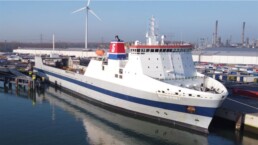
Stena Line has reached an agreement to acquire the RoRo vessel Somerset from CLdN. Subject to closure and transfer, the vessel would begin operating…
DORIC WEEKLY INSIGHT 16 OCTOBER 2026
Please find below the DORIC Market Insight for the week ending 16th October 2026. Weekly Report 16.10.2026

Important information for port clients and freight carriers effective November 1, a new traffic overpass and port checkpoint will open for traffic to the Port of Riga on Kundziņsala
Starting November 1 of this year, a new traffic overpass connecting Tvaika Street to Kundziņsala will open to facilitate traffic to and from the Port…
Subscribe to our newsletter!
if you dont want to swim alone in the ocean of news, sign up for the newsletter, and you will receive daily all the important news of world shipping!
