Maersk – Keeping the entrepreneurial spirit high
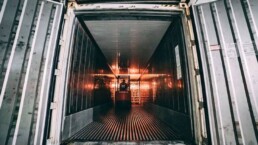

GLOBAL INTEGRATOR | Customers and society at large are showing a growing appetite for integrated transport and logistics solutions amid the pandemic, with Maersk teams finding new ways to move global trade and critical supplies.
As factories were closing, roads blocked and workers put in quarantine, supply chains began to congest.
The impacts of the coronavirus outbreak escalated in China in early February. For instance, a global, leading agriculture company and key Maersk customer urgently needed alternative ways to keep its goods moving out of more than 50 Chinese factories to ports across Europe, Latin America and Asia Pacific.
To avoid a major disruption of critical supplies during peak season for agricultural products, Maersk’s 4PL team in Qingdao quickly mobilised a cross-functional task force. The team organised alternative transportation using inland haulage, barge service, rail and air freight to supplement the ocean product and created several end-to-end solutions.
In these difficult times, customers value Maersk because of our resilient business continuity plans and our integrator offering of alternative solutions that are proving critical in mitigating disruptions in their supply chains.
Extraordinary efforts
Enabling global trade has been A.P. Moller – Maersk’s finest task for decades, but in recent months there has arguably never been more pressure on keeping goods moving freely. In extraordinary circumstances, colleagues across the world have gone extraordinary lengths to serve customers in new and creative ways, while taking care extra care of each other and helping society to get through the crisis.
In six critical weeks, the Maersk task force in Qingdao hosted more than 80 virtual, hyper-care meetings with the agriculture customer and multiple supply chain partners. As a result, the customer had daily visibility with clear order impact that enabled it to prioritise critical orders and mitigate huge sales losses.
Ultimately, more than 2,600 containers – hereof 40% dangerous cargo and 22% critical cargo – made their way to destination, with a 98% on-time departure success rate for priority cargo.
“Our efforts were highly appreciated by the customer who avoided a complete stop to its supply chain as well as ensuring the delivery of critical agricultural supplies across the world,” says Caroline Wu, Managing Director for the Greater China Area at Maersk, and adds:
“In these difficult times, customers value Maersk because of our resilient business continuity plans and our integrator offering of alternative solutions that are proving critical in mitigating disruptions in their supply chains.”
New opportunities emerge
This customer solution in China is just one example of how Maersk is keeping the wheels of global trade spinning. As an epidemic quickly became a pandemic in March, the early supply challenges in China turned into a global slowdown in demand, with government restrictions forcing shops to close and consumers to stay home in many countries.
While total demand has dropped, key areas of Maersk’s business are experiencing growing needs from customers. In Logistics & Services, for instance, new opportunities are emerging with customers looking for alternative modes of transport and storage solutions due to fewer and slower ocean transits.
As roads and borders closed, intermodal trucking transport also experienced a dramatic reduction in capacity. Several customers across industries such as retail, automotive and lifestyle have turned to intercontinental rail (ICR), some even for the very first time, to beat delays of up to 70% truck shortage and get goods to market in time.
Rail offers fast and efficient alternative
This increased demand means that Maersk’s combined ocean and rail service from Asia to Europe (AE19), which was previously offered on a monthly basis in west-bound direction only, is now available every week in both directions.
Transit times from South Korea and Japan to Northern Europe have been reduced to 23-32 days from the previously 52-57 days through intermodal transportation. As such, the extended and improved rail offering offers a faster and cost-friendly alternative for customers who experience problems such as blank sailings, congested ports and sky-rocketing air rates.
“Frequent cancellations and congestions in ports and airports around the world have made the usual ocean and air services less attractive for customers. Evidently, AE19’s volumes have increased by approximately 30% compared to before COVID-19, compensating for the reduced demand for our other services,” explains Jason Park, Head of Maersk in Korea.
Cross- and upselling opportunities are also on the rise for Maersk’s blocktrain offering. Customers including Decathlon and Aldi have either increased volumes or bought into the service for the first time to capture important sales in stores and supermarkets across Europe.
Reefer innovation as cold storage peaks
After the congestion in Chinese ports in February and March, reefer containers continue to be in short supply in many parts of the world. As a response, Maersk was able to bring 1800 reefers from Asia to help Brazil meet strong export demand in early April, supporting its fruit and livestock sectors.
In Argentina, APM Terminals commissioned a new cold-store chamber in May. The chamber can maintain constant temperatures as low as -35°C, enabling it to handle a variety of cargo, including fruit, frozen produce and meat.
“With the COVID-19 pandemic, our cooling chamber may have arrived at a vital moment, given that cargo often have to be stored at specific temperatures to maintain their quality,” adds Marcelo Siminet, Head of Operations in APM Terminals Buenos Aires.
The chamber can store up to 11 standard pallets and is located within the customers’ bonded area of the terminal, reducing the need for additional transport costs as well as the inconvenience, risk and paperwork that come with off-terminal facilities.
Appetite for more
Throughout the pandemic, Maersk has retained its focus on three priorities: Protecting people, serving customers, and helping society fight COVID-19.
The list of examples of how colleagues have kept Maersk’s entrepreneurial spirit high in times of crisis to find new solutions to challenging supply chain problems grows every day – and customers’ increasing appetite for integrated transport and logistics represents a tangible proof point of the strategy.
“Our strategy of becoming the global integrator has truly been validated by the pandemic. Ocean customers actually want to buy more logistics services from us and recognise the value from dealing with the asset operator. This is a huge opportunity for us, which we will pursue in the coming years,” says Søren Skou, CEO of A.P. Moller – Maersk.
As society gradually recovers, Maersk will move from defense to offense by having the network and capacity in place to meet demand when and where it returns, while looking for opportunities to accelerate the transformation – e.g. through acquisitions and new investments in digital.


Source: Maersk



Related News.
OL Shipping Group in Tokyo: Capt. Eberhard Koch calls for realistic solutions to Maritime Decarbonisation
An intensive and engaging couple of days in Tokyo brought together leading figures from the international maritime community, providing a valuable…

Regatta for Peace one of the largest ever in Cyprus
Cyprus will host the first European stop on a global sailing journey leading up to the 2027 America’s Cup in Naples. More than 120 sailors…
The propulsion technology powering the marine energy transition
The marine industry is under increasing pressure to future-proof fleets, balancing the need to reduce emissions and improve efficiency. Propulsion…
Signal Ocean acquires Lgmar
Signal Ocean announced the acquisition of Lgmar, the Athens-based company behind Telix, a maritime email and communication platform in daily use…

Canada clean power push challenged by interprovincial grid limits, says GlobalData
Canada is entering a pivotal phase of power-sector expansion as federal tax credits, the phase-out of coal-fired generation, and accelerating…

Maritime safety depends on human factors and leadership, not procedures alone
Interim survey findings point to a gap between seafarers’ perceptions of risk and injury data Seafarers may misjudge when and where they are most at…

New BIMCO contracts tackle ship recycling and energy-saving retrofits
BIMCO adopted two new contractual solutions designed to help you manage important operational and regulatory challenges: the revised…
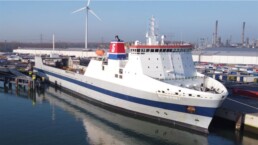
Stena Line to acquire vessel and make changes to its network
Stena Line has reached an agreement to acquire the RoRo vessel Somerset from CLdN. Subject to closure and transfer, the vessel would begin operating…
DORIC WEEKLY INSIGHT 16 OCTOBER 2026
Please find below the DORIC Market Insight for the week ending 16th October 2026. Weekly Report 16.10.2026
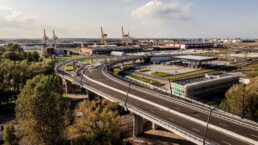
Important information for port clients and freight carriers effective November 1, a new traffic overpass and port checkpoint will open for traffic to the Port of Riga on Kundziņsala
Starting November 1 of this year, a new traffic overpass connecting Tvaika Street to Kundziņsala will open to facilitate traffic to and from the Port…
Subscribe to our newsletter!
if you dont want to swim alone in the ocean of news, sign up for the newsletter, and you will receive daily all the important news of world shipping!
