ExxonMobil collaborates on discovery of new material to enhance carbon capture technology


Scientists from ExxonMobil, University of California, Berkeley and Lawrence Berkeley National Laboratory have discovered a new material that could capture more than 90 percent of CO2 emitted from industrial sources, such as natural gas-fired power plants, using low-temperature steam, requiring less energy for the overall carbon capture process.
ExxonMobil collaborates on discovery of new material to enhance carbon capture technology
Laboratory tests indicate the patent-pending materials, known as tetraamine-functionalized metal organic frameworks, capture carbon dioxide emissions up to six times more effectively than conventional amine-based carbon capture technology. Using less energy to capture and remove carbon, the material has the potential to reduce the cost of the technology and eventually support commercial applications.
By manipulating the structure of the metal organic framework material, the team of scientists and students demonstrated the ability to condense a surface area the size of a football field, into just one gram of mass – about the same as a paperclip – that acts as a sponge for CO2. Results of the research were published today in the international peer-reviewed journal, Science.
“This innovative hybrid porous material has so far proven to be more effective, requires less heating and cooling, and captures more CO2 than current materials,” said Vijay Swarup, vice president of research and development at ExxonMobil Research and Engineering Company.
“Through collaborations with strong academic institutions and national labs like UC Berkeley and the Lawrence Berkeley National Laboratory, we are developing a portfolio of lower-emissions energy solutions. This provides yet another example of one of the many new materials ExxonMobil is researching to reduce CO2 in the production of energy,” said Swarup.
ExxonMobil’s team, led by senior research associate Simon Weston, along with UC Berkeley’s professor Jeffrey Long and his team of faculty and students have been working collaboratively for eight years to develop this potential carbon capture solution that demonstrates stability in the presence of water vapor, without oxidation, allowing carbon dioxide to be captured from various sources, under a number of conditions.
Additional research and development will be needed to progress this technology to a larger scale pilot and ultimately to industrial scale.
The research successfully demonstrated that these hybrid porous metal-organic materials are highly selective and could capture more than 90 percent of the CO2 emitted from industrial sources. The materials have much greater capacity for capturing carbon dioxide and can be regenerated for repeated use by using low-temperature steam, requiring less energy for the overall carbon capture process.
“This exciting advance for carbon capture technology is an outstanding example of how scientists with diverse expertise from universities, national labs, and industry can come together to solve fundamental research challenges,” said Jeffrey Long, professor of chemistry and chemical and biomolecular engineering at University of California, Berkeley and faculty senior scientist at Lawrence Berkeley National Laboratory. “We are grateful to have had such long-term research support from ExxonMobil, without which this discovery would not have been possible. I hope this success will serve to encourage further partnerships between industry and academic research labs.”
ExxonMobil is the world leader in carbon capture, capturing more carbon dioxide than any other company since 1970 and working on a portfolio of carbon capture technologies in collaboration with others. Since 2000, ExxonMobil has invested approximately $10 billion in projects to research, develop and deploy lower-emission energy solutions. The company continues to expand collaborative efforts with more than 80 universities, five energy centers and multiple private sector partners around the world to explore next-generation energy technologies.
The researchers on the technology as written in Science include Simon Weston and Joseph Falkowski from ExxonMobil; Eugene Kim, Henry Jiang, Alexander Forse, Jeffrey Martell, Phillip Milner from the University of California, Berkeley; and Rebecca Siegelman, Jung-Hoon Lee, Jeffrey Neaton, Jeffrey Reimer, Jeffrey Long from the University of California, Berkeley and Lawrence Berkeley National Laboratory.



Related News.

OL Shipping Group in Tokyo: Capt. Eberhard Koch calls for realistic solutions to Maritime Decarbonisation
An intensive and engaging couple of days in Tokyo brought together leading figures from the international maritime community, providing a valuable…

Regatta for Peace one of the largest ever in Cyprus
Cyprus will host the first European stop on a global sailing journey leading up to the 2027 America’s Cup in Naples. More than 120 sailors…

The propulsion technology powering the marine energy transition
The marine industry is under increasing pressure to future-proof fleets, balancing the need to reduce emissions and improve efficiency. Propulsion…
Signal Ocean acquires Lgmar
Signal Ocean announced the acquisition of Lgmar, the Athens-based company behind Telix, a maritime email and communication platform in daily use…

Canada clean power push challenged by interprovincial grid limits, says GlobalData
Canada is entering a pivotal phase of power-sector expansion as federal tax credits, the phase-out of coal-fired generation, and accelerating…

Maritime safety depends on human factors and leadership, not procedures alone
Interim survey findings point to a gap between seafarers’ perceptions of risk and injury data Seafarers may misjudge when and where they are most at…

New BIMCO contracts tackle ship recycling and energy-saving retrofits
BIMCO adopted two new contractual solutions designed to help you manage important operational and regulatory challenges: the revised…
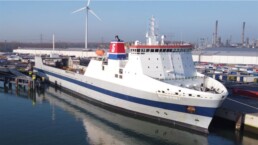
Stena Line to acquire vessel and make changes to its network
Stena Line has reached an agreement to acquire the RoRo vessel Somerset from CLdN. Subject to closure and transfer, the vessel would begin operating…
DORIC WEEKLY INSIGHT 16 OCTOBER 2026
Please find below the DORIC Market Insight for the week ending 16th October 2026. Weekly Report 16.10.2026

Important information for port clients and freight carriers effective November 1, a new traffic overpass and port checkpoint will open for traffic to the Port of Riga on Kundziņsala
Starting November 1 of this year, a new traffic overpass connecting Tvaika Street to Kundziņsala will open to facilitate traffic to and from the Port…
Subscribe to our newsletter!
if you dont want to swim alone in the ocean of news, sign up for the newsletter, and you will receive daily all the important news of world shipping!
