Nokia Global Network Traffic report forecasts AI will drive nearly half of global traffic in 2035


- AI traffic behaves differently than traditional application traffic, reshaping network requirements.
- Physical and agentic AI will be among the fastest growing network traffic categories increasing demand for uplink capacity, low latency and distributed infrastructure.
Nokia published its Global Network Traffic Report, forecasting that AI will drive nearly half of global network traffic in 2035. The findings show networks will increasingly need to serve connected machines as well as people, with AI driving greater uplink demand, faster response times and more processing closer to users and devices.
By 2035, Nokia projects that total network traffic will nearly quadruple from 2026 levels to almost 3,789 exabytes (EB) per month, with 44% of that traffic driven by AI. The increasing adoption of autonomous AI agents and connected machines will challenge networks built primarily for downloads, increasing demand for upload capacity and real-time responses. Physical AI applications, including robots and vehicles that interact with their surroundings, are projected to generate more than 90% of their traffic over the network uplink by 2035.
Starting from a small base, agentic AI traffic is projected to reach 160 times its 2026 levels in 2035, while physical AI traffic is expected to reach 105 times its 2026 level over the same period. These projected workloads will require networks that support differing needs, from bulk uploads to continuous, real-time connections.
The report also forecasts a shift in where AI data is processed by 2035. While most AI traffic is expected to remain within the central cloud, edge and metro core infrastructure is projected to serve 36% of all AI-native traffic by 2035 as agentic and physical AI applications rise in prominence. More efficient models, low-latency requirements and data sovereignty needs are expected to bring intelligence and inferencing closer to users and devices, supporting a more distributed infrastructure known as the AI grid.
Beyond AI, the report projects that fixed wireless access (FWA) will generate more than one-third of consumer cellular traffic by 2035 as connections and usage grow, expanding cellular networks’ role in home broadband alongside mobile services.
Nokia’s Global Network Traffic Report (2026–2035) uses a bottom-up model of consumer, enterprise and AI traffic. It combines application usage, connected-device activity and agentic workflows with third-party research, expert review and Nokia lab testing and insights to assess traffic growth and characteristics, network distribution and potential uplink constraints.
Pallavi Mahajan, Chief Technology and AI Officer at Nokia: “AI is changing what we need from networks, not just how much traffic they carry. Networks built for traditional internet applications will increasingly have to support machines that place new demands on the uplink and require real-time responses. The next phase of AI will depend as much on the network as on compute. Network readiness must therefore be a central part of AI planning, not an afterthought. At Nokia, we’re building the distributed, AI-ready networks that make this next phase possible.”



Related News.
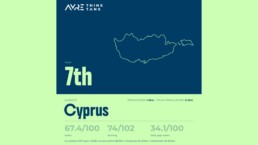
Global study finds Cyprus ranks SEVENTH and set for $1.1 billion AI GDP boost
Cyprus beats India and New Zealand to come SEVENTH in major AI study – with potential €1.1 billion GDP boost and youth jobs opportunity Some 86% of…

Global shipping’s trillion dollar climate bill according to Zero Carbon Analytics
A new study by Zero Carbon Analytics finds that emissions from international shipping cost the global economy around USD 963 billion between 1990…

Keeping Children Safe Online at Sea Seafy® earns friendly WiFi Certification across 26 vessels
Seafy becomes Friendly WiFi’s first partner in the maritime sector, helping protect kids from harmful content online. Friendly WiFi is delighted…

ShipManager joins Star Information Systems to accelerate the maritime industry’s transition to cloud
CFARER, a DNV Company selects Star Information Systems as the longterm home for ShipManager and its cloud future Star Information Systems (Star)…

Seafarer experience must shape maritime technology, initial STEER Project report finds
New research finds technology can shift rather than remove risk as The Nautical Institute, with support from Lloyd’s Register Foundation, calls for…

New LR service targets cargo disruption when trade routes fail
New LR Advisory service helps ports, governments and logistics operators respond to disruption, protect critical cargo flows and strengthen trade…

DORIC WEEKLY INSIGHT 06 NOVEMBER 2026
Please find below the DORIC Market Insight for the week ending 06th November 2026. Weekly Report 06.11.2026
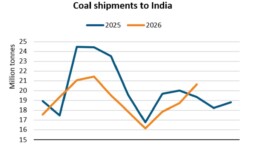
BIMCO Shipping Number of the Week
Coal shipments to India drop 7%, but limited recovery may lie ahead "Between January and October, coal shipments to India dropped 7% y/y due to the…

Hapag-Lloyd marks 20 years in South Africa and targets further growth
South Africa has become a cornerstone of Hapag-Lloyd's business in Africa Hapag-Lloyd surpasses 1 million TEU in Africa for the first time in its…
Subscribe to our newsletter!
if you dont want to swim alone in the ocean of news, sign up for the newsletter, and you will receive daily all the important news of world shipping!
