Seafarer experience must shape maritime technology, initial STEER Project report finds

New research finds technology can shift rather than remove risk as The Nautical Institute, with support from Lloyd’s Register Foundation, calls for the industry to keep #ListeningToSeafarers
Technology can improve safety, efficiency and life at sea, but its benefits depend heavily on how systems are designed, introduced, supported and used, according to initial findings from the STEER Project.
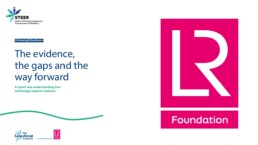
The Nautical Institute, in collaboration with Lloyd’s Register Foundation, has published The evidence, the gaps and the way forward, its initial report into understanding how technology impacts seafarers.
The report marks the completion of STEER’s foundational research phase and brings together academic research, industry evidence, casualty investigations and direct engagement with seafarers.
One consistent finding has emerged: technology does not operate in isolation. Its effects on safety, workload, skills and wellbeing depend heavily on how it is designed, implemented, supported and maintained.
The evidence also suggests that technology frequently shifts risk rather than eliminating it.
A review of 471 maritime casualty cases between 2005 and 2025 found that 43.1% involved at least one human-factor cause associated with equipment and workplace conditions. In many cases, technology itself was not the primary cause, with deeper issues including inadequate training, poor procedures, weak supervision and gaps in safety management contributing to incidents.
Among 35 cases where technology was identified as the direct cause, safety management failures were present in 89% and inadequate resourcing in 77%.
Capt. David Patraiko, Director of Projects, The Nautical Institute said: “Technology is bringing significant benefits to shipping, but the evidence shows that those benefits cannot be judged on technical capability alone. What matters is how systems perform in real operations and how they affect the people expected to use them. That is why #ListeningToSeafarers is so important. By involving seafarers in the design, introduction and ongoing development of technology, we have a much better chance of ensuring it supports safer operations rather than creating new risks or additional pressures.”
The report also finds that seafarers are not resistant to technological progress itself. Their concerns more commonly relate to difficult or poorly supported systems, inadequate familiarisation, inconsistent interfaces, excessive alarms and technology that does not reflect the realities of shipboard operations.
Technology-related casualties were found to be more commonly associated with systems being misused, misunderstood or ignored than with broken hardware, while the report identifies vessel-specific familiarisation and realistic training as important factors in safe technology adoption.
These findings reinforce the central principle behind the STEER Project: #ListeningToSeafarers.
The project argues that seafarers should be treated as expert end users and given meaningful opportunities to contribute to the design, testing, implementation and ongoing development of maritime technology.
One Indian navigating officer interviewed for the project said: “Technology should not replace seafarers. It should amplify their experience.”
The report also highlights how digitalisation and automation can change rather than simply reduce workload. Poorly integrated systems can create duplication, additional administrative demands and greater cognitive load, while increased automation can place more emphasis on monitoring systems, recognising failures and knowing when professional judgement should take precedence.
Similarly, greater connectivity can improve access to family, shore-based support and services, while also creating new challenges around constant availability, privacy and the boundary between work and rest.
The research draws on 105 academic studies, 55 industry publications and 471 casualty reports, alongside direct engagement with seafarers and other maritime professionals. This included interviews, ship visits, workshops, webinars, surveys and analysis of public social media discussions.
Dr Tim Slingsby, Director of Skills and Education at Lloyd’s Register Foundation, says in the report: “#ListeningToSeafarers is fundamental to Lloyd’s Register Foundation’s strategy. By listening to those directly impacted by new technologies on ships, we can put people at the heart of decision-making and ensure seafarers have an active role in shaping an equitable transition to a safe, sustainable, decarbonised and digitalised ocean economy.”
The report’s initial recommendations call for closer involvement of seafarers in technology design and implementation, improved vessel-specific familiarisation, greater attention to alarm fatigue and repeated system workarounds, and stronger consideration of workload, competence and human factors when new technology is introduced.
It also identifies significant gaps in current knowledge, particularly around emerging technologies such as AI and remote monitoring, the long-term impact of automation on skills and professional judgement, and how technological change affects ratings, smaller vessels and underrepresented groups within the global maritime workforce.
These gaps will help shape the next phase of the STEER Project, with further engagement intended to turn evidence and seafarer experience into practical tools and validated guidance for safer, more human-centred technology adoption.
The report concludes that human capability cannot be fully replaced by automation, but can be effectively supported by it. The central question is therefore not whether shipping should continue adopting new technology, but how that technology can best support safe operations, professional judgement and seafarer wellbeing.
To read The evidence, the gaps and the way forward and join the #ListeningToSeafarers conversation, visit:
https://www.nautinst.org/steer-project/the-evidence-the-gaps-and-the-way-forward.html



Related News.
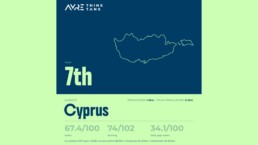
Global study finds Cyprus ranks SEVENTH and set for $1.1 billion AI GDP boost
Cyprus beats India and New Zealand to come SEVENTH in major AI study – with potential €1.1 billion GDP boost and youth jobs opportunity Some 86% of…

Global shipping’s trillion dollar climate bill according to Zero Carbon Analytics
A new study by Zero Carbon Analytics finds that emissions from international shipping cost the global economy around USD 963 billion between 1990…

Keeping Children Safe Online at Sea Seafy® earns friendly WiFi Certification across 26 vessels
Seafy becomes Friendly WiFi’s first partner in the maritime sector, helping protect kids from harmful content online. Friendly WiFi is delighted…
ShipManager joins Star Information Systems to accelerate the maritime industry’s transition to cloud
CFARER, a DNV Company selects Star Information Systems as the longterm home for ShipManager and its cloud future Star Information Systems (Star)…

New LR service targets cargo disruption when trade routes fail
New LR Advisory service helps ports, governments and logistics operators respond to disruption, protect critical cargo flows and strengthen trade…

DORIC WEEKLY INSIGHT 06 NOVEMBER 2026
Please find below the DORIC Market Insight for the week ending 06th November 2026. Weekly Report 06.11.2026
BIMCO Shipping Number of the Week
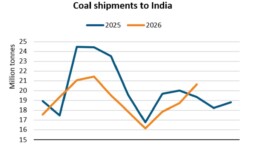
Coal shipments to India drop 7%, but limited recovery may lie ahead "Between January and October, coal shipments to India dropped 7% y/y due to the…
Hapag-Lloyd marks 20 years in South Africa and targets further growth
South Africa has become a cornerstone of Hapag-Lloyd's business in Africa Hapag-Lloyd surpasses 1 million TEU in Africa for the first time in its…
The APV is putting its ValenciaportPCS technology platform out to tender for 7.9 million euros
The tender covers the management and technical operation of the platform where members of the port community exchange information on processes…
Subscribe to our newsletter!
if you dont want to swim alone in the ocean of news, sign up for the newsletter, and you will receive daily all the important news of world shipping!
