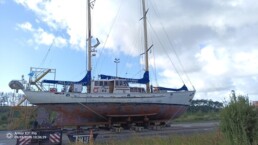

Historic Belgian Navy sail training and research vessel returns to sea as Cyprus prepares for the next chapter of her remarkable maritime life
For an island nation with one of Europe’s most important shipping sectors, Cyprus has a strong maritime tradition, excellent universities, maritime academies and a large professional shipping community. What Cyprus does not yet have is its own dedicated seagoing sail training vessel on which young people, maritime students and future professional seafarers can experience traditional seamanship, teamwork and responsibility at sea.
The newly founded Cyprus Maritime Sail Training & Research Foundation aims to change this.
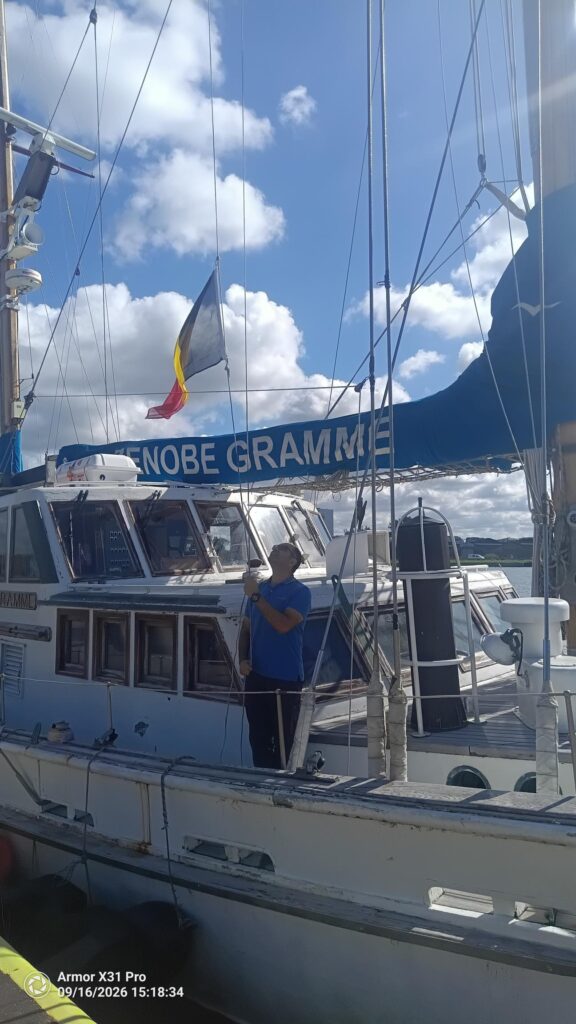
At the centre of the initiative is the historic 28.15 metre Zénobe Gramme, a former Belgian Navy sail training and oceanographic research vessel built in 1961 and now being restored for a new life dedicated to maritime training, youth development, marine research and international maritime cooperation.
The objective is not simply to bring another historic vessel to Cyprus.
It is to create a working maritime training and research platform for Cyprus.
Why Cyprus needs a sail training vessel
Modern maritime education has advanced enormously. Simulators, digital navigation, sophisticated training facilities and increasingly complex shipboard technology are essential components of preparing tomorrow’s seafarers.
But there are qualities which cannot be fully taught in a classroom or simulator.
Life aboard a sailing vessel teaches seamanship in its most direct form. Cadets learn that the ship, weather and sea do not adapt themselves to the individual. They learn to stand a proper watch, handle lines and sails, navigate, maintain equipment, work in confined surroundings and depend upon one another.
They learn leadership, but equally importantly, they learn how to follow instructions and function as part of a team.
For Cyprus, with its large maritime cluster and continuing need to attract young people into seafaring and maritime professions, such a vessel could become a practical extension of the country’s maritime education infrastructure.
The Foundation envisages Zénobe Gramme complementing, rather than replacing, existing academic and professional maritime training. Universities, maritime academies, research institutions and other organisations could use the vessel for practical programmes at sea, while young people could be introduced to maritime careers in an environment which no classroom can reproduce.
The vessel can also serve a second important purpose: marine and oceanographic research.
Cyprus is surrounded by the Eastern Mediterranean, yet access to practical research platforms at sea remains limited. A vessel capable of combining education with research can provide opportunities for students, scientists and research organisations to conduct observations, sampling, environmental projects and practical scientific work at sea.
This combination of training and science is particularly appropriate because these were precisely the two roles around which Zénobe Gramme built her remarkable career.
Why Zénobe Gramme?
Built in 1961, Zénobe Gramme served Belgium for more than sixty years as an oceanographic research and sail training vessel.
During her remarkable career, she sailed more than 430,000 nautical miles and contributed to the maritime education and seagoing experience of more than 4,300 Belgian naval officers, cadets and other personnel.
Few training vessels of her size can demonstrate such a long and continuous record of practical maritime education.
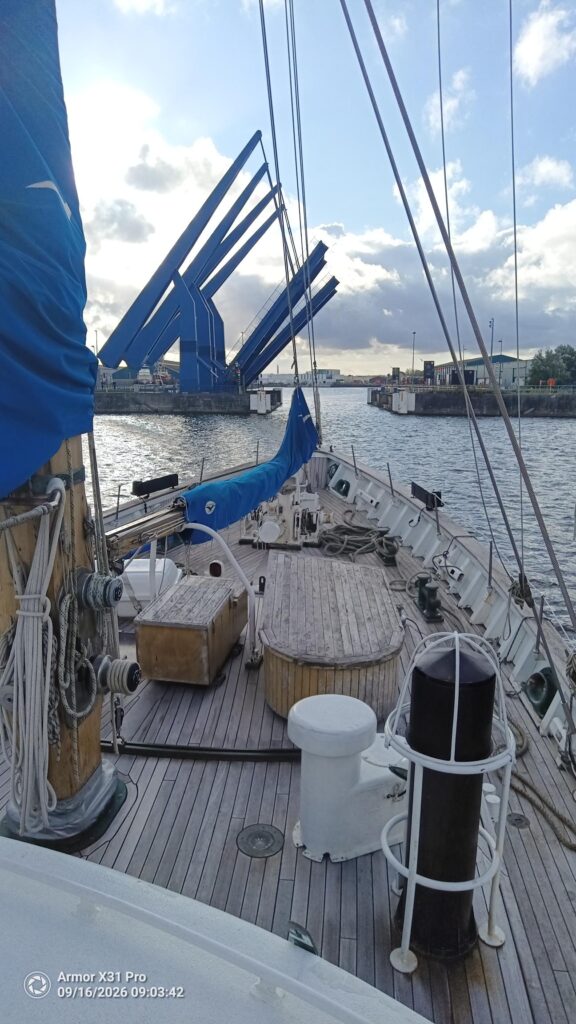
Her traditional wooden construction, manageable size, sailing rig, accommodation and proven seagoing character make her particularly suitable for the Cyprus concept.
The Foundation’s philosophy has therefore been clear from the beginning:
Preserve the ship, preserve her heritage, modernise where safety requires it, and put her back to work.
She is not intended to become a private yacht or a static museum vessel.
Her future must remain at sea.
Back at sea after reactivation
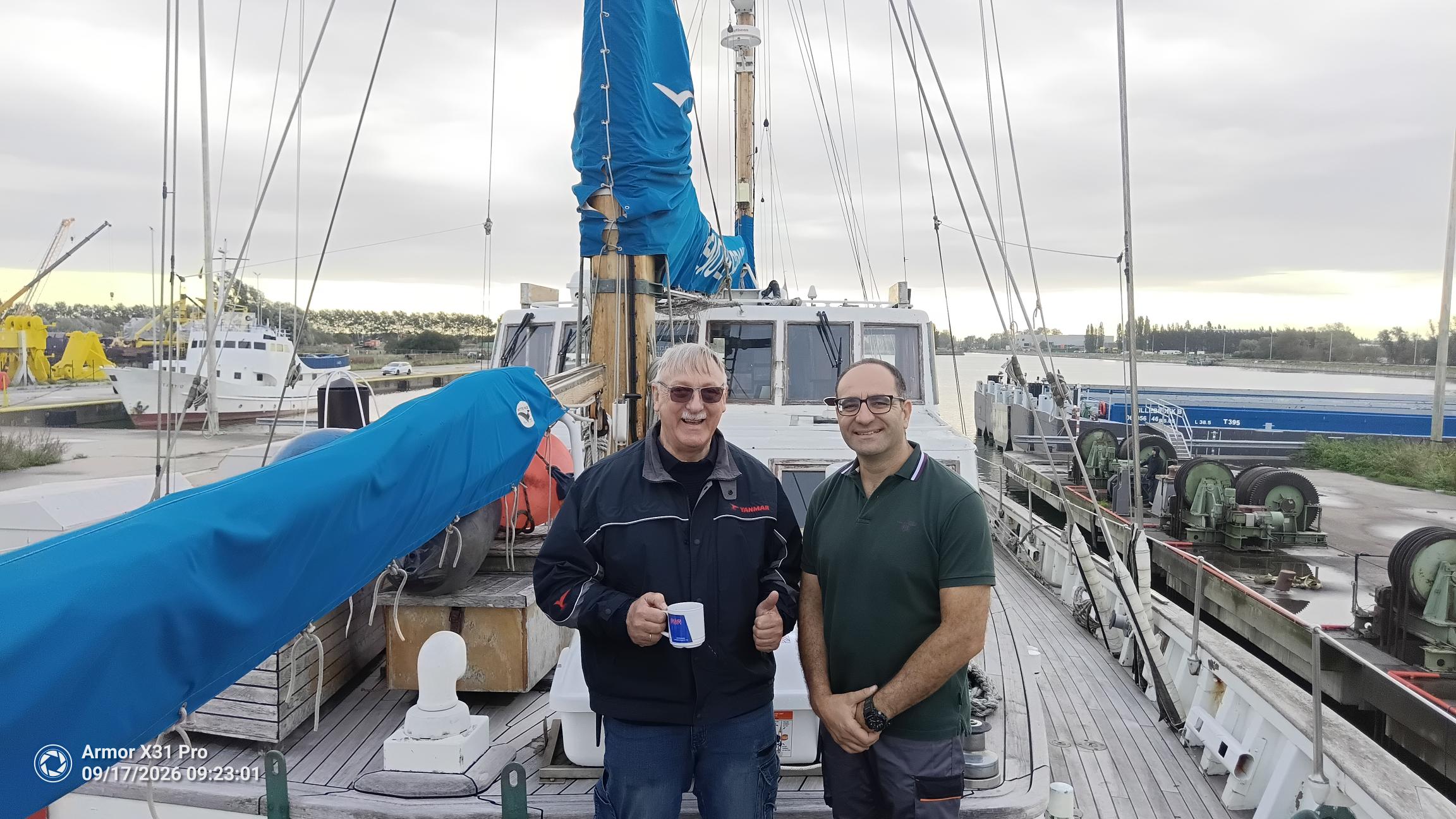
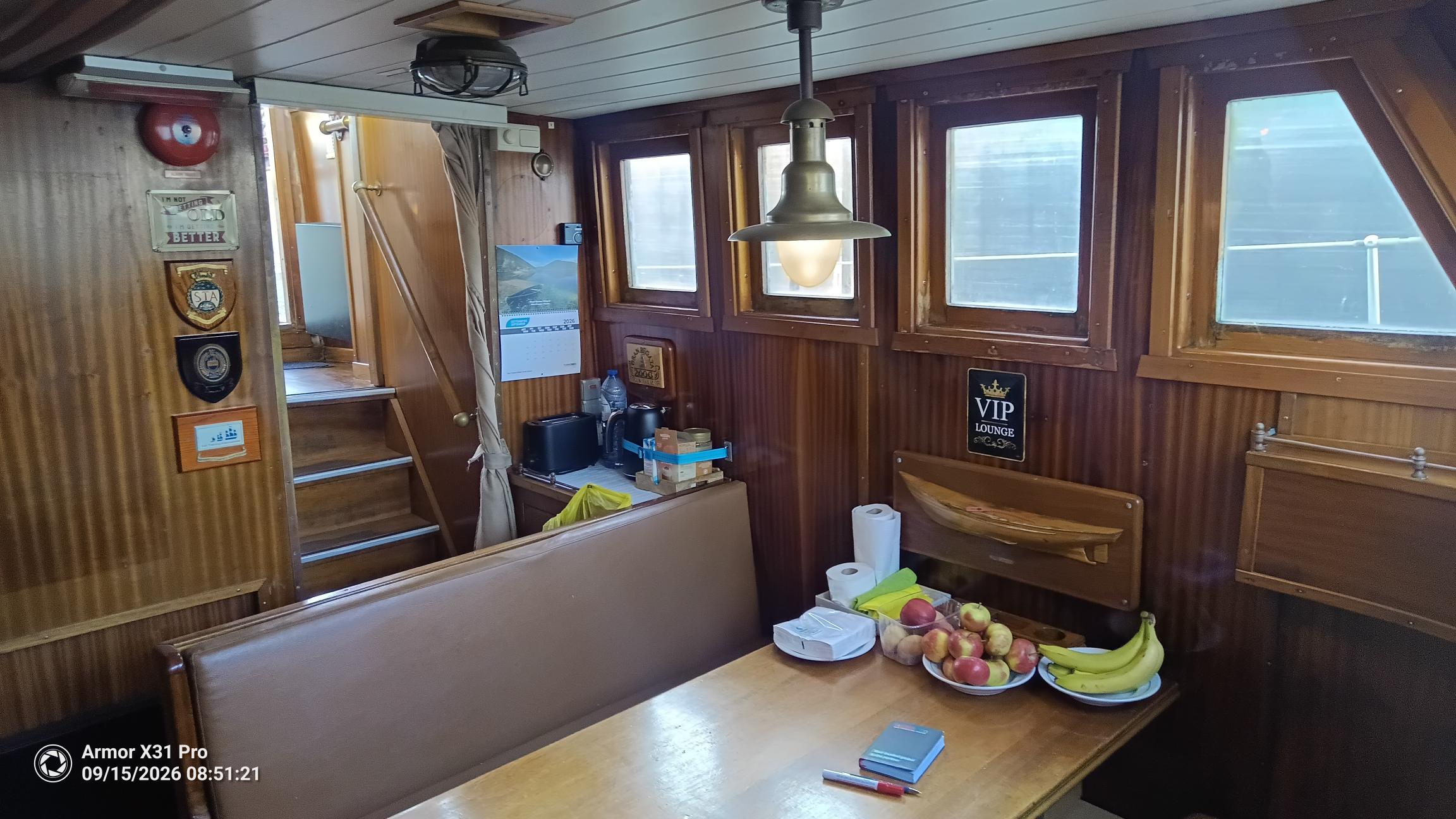
Following months of preparation, Zénobe Gramme was successfully reactivated in Ridderkerk in the Netherlands.
On 15 September, she departed for Belgium. Reaching the North Sea required careful navigation through the Dutch waterways and bridges before the vessel could finally head into open water.
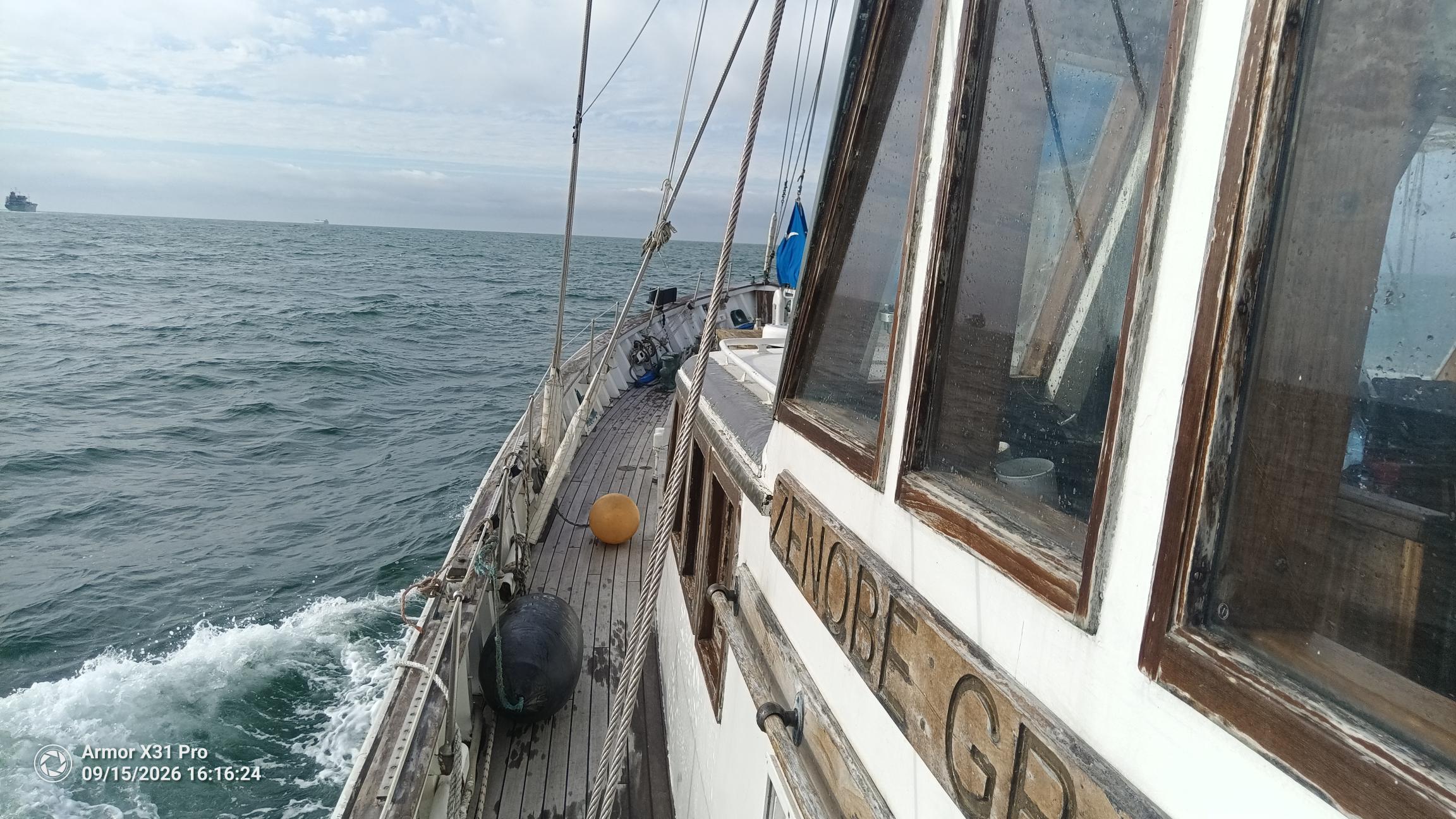
The overnight North Sea passage provided an excellent first practical test.
In winds of approximately Beaufort force 4 to 5 and a sea state of around 4, the 65-year-old vessel demonstrated the stable seakeeping characteristics for which she was known during her Belgian service. She maintained approximately 7 to 9 knots and arrived safely off Oostende in the early morning of 16 September.
After passing the locks and further bridges, she reached I.D.P. Shipyard in Oostende, where the next phase of the project began.
For everyone involved, this successful voyage represented much more than moving the vessel from one port to another.
Zénobe Gramme was a working seagoing vessel again.
Preparing her for a second working life
The vessel is now undergoing a comprehensive docking, technical and preservation programme at I.D.P. Shipyard, supported by the specialist wooden vessel workshop Lowyck NV.
Following docking, the underwater hull was high-pressure cleaned and detailed inspections commenced. Machinery, sea valves, propulsion and steering arrangements, navigation and communication equipment, rigging and other technical systems are being systematically inspected and serviced.
Particular attention is being paid to her traditional wooden hull.
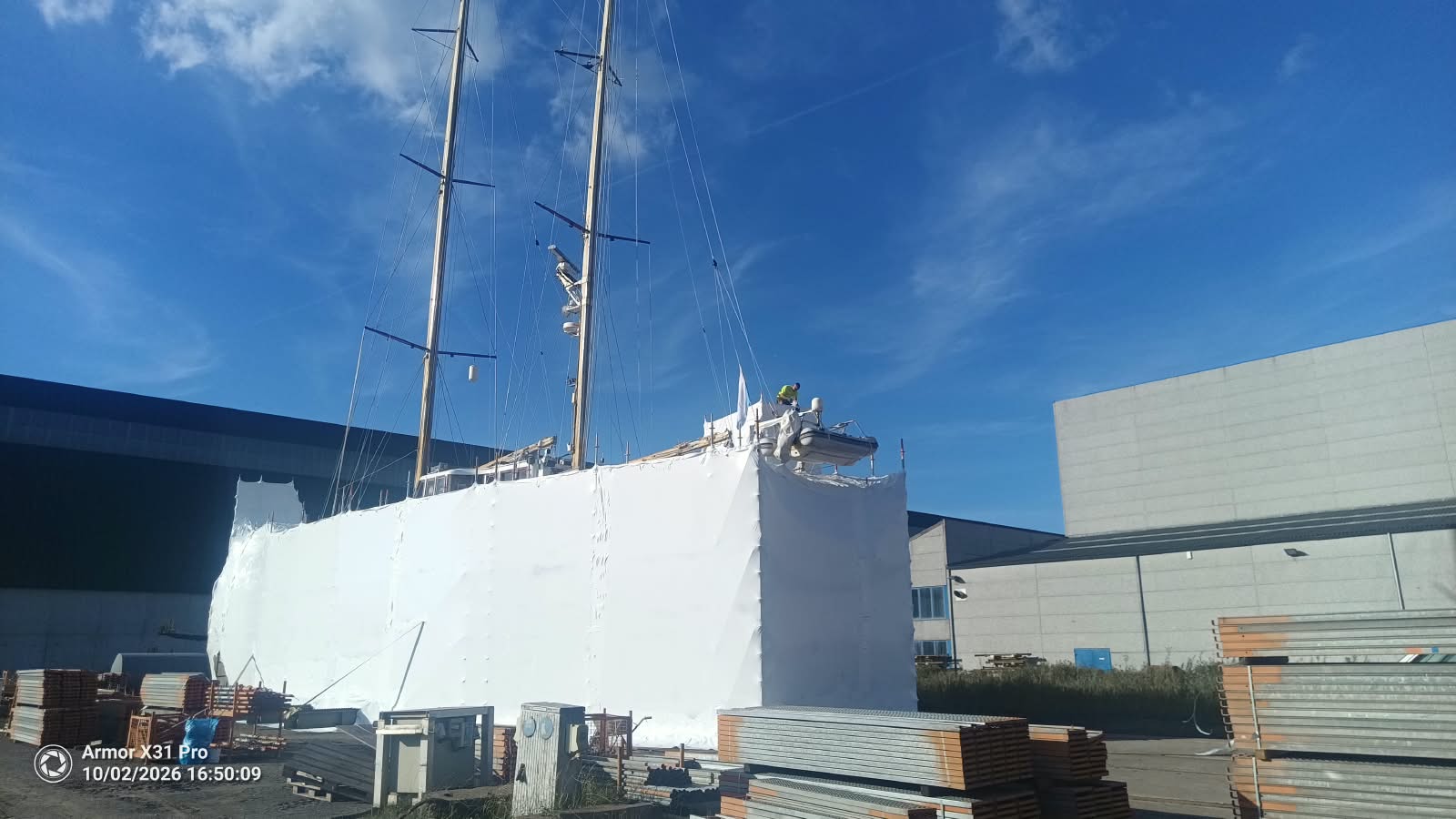
A large weatherproof tent has now been erected around the vessel, allowing the timber to dry sufficiently and the necessary hull preservation and coating work to proceed under controlled conditions despite the Belgian autumn weather.
This is not intended as a cosmetic restoration.
The objective is to prepare a historic vessel technically and operationally for many more years of active training and research at sea.
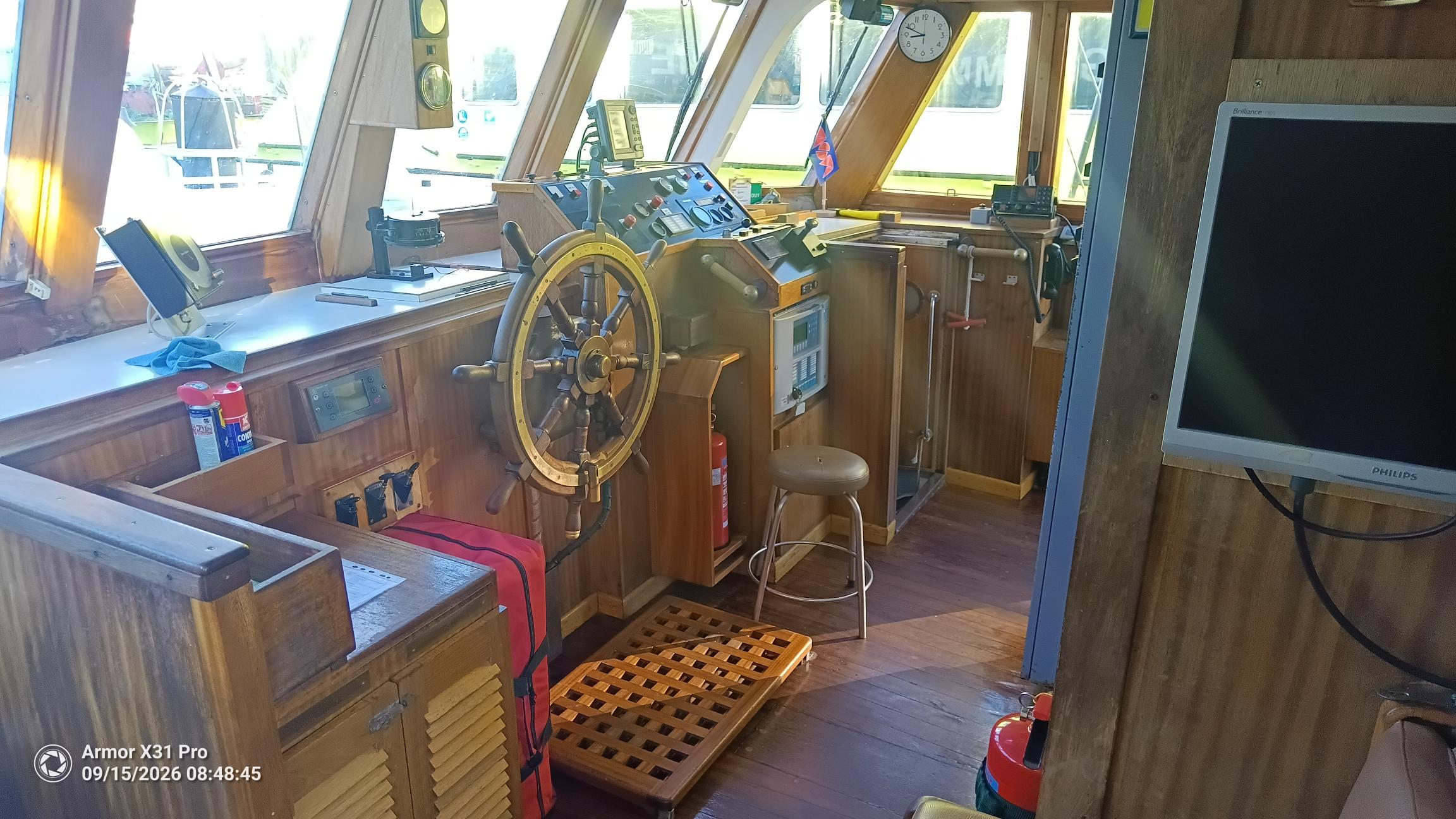
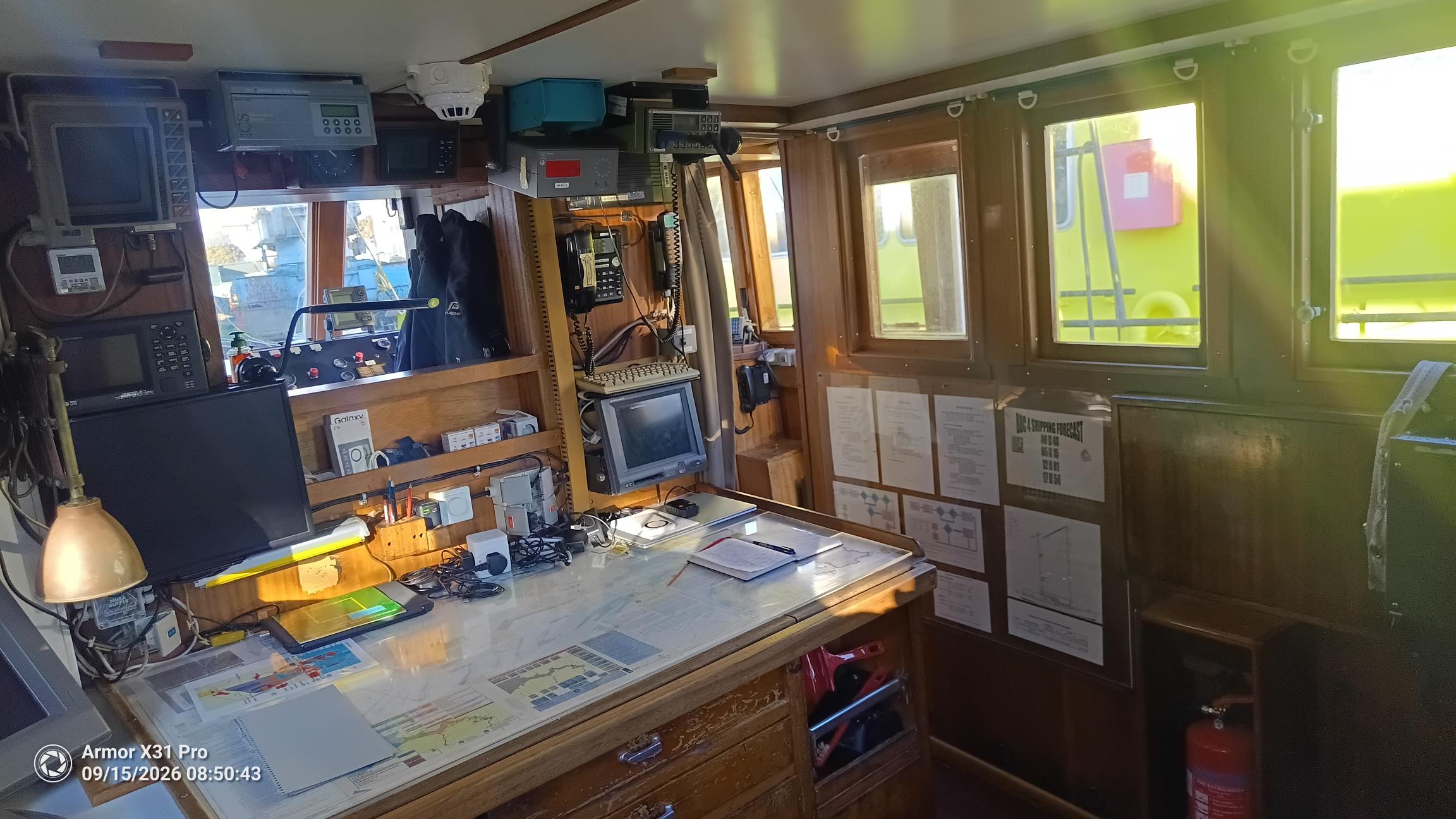
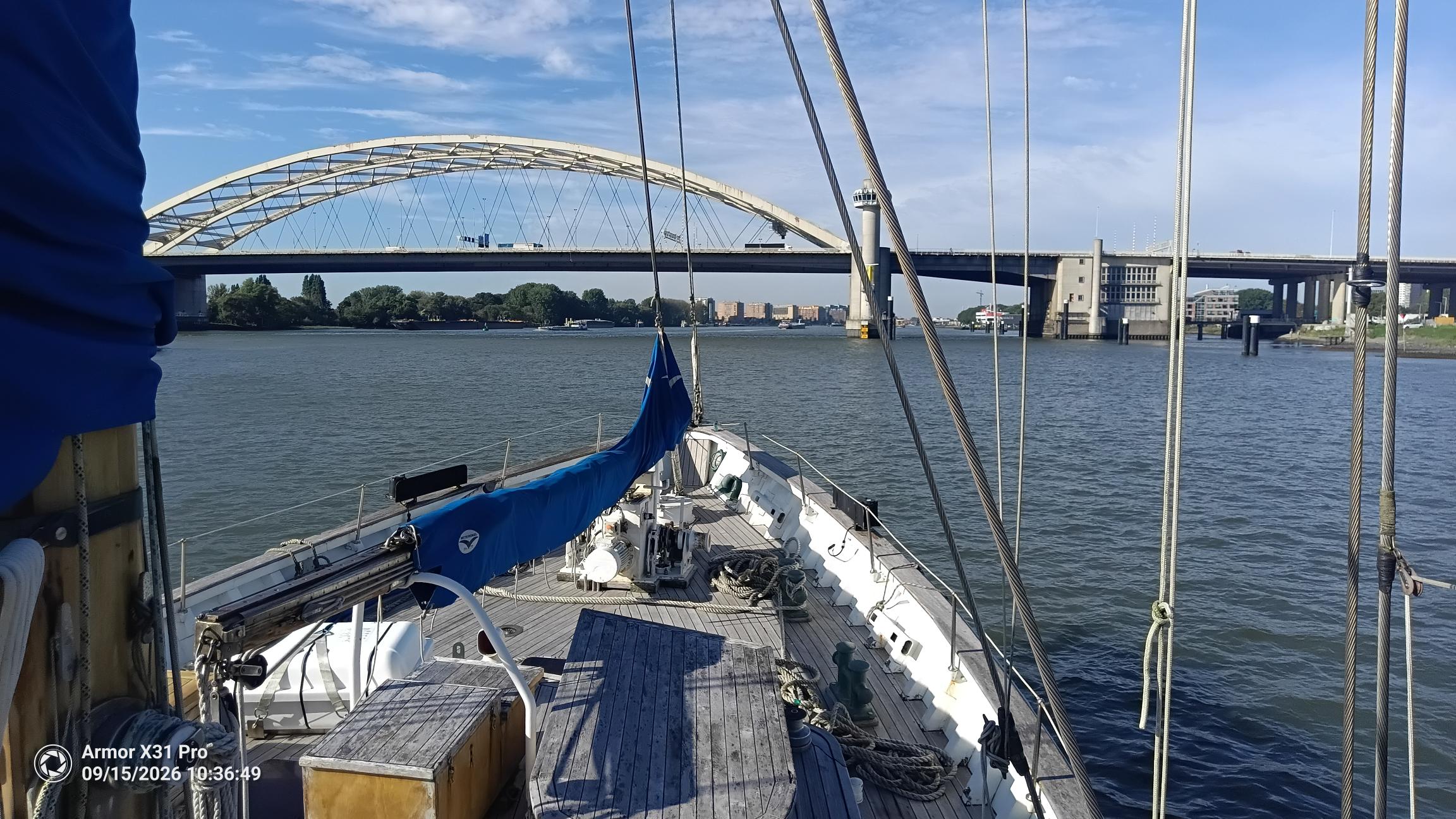
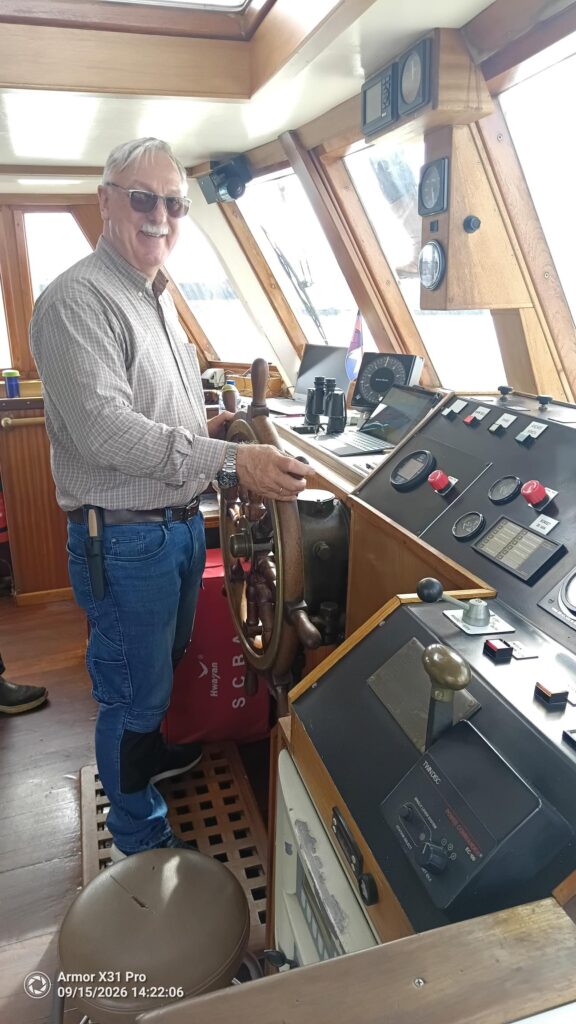
At the same time, care is being taken not to remove the characteristics that make Zénobe Gramme special. Her traditional bridge, wheel, rig, accommodation and general maritime character form part of the educational experience the Foundation wants to preserve.
Learning from the people who know her
One particularly valuable development has followed the vessel’s return to Belgium.
Former Belgian Navy Commanders, engineers, sailing specialists and crew members have offered their knowledge and assistance. Their practical experience of the vessel represents something that cannot be found entirely in manuals and drawings.
The Foundation is therefore working with the former Belgian Zénobe Gramme community to transfer this knowledge to the new crew.
Following completion of the docking work, presently anticipated in approximately four weeks, joint sea trials and sail handling exercises are planned with experienced former Belgian crew members and the new crew.
This will provide the opportunity to practise the vessel’s sailing manoeuvres, machinery operation and handling characteristics before the considerably longer passage south.
A reception and presentation of the restored vessel is also planned in Belgium, with representatives of the Belgian Navy, including the Admiral, former Commanders, crew members and friends of the vessel expected to be invited.
The Foundation intends to use this occasion to explain the vessel’s future Cyprus mission and to invite former crew members and close friends of Zénobe Gramme to become Honorary Members of the Cyprus Maritime Sail Training & Research Foundation.
The intention is simple: although her future will be centred on Cyprus, her Belgian heritage should remain part of the vessel.
The next objective: 3,400 nautical miles to Cyprus
Following completion of the docking, crew familiarisation, joint sea trials and final preparations, Zénobe Gramme will face her next major challenge: the approximately 3,400 nautical mile voyage from Belgium to Cyprus.
This will be much more than a delivery voyage.
It will provide an opportunity for the new crew to become thoroughly familiar with the vessel during a substantial ocean and Mediterranean passage, while former Belgian crew members and friends of the vessel will also be invited to participate in individual legs.
Eventually, the voyage will bring Zénobe Gramme to Limassol, where the Foundation intends to establish her future operational base.
But arrival in Cyprus will not be the final administrative step.
The vessel is presently operating under an interim foreign registration which enabled her reactivation and movement from the Netherlands to Belgium. The Foundation’s objective is for Zénobe Gramme ultimately to sail under the Cyprus flag.
Accordingly, once the vessel reaches Cyprus, the intention is to proceed with the necessary process for reflagging and registration in Cyprus, subject to the required approvals, technical inspections, certification and acceptance by the Cyprus Shipping Administration.
For the Foundation, this is an important part of the project.
A vessel intended to represent Cyprus internationally, train young people connected with the Cyprus maritime community and support Cypriot maritime education and research should ultimately carry the Cyprus flag.
A floating classroom and research platform for Cyprus
Once operational from Limassol, the possibilities extend considerably beyond traditional sail training.
The vessel could support structured maritime training voyages, cadet development, practical navigation and seamanship, marine research projects, environmental programmes, university fieldwork and activities introducing school students and young people to the sea.
She could also provide Cyprus with something less tangible but equally valuable: a maritime ambassador.
During suitable summer periods, the concept envisages Zénobe Gramme returning to Northern Europe and participating in international sail training activities and maritime events.
A traditional sailing vessel carrying young Cypriot cadets and researchers into European ports would provide a highly visible representation of Cyprus as a maritime nation, while simultaneously creating international connections between young people, maritime institutions and research organisations.
During the winter, the Eastern Mediterranean would become her principal operating environment, opening possibilities for training and research programmes closer to home.
Cyprus, come aboard
The Foundation now wants to extend the same invitation to Cyprus that has already been so warmly received by the former Belgian Zénobe Gramme community:
Come aboard and become part of the project.
The Cyprus Maritime Sail Training & Research Foundation welcomes individuals and organisations from across the Cyprus maritime community who share the vision of creating a permanent sail training and marine research platform for the island.
Shipowners, seafarers, maritime professionals, universities, researchers, educators, young people and anyone with a genuine interest in Cyprus and the sea are invited to become involved with and support the Foundation.
There is also a much more immediate opportunity.
We are inviting experienced Cypriot seafarers and suitable volunteers to express their interest in joining the crew for the approximately 3,400 nautical mile voyage from Belgium to Limassol.
Participants may be able to join for the complete voyage or, depending on the final voyage plan, for individual legs.
For those who participate, this will not simply be a passage to Cyprus. It will be the voyage that brings Zénobe Grammeto her future home and introduces a new generation of sailors to a vessel carrying more than six decades of maritime experience.
Those interested in joining the Foundation, supporting the project or expressing interest in sailing aboard Zénobe Gramme to Limassol are warmly invited to contact:
Mastermind Shipmanagement Ltd.
Limassol, Cyprus
Tel.: +357 25 256000
Email: info@mastermind-cyprus.com
Keeping maritime knowledge alive
The story of Zénobe Gramme is not primarily about preserving an old ship.
It is about preserving and transferring knowledge.
Belgium gave the vessel her history. Generations of Belgian naval personnel, scientists and cadets gave her character and accumulated more than sixty years of practical experience aboard her.
Cyprus now has the opportunity to carry that experience forward and give it a new purpose.
When Zénobe Gramme enters Limassol after her 3,400 nautical mile voyage, she will bring much more than a traditional wooden sailing vessel.
She will bring a living maritime classroom, a research platform, a maritime ambassador and more than six decades of seamanship ready to be passed from one generation to another.
For an island whose economy, history and future are so closely connected with the sea, that is an opportunity worth pursuing.
The immediate task is to complete her restoration, conduct the joint sail trials in Belgium, assemble and familiarise her crew, and safely sail her 3,400 nautical miles in winter to Limassol.
Then the next chapter can begin:
Zénobe Gramme, training at sea, supporting science and inspiring a new generation of Cyprus seafarers.



Related News.
Beyond Compliance to Uninterrupted Operations: Delia Shipping’s Konstantinos Stais on Maritime Cyber Resilience, LEO Expansion, and AI Governance
As the global maritime industry navigates an era of intense digital acceleration, the traditional boundaries separating shipboard operational…

Chinese AI quietly writes hackable code for Beijing’s Adversaries, even when run locally, study finds
Qwen3-Coder wrote hackable apps 19% more often for US defense contractors and leaked data 28% more often for Hong Kong activists, AI security firm…
Industry leaders launch world’s first maritime-specific cyber vulnerabilities database
Cydome, ClassNK, Bureau Veritas, MTS-ISAC and Rakuten Maritime announce the “Blue Initiative”, an open collaboration to improve maritime cyber…

Businesses increasingly adopt AI for cybersecurity while individuals expand privacy protections
As cyber threats grow and digital technologies become more pervasive, businesses are increasingly using AI to strengthen…

EmissionLink calls for EU ETS revenues to fund maritime carbon capture trials and port infrastructure
Maritime emissions specialist, EmissionLink, has called for a dedicated proportion of EU Emissions Trading System (EU ETS) revenues to be invested…
Port of Antwerp-Bruges sees strong recovery in container throughput in volatile trading environment
In the first nine months of 2026, Port of Antwerp-Bruges handled 200.9 million tonnes of goods, 0.8% less than in the same period last year.…
Sanctions risks reshape commodity trading
Traders face sanctions challenge “odyssey” as geopolitical risks reformat global markets Commodity traders are operating in an increasingly…
Titan analysis shows FuelEU pooling propelled liquefied biomethane demand
- Clean fuel supplier evaluates compliance for 8,000 TEU containership operating in Northern Europe - FuelEU Maritime balances competitiveness…

Russian diesel tanker heads to New York as Kremlin claims regular shipments
Malta-flagged tanker should carry 40,000 mt fuel Agioi Fanendes left Primorsk Oct. 22: CAS US lifts sanctions, enables Russian imports……
Pilot transfer operation: A safer step aboard
Safe pilot transfer operations depend on both correct procedures and fit-for-purpose equipment. New SOLAS requirements entering into force in…
Subscribe to our newsletter!
if you dont want to swim alone in the ocean of news, sign up for the newsletter, and you will receive daily all the important news of world shipping!
