

New edition of Guidelines for Collecting Maritime Evidence Volume 2 addresses electronic records, AI, digital reconstruction and the changing responsibilities of maritime professionals
The Nautical Institute is highlighting the growing importance of electronic evidence following maritime accidents and incidents as modern ships generate more data and complex records of their operation.
The forthcoming second edition of Guidelines for Collecting Maritime Evidence, Volume 2 examines how evidence from onboard systems should be identified, recovered and preserved, and how it can be used to understand the circumstances surrounding a maritime casualty.
Originally published in 2019, the updated edition reflects the rapid development of onboard technology and the changing duties, responsibilities and risks faced by Masters, officers, crew and ship managers when an incident occurs.
The increasing availability of digital information provides investigators with opportunities that would have been unavailable to previous generations, but it also creates new challenges.
Simon Daniels PhD AFNI, Technical Editor of Guidelines for Collecting Maritime Evidence, Volume 2, said: “Ships now produce an extraordinary amount of digital information, but having more data available does not automatically mean that the circumstances of an incident will be easier to understand.
“The quality of an investigation still depends on knowing where relevant evidence may be found, acting quickly enough to preserve it and understanding the limitations of the systems that produced it.
“For Masters and officers, this is increasingly important professional knowledge. The records created by modern shipboard technology can play a significant role in reconstructing an incident and understanding the decisions that were taken.”
The second edition brings together expertise from across the maritime, technical, insurance and legal communities. Subjects include electronic evidence recovery, evidence following fires and machinery failures, cargo deterioration, digital tools and ethics, visual reconstruction and analysis, evidence gathering for prosecution, the P&I perspective, average adjustment and evidence in the Admiralty and Commercial Court.
It also examines the opportunities and risks associated with artificial intelligence. The publication stresses the need for material generated or supported by AI to be verified rather than accepted without professional scrutiny.
A further theme is the role of just culture in casualty investigation. The guidance argues that effective learning depends on maritime professionals being able to provide safety-related information openly and fairly, while recognising systemic factors as well as individual actions.
The foreword is written by Marius Schønberg MSc, Vice President, Head of Loss Prevention at Gard AS. He emphasises that effective evidence collection has value beyond establishing liability, helping the industry identify technical, operational and human causes and use those lessons to reduce future risk.
Guidelines for Collecting Maritime Evidence, Volume 2 – Second edition is an essential companion to Volume 1 and is intended for seafarers, Masters and senior officers, shore-based ship managers, insurers, average adjusters and legal professionals.
The publication will be available in paperback and ebook formats.



Related News.

Register Now for the CSN London Maritime Forum “Shipping: Predicting an Unpredictable Future”, 13 October – Two Weeks Left
“Shipping: Predicting an Unpredictable Future” REGISTER HERE Date: 13 September 2026 Time: 09:00-16:00 Venue: Marriott Hotel Regent's Park Following…
Working visit of the Shipping Deputy Minister of Cyprus to Brussels
The Shipping Deputy Minister to the President, Ms. Marina Hadjimanolis, departed on Monday, 28 September 2026, for Brussels, following an official…

Navigating the S-100 Transition: Real-World Trials and the Future of Digital Navigation
As the maritime industry prepares for the implementation of the S-100 data standard, the shift from traditional Electronic Navigational Charts (S-57)…
Xeneta freight rates set to climb in early October
“For the high-flying spot rates from Far East to US East and West Coasts, we may just begin to see the end of that rising trend as we get into the…
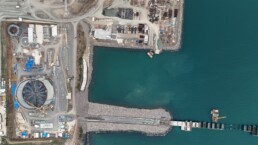
A new gateway to Turkey – Stolthaven Terminals and Rönesans Holding on the DAPEK Ceyhan Terminal
Stolthaven Terminals and Rönesans Holding are building a new chemical and industrial terminal at Ceyhan, on Turkey’s Mediterranean coast. The…

KME & KMSM Family Day 2026 held in Singapore
Promoting Business Understanding and Employee Engagement Through Interaction Between Employees and Their Families K LINE MARINE & ENERGY a…
Maritime Coastguard Agency celebrates World Maritime Day 2026
Transport Secretary Heidi Alexander has written to the International Maritime Organization on World Maritime Day. On Thursday 24 September,…

Paracel Carbon Forestry Project verifies first carbon removal credits
Paracel, a large-scale carbon removals project in Paraguay backed by Trafigura, has verified its first carbon removal credits, totalling over 190,000…
When the Levee Breaks
The weakest June for Chinese crude imports in a decade did not cost a single barrel of throughput. Imports fell 41.3% on the year, runs held above…
DORIC WEEKLY INSIGHT 25 SEPTEMBER 2026
Please find below the DORIC Market Insight for the week ending 25thSeptember 2026. Weekly Report 25.09.2026
Subscribe to our newsletter!
if you dont want to swim alone in the ocean of news, sign up for the newsletter, and you will receive daily all the important news of world shipping!
