San Pedro Bay Ports outline path for Cleaner Marine Fuels
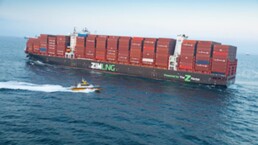

The ports of Long Beach and Los Angeles have released a comprehensive report identifying promising clean marine fuels for oceangoing vessels and outlining steps to support their use at the nation’s busiest port complex.
Conducted as part of the ports joint Green Shipping Corridorefforts, the Clean Marine Fuel Feasibility Assessment examined which fuels are most likely to be adopted by the shipping industry calling at our ports, how much demand could develop locally and what infrastructure would be needed to support them.
The study found that liquefied natural gas (LNG) and methanol are the two most viable clean marine fuels for the near and medium term. Both offer potential pathways to reduce emissions from oceangoing vessels, depending on how the fuels are produced and sourced. Approximately 4,000 vessels call each year at San Pedro Bay ports. Reducing emissions from these vessels – the largest source of emissions in the ports complex – is a key to accomplishing Clean Air Action Plan goals.
“Strategic investments guided by this study will enable a growing market for these green marine fuels, helping ships serving the trans-Pacific transition to a cleaner future,” said Port of Long Beach CEO Dr. Noel Hacegaba. “The findings provide a promising path for us to work with our partners to continue improving air quality across the region in pursuit of our zero-emissions ambitions.”
”Reducing emissions from ships is one of the most important challenges facing our industry,” said Port of Los Angeles Executive Director Gene Seroka. “This study gives us a clearer picture of where the market is headed and how we can work with our partners to make cleaner marine fuels more accessible. It’s another important step in our ongoing commitment to cleaner air and a more sustainable supply chain.”
Among the study’s findings:
- Shipping lines are investing in a variety of fuel technologies, rather than moving toward a single alternative to conventional marine fuel.
- By 2030, annual demand at the two ports could reach approximately 65,000 to 115,000 metric tons of LNG and 64,000 to 250,000 metric tons of methanol, depending on market conditions and vessel deployment.
- Much of the storage and distribution infrastructure needed for early methanol fueling is already available or could be adapted, reducing the need for major initial investments.
- Fuel costs, shipping line commitments and regulatory requirements will help determine how quickly cleaner fuels become widely available.
The assessment recommends that the ports adopt a phased approach that includes incentivizing early methanol use, exploring pilot fueling projects, making use of existing storage facilities and working with regulatory agencies to establish clear safety and permitting requirements. For LNG, the study recommends focusing on existing ship-to-ship fueling methods to ensure safety and efficiency rather than constructing major new storage facilities at the ports.
The information contained in the assessment will help inform a joint ports Request for Proposal anticipated to be released by the end of the year that will solicit proposals to demonstrate alternative fuel bunkering capabilities in the San Pedro Bay.
The ports will also use the findings to help guide future planning and collaboration with shipping lines, fuel suppliers, terminal operators and government agencies as the maritime industry continues its transition toward lower-emission operations.
Updated in 2017, the CAAP is a comprehensive strategy for accelerating progress toward a zero-emissions future while protecting and strengthening the ports’ competitive position in the global economy. Since 2005, port-related air pollution emissions in San Pedro Bay have dropped 90% for diesel particulate matter, 70% for nitrogen oxides, and 98% for sulfur oxides. Targets for reducing greenhouse gases from port-related sources were introduced as part of the 2017 CAAP. The document calls for the ports to reduce GHGs 40% below 1990 levels by 2030 and 80% below 1990 levels by 2050. The Clean Air Action Plan was originally approved in 2006. View the latest emissions inventories for the Port of Long Beach and the Port of Los Angeles.



Related News.

ECB keeps rates on hold as Christine Lagarde announced her resignation
With still very little knock-on effects from higher energy prices and headline inflation on the rest of the economy, the ECB kept interest rates on…
ASA SC highlights geopolitical risks to seafarers while tackling workforce and regulatory challenges
The 33rd Interim Meeting of the Asian Shipowners’ Association (ASA) Seafarers Committee (SC) convened online on 16 October 2026, hosted by the China…
US awards $498m to 35 port projects across 19 states
The round uses the last US$450 million of the infrastructure law's port grant commitment. Alaska's Whittier receives US$50.6 million to replace the…
Maritime leaders push for stronger action on global shipping rules in Busan
World Maritime Day Parallel Event spotlights theme “From Policy into Practice: Powering Maritime Excellence”. International delegates meeting in…
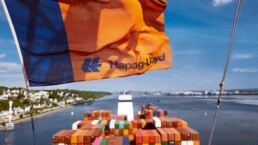
Hapag-Lloyd strengthens its position in Italian ports
Italian export volumes of Hapag-Lloyd continue its upward trend, with a further relevant growth expected in 2026 compared with 2025, bringing…
 Fujairah…
DORIC MONTHLY CHINA BAROMETER OCTOBER 2026
Pls find below the DORIC MONTHLY - CHINA BAROMETER OCTOBER 2026 CHINA_BAROMETER_OCTOBER_2026
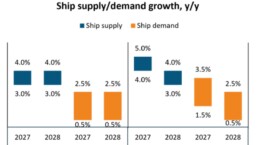
BIMCO Dry Bulk Shipping Market Overview & Outlook
Escalating attacks on ships heighten uncertainty "Geopolitical disruptions continue to cloud the dry bulk market outlook. The effective closure of…
Nor-Shipping aims to demystify ship recycling with new conference for 2027
With industry estimates suggesting more than 15,000 vessels will need to be recycled by 2032*, more than double the number recycled in the previous…

SFL Newbuild agreements and long-term charters of two 8,800 TEU container vessels and one very large ammonia carrier
SFL Corporation announced that it has agreed to acquire two 8,800 TEU Container Vessels with scheduled delivery in 2027 and one 93,000 cbm dual-fuel…
Subscribe to our newsletter!
if you dont want to swim alone in the ocean of news, sign up for the newsletter, and you will receive daily all the important news of world shipping!
