Korea’s LNG Carrier Edge Faces China’s Rise
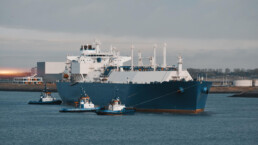

Chinese Orders Recover This Year As Private Shipyards Move into LNG Carrier Construction While Industry Urges Korea to Strengthen Next-Generation Ship Technology Amid Rising Chinese Capacity
According to Clarkson Research, a British shipbuilding and shipping market analysis agency, on Sept. 22, the global LNG carrier order volume placed from January of this year to Sept. 18 was 66 vessels. Among these, Korea accounted for 61.2% of the total with 40 vessels, while China showed a 38.8% market share with 26 vessels. China’s LNG carrier market share plummeted from 42.8% in 2024 to 8.1% last year, but it is showing a recovery trend this year.
Analysis also suggests that China’s pursuit in LNG carriers will intensify. Hengli Heavy Industry, which has previously recorded the world’s largest order backlog for a single shipyard, is a prime example. Hengli has been expanding its order portfolio centering on large oil tankers, bulk carriers, and container ships, and its first newbuilding order for an LNG carrier is known to be imminent. Accordingly, the number of Chinese shipyards that have secured the capacity to build large LNG carriers is expected to expand from the existing 5 to a 6 shipyard system.
As China enjoys a boom in the shipbuilding industry taking advantage of the Iran war this year, the warmth is spreading to LNG carriers as well. With growing uncertainties in the crude oil supply chain due to concerns over the blockade of the Strait of Hormuz, orders for large oil tankers surged, and Chinese shipbuilders armed with price competitiveness absorbed a substantial volume. Observations indicate that the order capacity and production experience accumulated in this way are leading to orders for high-value vessels, including LNG carriers. In the first half of this year, the new order volume of the Chinese shipbuilding industry reached 121,060,000 DWT (deadweight tonnage), exceeding 80% of the global total, and Hengli is also aggressively building up its backlog by securing more than 200 vessels in the first half alone.
The industry’s perspective is that it is not easy for Chinese shipbuilders to replace Korean shipbuilders in the LNG carrier market for the time being. As LNG carriers must transport cryogenic cargo at around minus 163 degrees Celsius, high levels of technological prowess are required, such as cargo hold design, insulation, and gas processing systems. The trust of shipowners accumulated through long-term construction experience and actual operational track records is also difficult to secure in a short period. An LNG carrier typically takes 3 to 4 years from order to delivery, and the fact that shipowners demand a considerable verification period before entrusting their first volume to a newly entering shipyard is also cited as an entry barrier.
Nevertheless, the atmosphere within the domestic shipbuilding industry is that it cannot simply remain optimistic about China’s pursuit. Based on massive orders, China is expanding the production capacity of its shipyards and rapidly accumulating construction experience. In particular, as the number of shipyards securing the LNG cargo hold license from France’s GTT increases one by one, the rarity of the technology itself, which Korea has monopolized, is bound to fade. This means that even if a technological gap exists now, it is difficult to rule out the possibility that the gap will narrow as Chinese shipbuilders repeat the ordering and construction of LNG carriers.
This is the background behind the pointing out that a technological super gap must be maintained in next-generation vessels along with LNG carriers. An industry official emphasized, “Following LNG carriers, the high-value vessel market is expanding into liquefied carbon dioxide carriers and ammonia carriers,” and added, “We must secure competitiveness that encompasses not only the construction technology of next-generation vessels but also eco-friendly fuels and core equipment.”
Source: BusinessKorea



Related News.

Poland’s additional national requirements distort competition says Danish Shipping
Poland has introduced a national survey requirement for smaller foreign-flagged vessels operating in Polish waters. This creates significant…

Battery Vessels could help electrify most of Global Shipping Emissions
Battery-electric ships are economical only if the pack is cycled frequently, so they have been confined to short-sea, ferry and harbour vessels…

Mintra and Ledgid explore collaboration to connect Maritime digital identity, learning and workforce development
Mintra® and LEDGID are exploring opportunities to bring together complementary capabilities in digital learning, maritime training, professional…

World Shipping Council calls for global agreement on shipping emissions as industry investment surpasses $200 billion USD
The World Shipping Council (WSC) is calling on governments to agree on binding global greenhouse gas regulations for international shipping without…

What happened to the ITF whistleblower’s complaint?
In January 2026, a whistleblower complained that International Transport Workers’ Federation (ITF) General Secretary Stephen Cotton had manipulated…

Growing regulatory scrutiny puts seafarer wellbeing firmly on maritime safety agenda, VIKAND warns
Seafarer wellbeing is coming under greater regulatory scrutiny as international rules and guidance increasingly recognise crew health and welfare as…

Good Times Bad Times the Premium Stays with the Strait
In October, we wrote that if the transfer network off Oman kept pace, Gulf crude would carry China's refill and keep drawing tonnage east,…

Allied Weekly Market Review Week 47
Pls find below the Allied - Weekly Market Review - Week 47 ALLIED - Weekly Market Report- Week 47


Climate TRACE releases September 2026 Emissions Data
Climate TRACE reported that global greenhouse gas (GHG) emissions for the month of September 2026 totaled 4.7 billion tonnes CO₂e. This remains…
Subscribe to our newsletter!
if you dont want to swim alone in the ocean of news, sign up for the newsletter, and you will receive daily all the important news of world shipping!
