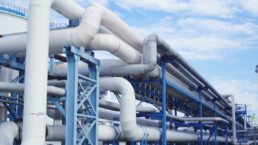

Carbon capture, utilisation, and storage (CCUS) has become an important decarbonization pathway for oil and gas, power, cement, steel and other hard-to-abate industries. As of June 2026, more than 70% of operational and upcoming carbon capture facilities, by facility count, were associated with energy assets, with oil and gas companies remaining key participants, even though many have scaled back broader low-carbon investments, says GlobalData, a leading intelligence and productivity platform.
GlobalData’s Strategic Intelligence report, “Carbon Capture and Storage,” reveals that several oil and gas companies continue to prioritize CCUS where it supports core assets, including LNG, refining, hydrogen production, and upstream operations. Some of the key projects include Eni’s Ravenna cluster, ExxonMobil’s Gulf Coast CO₂ transport and storage network, and Northern Lights, which is jointly owned by Equinor, Shell, and TotalEnergies, for advancing offshore CO₂ transport and storage in Norway.
Ravindra Puranik, Oil and Gas Analyst at GlobalData, comments: “As of June 2026, the operational carbon capture base remained modest, with more than 140 projects globally across multiple industries and a cumulative capacity of 62 million tonnes per annum (mtpa). The energy sector accounted for the bulk of this capacity. However, most future capture capacity remains concentrated in the feasibility and FEED stages of project development.”
The current phase of the CCUS market reflects that the sector has moved beyond pilot-scale interest, but many projects have yet to clear the commercial, regulatory, and infrastructure hurdles required for construction and commissioning. The availability of shared CO₂ pipelines, shipping routes, and storage hubs will be critical in de-risking these projects and improving the economics of capture investments.
Despite the strong project pipeline for CCUS, the decade is likely to be defined by selective delivery rather than uniform expansion. Many announced projects remain exposed to financing risk, cost inflation, regulatory uncertainty, and delays in securing long-term CO₂ offtake or storage contracts. Without sufficient transport infrastructure and storage capacity, captured CO₂ cannot be permanently sequestered at scale, which can slow or limit capture project development. Companies are unlikely to advance capture facilities without a reliable route to store the CO₂.
Puranik concludes: “The US 45Q tax credit, the European Union’s ETS, and Canada’s carbon pricing mechanism support project economics. However, high capital and operating costs, inadequate CO₂ transport and storage infrastructure, permitting delays, long-term liability, and public skepticism remain critical for the mass CCUS deployment.”
Source: GlobalData



Related News.

Hong Kong Global Maritime Trade Summit to return for third edition
The International Chamber of Shipping, in collaboration with the Transport and Logistics Bureau of the Government of Hong Kong and the Hong Kong…

Appetite for US crude oil exports climbs despite high freight
South Korea tops US crude destinations at 568,600 b/d VLCC rates to Asia double, closing arbitrage window European refining margins…
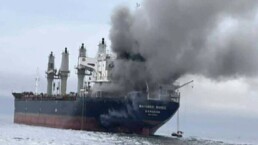
Shipping stocks Rally as Hormuz Traffic plunges 75%
Ship traffic through the Strait of Hormuz — a critical chokepoint handling about 20% of global crude oil and liquefied natural gas shipments — has…
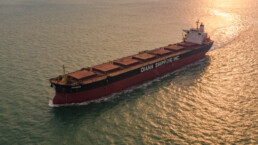
Diana Shipping announces Time Charter Contract for m/v G P Zafirakis with Classic Maritime
Diana Shipping, a global shipping company specializing in the ownership and bareboat charter-in of dry bulk vessels, announced that, through a…
New IMO ESP Code framework for Remote Inspection Techniques
The International Maritime Organisation, through Resolution MSC.584(111) , has adopted amendments to the International Code on the Enhanced…

ABS opens Offshore & Marine Support Center in Bergen
ABS has expanded its capabilities in the Norwegian maritime market with the opening of a cutting-edge support center in Bergen, bringing advanced…
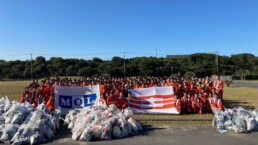
MOL holds giant step memorial ceremony and beach cleanup at Kashima Coast
Memorial and Reflection 20 Years After the Accident: Learning from the Past to Foster an Even Stronger Safety Culture Mitsui O.S.K. Lines, announced…

KEZAD-based Arabian Gulf Steel Industries achieves lowest verified Carbon Footprint for Rebar
CARES UK verified Environmental Product Declaration confirms 139 kg CO₂e per tonne for rebar produced at AGSI’s KEZAD Abu Dhabi facility Arabian…

Indian Register of Shipping announces launch of first fleet support ship INS Surya
Indian Register of Shipping continues to strengthen its role in supporting the Indian Navy and India’s naval shipbuilding capabilities through the…

VLCCs Climbing the Record Charts
LR2 The TC1 75kt MEG/Japan index decreased by only a single point this week to WS928. The corresponding Baltic round-trip TCE fell by $2,000 to…
Subscribe to our newsletter!
if you dont want to swim alone in the ocean of news, sign up for the newsletter, and you will receive daily all the important news of world shipping!
