The Port of Bilbao has seen the largest tear-on-year increase in recent years


- The increases are mostly in liquid bulk, such as crude oil and natural gas, and in container traffic.
- Imports rose by 14% and exports by 9%, with a balance between short-sea and deep-sea markets in terms of volume of traffic.
- Passenger numbers rose by 13% and the new EU Entry/Exit System has been deployed.
In the first half of the year, the Port of Bilbao handled 17,317,427 tonnes of cargo, an increase of 1,893,980 tonnes and 12.3% up on the same period last year. This figure represents the highest year-on-year growth recorded at the start of a year for the last twenty-two years, or since 2004.
Furthermore, despite a difficult start to the year due to the storms, mostly in January and part of February, that affected the vast majority of state-owned ports, and which, in the case of the Port of Bilbao, led to a 9.5% year-on-year decrease in cargo handling in January, the subsequent months, from February to June, have seen the highest volumes of cargo recorded over this period in the last 18 years.
Of particular note is the 24% increase in liquid bulk, following the return to normal operations at the Petronor refinery. Containerised cargo, a strategic sector for the port, rose by almost 3%, whilst non-containerised general cargo fell by 4% (with a 5.1% increase in breakbulk, the best figures in this decade, and an 18.7% fall in Ro-Ro cargo). Dry bulk cargo fell by 11.5%.
Among the main commodities, crude oil imports, up almost 1.8 million tonnes and recording a 52% year-on-year increase, account for 30% of total traffic. The unloading of liquefied natural gas, up 11% (+200,849 tonnes), accounted for 11% of the total volume of cargo handled. Exports of petrol and chemical products, as well as imports of soybeans, also increased.
The volume of project cargo linked to offshore wind power also maintains a positive trend, with the export of monopiles and offshore towers manufactured by Haizea Wind within the Port itself. This year, specifically, Haizea Wind is manufacturing a 97.3 metre long monopile weighing 1,860 tonnes.
In the first half of the year, the port has also hosted other complex logistics operations involving various large-scale components, such as the unloading, assembly and transfer of four units that make up the structure of the green hydrogen-powered synthetic fuels plant currently being built by Petronor within the port itself. These structures weigh between 160 and 535 tonnes, are up to 33 metres high and have a combined weight of 1,200 tonnes.
Growth in both short and deep-sea international markets
Although the international arena continues to be marked by geopolitical tension and tariff uncertainty, this, as yet, had had no significant impact on traffic volumes. Imports are up around 14% and exports by 9%. Short and deep-sea traffic are steadily becoming equally balanced, making Bilbao an international port serving all types of markets, both European and transoceanic. At present, short-sea shipping accounts for 51% of traffic, whilst deep-sea accounts for 49%.
Deep-sea traffic is the fastest-growing, together with that from Mediterranean Africa and coastal shipping with other Spanish ports. By country, the leaders in terms of total traffic are the United States, Russia, Brazil, Mexico, Spain and the United Kingdom. Of these, the countries showing the strongest growth in tonnage, largely due to liquid bulk, are Mexico, Spain, Russia, the United Kingdom and the United States, with Brazil being the only one among them to see a decline in traffic.
In terms of destination markets, Spain leads the ranking due to shipments of chemicals, gasoil and petrol, followed by the United Kingdom, Belgium and the Netherlands. As for markets of origin, Russia and the United States lead the way, almost neck and neck, followed by Mexico and Brazil.
The new direct container shipping routes to Canada and the west coast of South America, launched in late 2025 and January 2026, have also led to a very significant increase in trade with these strategic markets. As of June, the changes in the political and economic situation in Venezuela have resulted in only one additional oil tanker arriving at the Port of Bilbao (three had arrived over the same period last year).
Larger-capacity vessels and growth in tourism
Between January and June, 1,285 vessels called at the Port of Bilbao, 32 fewer than in the same period last year. However, gross tonnage, the measure of a ship’s capacity, has risen by 14%, reflecting the international trend towards the use of larger container ships, as is also the case with LNG carriers, although the number of these arriving in Bilbao has fallen. The number of oil tankers calling at the port has risen, though their average size has not increased.
Passenger traffic is up almost 13%, with 135,117 people arriving or departing on cruise ships or on the ferries connecting the Basque Country with the UK and Ireland. The number of cruise ship passengers has risen 36% in a season that is set to break yet another record, with 38 cruise ships having already called at the port, whilst the number of ferry passengers has fallen 8% across the 80 ferries that have called to date.



Related News.

Hong Kong Global Maritime Trade Summit to return for third edition
The International Chamber of Shipping, in collaboration with the Transport and Logistics Bureau of the Government of Hong Kong and the Hong Kong…

Appetite for US crude oil exports climbs despite high freight
South Korea tops US crude destinations at 568,600 b/d VLCC rates to Asia double, closing arbitrage window European refining margins…

Shipping stocks Rally as Hormuz Traffic plunges 75%
Ship traffic through the Strait of Hormuz — a critical chokepoint handling about 20% of global crude oil and liquefied natural gas shipments — has…
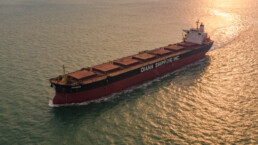
Diana Shipping announces Time Charter Contract for m/v G P Zafirakis with Classic Maritime
Diana Shipping, a global shipping company specializing in the ownership and bareboat charter-in of dry bulk vessels, announced that, through a…
New IMO ESP Code framework for Remote Inspection Techniques
The International Maritime Organisation, through Resolution MSC.584(111) , has adopted amendments to the International Code on the Enhanced…

ABS opens Offshore & Marine Support Center in Bergen
ABS has expanded its capabilities in the Norwegian maritime market with the opening of a cutting-edge support center in Bergen, bringing advanced…

MOL holds giant step memorial ceremony and beach cleanup at Kashima Coast
Memorial and Reflection 20 Years After the Accident: Learning from the Past to Foster an Even Stronger Safety Culture Mitsui O.S.K. Lines, announced…

KEZAD-based Arabian Gulf Steel Industries achieves lowest verified Carbon Footprint for Rebar
CARES UK verified Environmental Product Declaration confirms 139 kg CO₂e per tonne for rebar produced at AGSI’s KEZAD Abu Dhabi facility Arabian…

Indian Register of Shipping announces launch of first fleet support ship INS Surya
Indian Register of Shipping continues to strengthen its role in supporting the Indian Navy and India’s naval shipbuilding capabilities through the…

VLCCs Climbing the Record Charts
LR2 The TC1 75kt MEG/Japan index decreased by only a single point this week to WS928. The corresponding Baltic round-trip TCE fell by $2,000 to…
Subscribe to our newsletter!
if you dont want to swim alone in the ocean of news, sign up for the newsletter, and you will receive daily all the important news of world shipping!
