The Pattern Emerging across AI transformations


For decades, enterprise transformation followed a familiar playbook. Digitize processes. Move to the cloud. Standardize operations. Then optimize them over time.
Those investments are critical. But they weren’t the finish line. They were the foundation. And today, they’re paying off in new ways as organizations adopt AI to drive measurable business outcomes.
But there’s another part of that foundation which is becoming just as important: data. The organizations best positioned to compound their value from AI are those that have invested in data foundations that give AI the trusted business context it needs to reason, recommend, and act.
Now, in conversations with customers across the Americas and around the world, I’m seeing a new pattern emerge. The discussion is shifting from where AI can be applied to what happens when intelligence becomes embedded into the core of how the business operates.
While every transformation is different, three common shifts keep coming up.
1. From AI use cases to intelligent business processes
The first wave of AI adoption focused on proving value. Organizations identified high-impact use cases, delivered measurable results, and built confidence that AI could make a difference.
That work isn’t finished. But increasingly, customers are asking how intelligence can become part of the business processes employees use every day. We’re already beginning to see what this looks like in practice.
For example, HR Path Brazil, a Brazilian company specializing in recruiting and managing talent for international firms, is using Joule embedded in SAP SuccessFactors HCM to automate routine HR interactions. It is helping employees find the information they need faster while allowing HR teams to focus on more strategic work. The company has reported a seven percent reduction in standard HR support cases and two hours of HR support workload eliminated each week, which quickly adds up. It’s one example of how embedded and connected AI is becoming part of how work gets done.
2. From measuring AI use to measuring the business outcomes it creates
One of the biggest changes I’m seeing is how organizations define success. ROI is becoming a given and that is reflected in the data, especially in Oxford Economics research out just this week. It showed that organizations investing in AI expect to see an average return of 21% this year but increasing to 38% in two years. And as agentic AI continues scaling, it is projected to deliver $17.6 million in returns, more than quadrupling last year’s estimates (US$4.3 million).
This is allowing organizations to focus more on business outcomes from their AI. They are asking questions like can we shorten cycle times? Can we improve decision-making? Can we free employees to spend more time creating value? Can we become more resilient and responsive as a business?
This is an important shift because it changes the conversation from implementing technology to improving how the business performs.
3. From systems of record to the new operating system for the enterprise
The third shift is the one I believe will have the greatest long-term impact. For decades, enterprise software primarily captured transactions, standardized processes, and automated routine work. Now it’s beginning to help organizations anticipate change, recommend actions, coordinate work across functions, and increasingly execute routine decisions with human oversight.
That’s why I believe the Autonomous Enterprise represents more than the next phase of automation. It represents a new operating model for business.
Instead of people spending time connecting information across finance, supply chain, procurement, HR, and customer operations before deciding what to do next, intelligent systems can increasingly provide context, surface recommendations, orchestrate work, and help teams execute.
People remain firmly in control. But they’re supported by enterprise software that is becoming an active participant in how the business operates and executes, not simply a system that records what already happened.
Where we go from here
The organizations creating the greatest long-term advantage won’t just be the ones deploying the largest number of AI use cases. They’ll be the ones that use those early successes to rethink how work gets done across the enterprise.
The journey to the Autonomous Enterprise won’t happen overnight, and it won’t replace the need for strong leadership, governance, or talented people. If anything, those become even more important.
We’ll likely look back on today’s AI projects much the same way we now look back on the early days of cloud transformation; not as the destination, but as the foundation for a fundamentally new way of operating and innovating continuously.
The true winners from this shift will be the ones who continuously become more intelligent, more adaptive, and ultimately more autonomous.



Related News.

European Shipowners call on MEPs to back Commission proposal to include two Indian yards in the EU ship recycling list
The Environment Committee of the European Parliament votes on 4 November on a motion for resolution objecting to the Commission’s proposal to add two…
Oversea signs commercial agreement with UECC following Successful Pilot
Following a successful pilot onboard Auto Advance, UECC has chosen to enter into a commercial agreement with Oversea. The pilot demonstrates how…

First NABEP Crude Cargo Under U.S. Agreement Arrives in Texas
Shipment of 1 million barrels arrived as NABEP production passes 223,000 barrels of oil equivalent per day. Two tankers carrying 1 million barrels of…
LNG carrier prices fall to $245 million, threatening Korean Shipbuilders’ Margins
Prices for high-value vessels, including liquefied natural gas carriers and ultra-large container ships, have begun to decline despite rising…

Vehicle Carrier Safety Forum publishes new Fire Drill Guidelines for vehicle carrying vessels
The Vehicle Carrier Safety Forum has published new Fire Drill Guidelines for Vehicle Carrying Vessels, providing vessel operators with a practical…
Is an Atlantic Basin crude glut on the cards?
Atlantic crude discounts fail to offset high freight to Asia, raising the risk of a regional glut as VLCC availability tightens. Freight…

The future of trade infrastructure in Europe is connectivity
One year after its inauguration, Rijeka Gateway offers a glimpse into the future of European trade. On 10 September last year,…

Allied – Weekly Market Review – Week 43
Please find below the Allied Weekly Report for Week 43 | 2026 ALLIED - Weekly Market Report- Week 43

Intermodal Report – Week 43 2026
Please find below the Intermodal market report for week 43 2026. Intermodal Report Week 43 2026
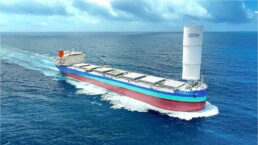
Wind Challenger-Equipped LNG Dual-Fueled Coal Carrier ‘MAIZURU KAZENOMAI’ Delivered
-While Supporting a Stable Energy Supply, Reducing Environmental Impact - Mitsui O.S.K. Lines announced the delivery and entry into service of an…
Subscribe to our newsletter!
if you dont want to swim alone in the ocean of news, sign up for the newsletter, and you will receive daily all the important news of world shipping!
