Sustainable Shipping Initiative IMO offers key to unlocking governance impasse between the Hong Kong and Basel Conventions
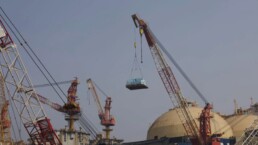

The governance impasse between the Hong Kong and Basel Conventions, which has deferred responsible investment in leading ship recycling facilities since 2011, can no longer be justified on evidentiary grounds, the Sustainable Shipping Initiative said.
The SSI is urging negotiators ahead of the Basel Convention’s Open-Ended Working Group (OEWG-15), meeting in Geneva, 23-26 June, for the IMO to become the universal focal point for technical work on the Hong Kong Convention (HKC), rather than deferring to a parallel process that the OEWG is not structured to resolve.
The SSI is also asking negotiators to make two further substantive steps. Firstly, to formalise a joint technical workstream connecting the MEPC 83 experience-building phase with the working group’s analytical outputs ahead of COP18 in Panama City in April 2027.
For the first time, following research conducted by the SSI at Alang, India, the world’s largest ship recycling cluster, there is independent operational evidence from inside a certified ship recycling facility in South Asia that the Hong Kong Convention is working. It confirmed that compliance is producing materially improved safety and environmental outcomes.
The Gujarat Maritime Board has committed to doubling Alang’s throughput to 9 million LDT by 2035, and BIMCO data indicates that more than 16,000 ocean-going vessels will require recycling over the coming decade, which is more than double the volume of the preceding ten years. Investment in the knowledge systems, digital infrastructure, workforce continuity and downstream accountability that safe scaling at that volume will require is being held back while the regulatory landscape remains unresolved.
Ellie Besley-Gould, chief executive, Sustainable Shipping Initiative, commented: “For the first time, there is independent operational evidence from inside a certified ship recycling facility in South Asia that the Hong Kong Convention is working. The governance impasse that has deferred responsible investment since 2011 can no longer be justified on those grounds. The evidence is in. Now negotiators need to act on it.
“With more than 16,000 vessels coming to the end of life this decade, the cost of another deferral is not abstract. Investment in the knowledge systems, digital infrastructure and downstream accountability that safe scaling requires is being held back. A further deferral at OEWG-15 pushes that back by at least two years.”
SSI’s position is grounded in its study, Alang in Transition: From Compliance to Capability. Published in May 2026, it is the first openly available independent operational assessment of an HKC-certified facility in South Asia. The research, conducted between February and May 2026, combined structured fieldwork at a leading HKC-compliant facility in Alang-Sosiya with interviews of management, supervisory staff and workers, and validation workshops involving yards, HSE professionals, union representatives and downstream value chain actors.
It found that HKC compliance is producing materially improved safety and environmental outcomes. These include stage-specific risk controls related to the distinct hazards of gas-freeing, primary cutting, secondary cutting and tertiary processing; a supervisory knowledge infrastructure of at least forty years; and sustained physical investment that has transformed conditions at the leading edge of the Alang cluster. The near agreement at Basel COP 10 in 2011 was partly floundered on questions about an operational reality that could not then be answered by independent assessment. However, these questions can be answered now through accumulated insights.
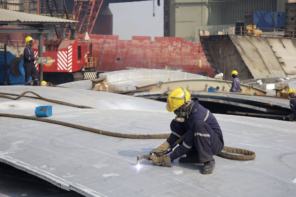
The clearest systemic gap SSI’s research identifies is downstream. HKC Regulation 20.4 requires that waste generated from recycling be transferred to facilities authorised to manage their treatment and disposal in line with the recycling state’s Basel obligations, and Regulation 3 makes the jurisdictional relationship explicit in that the HKC was designed to complement Basel’s downstream Environmentally Sound Management (ESM) framework.
What does not yet exist is the material traceability infrastructure to give Regulation 20.4 operational force beyond the primary facility gate. SSI’s research found that materials move through a complex network of segregators, secondary processors, up-cyclers and waste handlers. Whilst hazardous materials are transferred from the primary facility to local government authorities, no manifest follows them through the full downstream chain all the way through to e-waste.
This is one area where Basel’s continuing jurisdiction is most legitimate and most practically constructive; a Basel draft COP18 decision that omits these findings would leave intact the most technically defensible remaining objection to resolution. An omission would simultaneously fail workers, particularly women, who are most exposed in this part of the chain and who have no other forum through which to assert a claim on international standards.
Conditions for resolution are also materially more favourable than at COP 10. The four states handling around 95% of global recycling tonnage are now HKC parties, the IRRC process is operational, the Paris MoU has incorporated HKC enforcement since July 2025, and MEPC 83’s experience-building phase has created a formal mechanism for ongoing IMO–Basel Secretariat alignment.
SSI is also calling on the European Commission for greater alignment. The Commission’s March 2026 Industrial Maritime Strategy names India as a cooperation partner in maritime industrial transition, yet every Indian facility application to the EU Ship Recycling Regulation list remains outstanding after more than a decade, with audit reports unresolved for 18 months or more. The underlying legal barrier that lies within the EU Waste Shipment Regulation’s implementation of the Basel Ban Amendment cannot be removed unilaterally. However, the Commission can use its influence as a Basel party to advance equivalence criteria at OEWG-15 and COP18. The EU-India Strategic Agenda 2025 provides the diplomatic framework for a technical workstream to define what an EU SRR pathway requires and the SSI is asking the Commission to open it.



Related News.

Navigating the Multi-Orbit Era: In Conversation with Intellian’s Jon Harrison at SMM 2026
At SMM 2026 in Hamburg, the rapid evolution of maritime satellite communications took centre stage. Across the exhibition halls, discussions among…
Cyprus ports need joint energy and investment strategy, shipping agents chief says
Cyprus needs a coordinated strategy for shipping, energy and environmental protection to support port investment and modernisation, Cyprus shipping…

MASO Public Affairs introduces MASO Regulatory Intelligence
A new subscription service helping businesses understand what is changing and what it means for them MASO Public Affairs introduces MASO Regulatory…
Anglo-Eastern helps turn CMBTECH’s ammonia ambition into an operational reality
From early feasibility study and risk-based design to newbuilding supervision, crew readiness and technical management, Anglo-Eastern drew on its…

Escalation of attacks threatens to derail recovery in Middle East oil exports
World oil demand is forecast to fall by 2.5 mb/d y-o-y in 4Q26 and 2.6 mb/d on average in 2026. As the Iran war manifests itself through restricted…
New study finds shipping pays twice its share to EU ETS earmarked revenues should triple to help build market for sustainable fuels and technologies
Shipping is responsible for around 10% of EU ETS emissions but pays almost 20% of the ETS bill. Unlike other sectors, it has never received free…
MSARC strengthens maritime mass rescue readiness through training and national live exercise off Dakar, Senegal
Joint MSARC–FHAS programme combines three days of SAR training with a national multi-agency live exercise The Maritime Search and Rescue Council ,…
Sogese report deliveries are still being delayed as container freight rates fluctuate
FOR IMPORTERS Spot rates into the Mediterranean are back at January levels, Far East to Europe reliability sits at pandemic lows, and nearly…
Glencore begins trading on Australian Securities Exchange
Glencore has begun trading on the Australian Securities Exchange under the ASX code GLC. Gary Nagle, Glencore’s CEO, said it was an exciting day for…
BIMCO Shipping Number of the Week
Suez Canal container ship transits exceed 50% of pre-disruption levels "During the first two weeks of October, weekly container ship capacity…
Subscribe to our newsletter!
if you dont want to swim alone in the ocean of news, sign up for the newsletter, and you will receive daily all the important news of world shipping!
