Greek shipowners work with Japan, Liberia on new IMO bunker rules
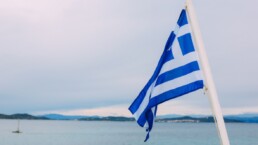

The Union of Greek Shipowners has reached out to Liberia and Japan to work on alternative proposals to the International Maritime Organization’s Net-Zero Framework, the group said June 5, also calling on the EU to make firmer commitments in rolling back its regulations on maritime greenhouse gas emissions.
After the UN agency’s member states voted to delay the framework’s adoption by a year in October 2025, Liberia and Japan have led proposals that would remove its mandatory GHG price mechanism in bids to seek consensus.
Speaking at a press conference, officials from UGS, Greece’s largest shipowners’ organization, said they would work with the countries to refine the regulatory proposals as the IMO is scheduled to have further discussions on the Net-Zero Framework later this year.
“Some parts of their proposals are positive, some parts are not feasible,” UGS President Melina Travlos. “We are in touch with them to hand over our own requests.”
In its current form, the NEF is designed to place a cost on maritime greenhouse gas emissions from later this decade to prompt a switch to low-carbon bunker fuels. Environmentalist groups and many shipping professionals have said a robust pricing mechanism is essential for the marine energy transition.
April’s delivered bunker price for 0.5%-sulfur fuel oil in Rotterdam was $17/Gigajoule, compared with $21/Gj for LNG and $35/Gj for bio-LNG, according to the Platts bunker cost calculator, which estimates bunker expenses based on Platts assessments. Platts is part of S&P Global Energy.
The Greek shipholders group has criticized that the framework in its current form is inappropriate, arguing that the lack of sustainable marine fuels could mean the IMO would simply be taxing ship operators in the form of the GHG cost while subsidizing developing countries and small island states.
Criticism against the EU
The EU officially supports the current framework, but Greece abstained from the IMO’s vote last October. Greece could face a greater risk of being taken to the European Court of Justice if expressing explicit opposition and presenting a new proposal, because it is bound by EU laws to act in a unified matter with other member states, according to UGC officials.
The UGC, meanwhile, has reiterated its call that the EU should phase out its Emissions Trading System for shipping and FuelEU Maritime rules on the GHG intensity of marine energy in EU-related trades should the IMO confirm a global regulation.
“ETS and FuelEU are hurting the European shipping industry’s competitiveness, but the EU didn’t say the ETS will be withdrawn once the IMO framework is in place,” Travlos said.
Greece is the largest shipowning country within the EU, with Greek-owned ships accounting for more than 19% of the global fleet, according to UGS figures. Last year, EU port calls accounted for 13.7% of the total for the Greek-owned fleet in deadweight tonnage.
The EU has stated it would review its regulations when the IMO finalizes the NZF to avoid double-counting, but how and when that happens remain uncertain. Brussels could stop implementing FuelEU, which has a similar design to the NZF, but it’s highly unlikely to exclude shipping from the ETS due to its contribution to national revenues, according to some bunker industry players.
John Lyras, a member of the UGS’ board of directors, said the ETS is a “sham” presented as an environmental measure as the EU collects the emission charges from international shipping but hasn’t used the proceeds to fund maritime decarbonization as promised.
Based on EU estimates of shipping GHG and current cargo prices, EU member states could generate over Eur7 billion ($8.2 billion) per year overall from ship operators. The European Commission has pledged to allocate Eur1.6 billion by 2030 to decarbonization projects. In March, the EU executive said it had provided Eur 600 million to shipping projects from the Innovation Fund since 2020.
Geopolitical tensions
UGS officials said Greek shipowners are not transporting sanctioned oil in the shadow fleet operations while expressing concerns that sanctions laws would create unfair competition.
“Greece is one of the world’s largest in owning ships, and after two or three sales sometimes Greek ships end up in the shadow fleet,” Travlos said. “Unfair targeting of Greek shipping needs to be stopped.”
In recent years, Greek tanker companies sold many aged tankers that would eventually become part of the shadow fleet and continued to participate in Russian oil trades as the EU approved such transactions under some conditions, including the compliance with the price cap regime.
In April, Brussels explicitly required EU-based tanker sellers to ensure their ships would not be used to transport Russian oil by the initial buyers and future buyers in resales in a sanctions package. But some industry participants, like Intertanko, said the new rules would be hard to enforce.
“EU sanctions are unilateral and not global. They distort market competition while we should protect fair competition,” Travlos said.
Greek tanker operators lifted nearly 687,000 b/d of Russian crude in April, the highest since October 2025, and nearly 17% of the total of Russia’s seaborne exports, according to data from S&P Global Commodities at Sea and Maritime Intelligence Risk Suite. This compared with 25% in November 2022, the month before the price cap took effect. UGS figures show Greek-owned ships account for 26% of the oil tanker fleet in deadweight tonnage.
Separately, Travlos said ships should be protected when transiting the Strait of Hormuz based on international laws for navigational freedom.
Iran has taken control of Hormuz, a choke point handling 20% of global oil and LNG flows in normal times, since its war with Israel and the US started Feb. 28 and limited ship traffic to 90% below the pre-war level. The IMO has recorded 40 maritime attacks during the conflict as of June 3, killing 11 seafarers.
Iranian officials have been seeking to formalize a toll system for Hormuz transits, but US officials have warned of sanction risks against whoever pays. Earlier this month, Evangelos Marinakis — whose companies control one of the largest Greek fleets — said in the TradeWinds Shipowners Forum that a fee might help resume cargo flows.
When asked to comment on Marinakis’s remarks, Travlos said: “Protecting shipping is super important … they shouldn’t put us on the spot for such discussions.”
Source: Platts



Related News.

Navigating the Multi-Orbit Era: In Conversation with Intellian’s Jon Harrison at SMM 2026
At SMM 2026 in Hamburg, the rapid evolution of maritime satellite communications took centre stage. Across the exhibition halls, discussions among…
Cyprus ports need joint energy and investment strategy, shipping agents chief says
Cyprus needs a coordinated strategy for shipping, energy and environmental protection to support port investment and modernisation, Cyprus shipping…

MASO Public Affairs introduces MASO Regulatory Intelligence
A new subscription service helping businesses understand what is changing and what it means for them MASO Public Affairs introduces MASO Regulatory…
Anglo-Eastern helps turn CMBTECH’s ammonia ambition into an operational reality
From early feasibility study and risk-based design to newbuilding supervision, crew readiness and technical management, Anglo-Eastern drew on its…
Escalation of attacks threatens to derail recovery in Middle East oil exports
World oil demand is forecast to fall by 2.5 mb/d y-o-y in 4Q26 and 2.6 mb/d on average in 2026. As the Iran war manifests itself through restricted…
New study finds shipping pays twice its share to EU ETS earmarked revenues should triple to help build market for sustainable fuels and technologies
Shipping is responsible for around 10% of EU ETS emissions but pays almost 20% of the ETS bill. Unlike other sectors, it has never received free…

MSARC strengthens maritime mass rescue readiness through training and national live exercise off Dakar, Senegal
Joint MSARC–FHAS programme combines three days of SAR training with a national multi-agency live exercise The Maritime Search and Rescue Council ,…
Sogese report deliveries are still being delayed as container freight rates fluctuate
FOR IMPORTERS Spot rates into the Mediterranean are back at January levels, Far East to Europe reliability sits at pandemic lows, and nearly…
Glencore begins trading on Australian Securities Exchange
Glencore has begun trading on the Australian Securities Exchange under the ASX code GLC. Gary Nagle, Glencore’s CEO, said it was an exciting day for…
BIMCO Shipping Number of the Week
Suez Canal container ship transits exceed 50% of pre-disruption levels "During the first two weeks of October, weekly container ship capacity…
Subscribe to our newsletter!
if you dont want to swim alone in the ocean of news, sign up for the newsletter, and you will receive daily all the important news of world shipping!
