Shipping industry fears fuel shortages as Iran war squeezes bunker fuel supply
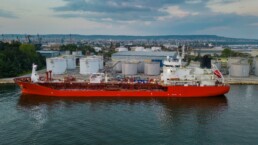

Ship operators rely on a sludgelike substance known as bunker fuel to keep vessels running. The Iran war ‘s closure of the Strait of Hormuz has choked off the supply of this fuel that powers the global maritime industry and its largest refueling hub in Asia.
Bunker fuel is a literal bottom of the barrel product: heavier and dirtier than the more expensive kinds of refined crude oil used by other vehicles like cars and airplanes, it sinks to the bottom of storage containers.
But it helps move the 80% of globally traded goods that are transported by sea, and experts say that means a shortage of bunker fuel will translate to higher shipping costs, increase consumer prices and hurt the bottom lines of businesses worldwide.
That will be an issue first in Asia, which relies heavily on Middle Eastern oil. In Singapore, the world’s biggest refueling hub for bunker fuel, reserves are dwindling and prices are spiking.
Shipping companies are trying to adapt to the energy shock, reducing vessel speeds and revising schedules to cut costs in the short term while making plans to acquire ships that can run on alternative fuels.
But some companies won’t survive this triage for long, according to Henning Gloystein of the Eurasia Group consultancy firm, who warned that the pain will spread beyond Asia through global supply chains.
Southeast Asia turns to ‘energy triage’
Asia, which was hit first and hardest by the energy shock, has adopted various forms of “energy triage ” to cope, increasing its use of coal, buying more crude oil from Russia and reviving plans to develop nuclear power.
But Asia is bracing for further impacts as energy reserves dwindle and government subsidies dry up.
More than half of global seaborne trade moved through Asian ports in 2024, according to United Nations data, so what happens there will have global consequences.
For now, Singapore’s supplies of bunker fuel have held up even as the price races up.
But the prolonged cutoff from major sources of the heavier crude oil needed for bunker fuel, like Iraq and Kuwait, will cause shortages, said Natalia Katona of the commodity site OilPrice.
We just see the price in Singapore going up, up, up,” Katona said.
Before the war, bunker fuel in Singapore cost about $500 per metric ton ($450 per U.S. ton). That went up to more than $800 ($725 per U.S. ton) as of early May.
Fuel shortages drive consumer costs
Shipping companies are absorbing the brunt of the costs for now, said June Goh, an oil analyst for market intelligence firm Sparta Commodities, but this may soon “pass on to the customers.”
The daily cost of the Iran war for the global shipping industry is 340 million euros (nearly $400 million), according to the European Federation for Transport and Environment.
“Bunker fuel shortages tend to feed through to shipping costs more quickly than many other cost pressures,” said Oliver Miloschewsky of risk consultancy firm Aon.
Individual product impact may appear incremental but the cumulative effect of higher shipping costs “can ripple across supply chains and ultimately influence consumer prices across a broad range of sectors,” he said.
Singaporean consumers are also feeling the pinch in other ways as local ferries increase fares and luxury cruise liners tack on fuel surcharges.
Ship operators face limited options
Shippers have limited choices to deal with the situation, Miloschewsky said. They can pay more for fuel or implement fuel-saving measures like slowing shipping or suspending voyages.
The average speed of bulk carriers and container ships has slowed globally by around 2% since the war began on Feb. 28, industry group Clarksons Research reported.
High prices are also driving more interest in green fuels, said Håkan Agnevall of marine and energy technology manufacturer Wartsila.
The good news is the technology to create lower-emitting fuels exists, he said. The bad news is production isn’t yet at scale and greener fuels are often more expensive.
Though U.S. President Donald Trump derailed efforts to shift global shipping away from fossil fuels in 2025, Agnevall said the current conflict could prompt strategically minded companies and countries to renew their push toward greener alternatives.
Rising fossil fuel prices are narrowing the cost gap. “That improves the business case for green fuels,” he said.
The Caravel Group owns one of the world’s largest ship management companies, Fleet Management Limited, which oversees more than 120 shipbuilding projects.
About a third of ships that the company is managing the construction of will be “dual fuel capable,” meaning they can run on both conventional bunker fuel and alternatives such as liquefied natural gas, CEO Angad Banga told The Associated Press.
Ship owners are willing to pay a premium to have vessels that can switch between fuels because “in a volatile environment optionality has a measurable economic value,” he said.
Alternative fuels are not yet as flexible as conventional bunker fuel, Banga said. While there are more than 890 LNG-fueled vessels in operation globally, a lack of supporting infrastructure has created bottlenecks for them.
But the industry is catching up and limits on bunker fuel are driving even more interest in LNG-capable ships, he said. “That progress is real.”
Source: AP



Related News.
Hong Kong Global Maritime Trade Summit to return for third edition
The International Chamber of Shipping, in collaboration with the Transport and Logistics Bureau of the Government of Hong Kong and the Hong Kong…

Appetite for US crude oil exports climbs despite high freight
South Korea tops US crude destinations at 568,600 b/d VLCC rates to Asia double, closing arbitrage window European refining margins…
Shipping stocks Rally as Hormuz Traffic plunges 75%
Ship traffic through the Strait of Hormuz — a critical chokepoint handling about 20% of global crude oil and liquefied natural gas shipments — has…
Diana Shipping announces Time Charter Contract for m/v G P Zafirakis with Classic Maritime
Diana Shipping, a global shipping company specializing in the ownership and bareboat charter-in of dry bulk vessels, announced that, through a…
New IMO ESP Code framework for Remote Inspection Techniques
The International Maritime Organisation, through Resolution MSC.584(111) , has adopted amendments to the International Code on the Enhanced…

ABS opens Offshore & Marine Support Center in Bergen
ABS has expanded its capabilities in the Norwegian maritime market with the opening of a cutting-edge support center in Bergen, bringing advanced…
MOL holds giant step memorial ceremony and beach cleanup at Kashima Coast
Memorial and Reflection 20 Years After the Accident: Learning from the Past to Foster an Even Stronger Safety Culture Mitsui O.S.K. Lines, announced…

KEZAD-based Arabian Gulf Steel Industries achieves lowest verified Carbon Footprint for Rebar
CARES UK verified Environmental Product Declaration confirms 139 kg CO₂e per tonne for rebar produced at AGSI’s KEZAD Abu Dhabi facility Arabian…
Indian Register of Shipping announces launch of first fleet support ship INS Surya
Indian Register of Shipping continues to strengthen its role in supporting the Indian Navy and India’s naval shipbuilding capabilities through the…

VLCCs Climbing the Record Charts
LR2 The TC1 75kt MEG/Japan index decreased by only a single point this week to WS928. The corresponding Baltic round-trip TCE fell by $2,000 to…
Subscribe to our newsletter!
if you dont want to swim alone in the ocean of news, sign up for the newsletter, and you will receive daily all the important news of world shipping!
