China’s data center capacity set to top 60 GW by 2030, driving a doubling of power demand
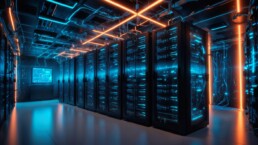

China is on course to nearly double its data center capacity within five years, with 28 gigawatts (GW) of new projects expected to come online by 2030, adding to the 32 GW already installed as of the end of last year, according to new analysis from Rystad Energy. Based on currently announced projects, with additional capacity likely to follow, this expansion is expected to lift data center power consumption to 289 terawatt-hours (TWh) by 2030. That is more than double levels seen last year and would account for around 2.3% of China’s total electricity demand. Data centers are also set to be the fastest-growing source of power demand in the country, with consumption rising at an annual rate of 19% between 2025 and 2030, driven by rapid growth in artificial intelligence (AI) and high-performance computing (HPC).
Installed capacity is projected to reach 40 GW by the end of this year, up from 32 GW at the end of 2025, reflecting the speed of buildout across the sector. AI and HPC facilities are playing a growing role, accounting for 39% of installed capacity this year and expected to rise to 48% by 2030. Unlike traditional data centers built for general-purpose computing, these facilities are significantly more energy-intensive, reshaping both the scale and geographic distribution of China’s digital infrastructure. The shift has been reinforced by the ‘East Data West Computing’ strategy launched in 2022, which established eight major computing hubs to ease pressure on land and energy in the east, with clusters emerging in regions such as Ulanqab in Inner Mongolia, where companies including 21Vianet, Huawei and ByteDance have secured around 10 GW of projects.
China’s data center sector is no longer a peripheral part of the country’s power system. It is becoming a structural driver of demand in its own right. What sets this buildout apart is the speed of the AI-driven shift, which is compressing timelines for both infrastructure deployment and energy procurement. Operators are not waiting for policy incentives or mandates to integrate renewables. They are increasingly combining different power sources, such as wind, solar and battery storage because reliable electricity and lower-carbon supply have become business priorities. This is most visible in western computing hubs, where abundant renewable resources can support growing AI demand,



Related News.

Navigating the Multi-Orbit Era: In Conversation with Intellian’s Jon Harrison at SMM 2026
At SMM 2026 in Hamburg, the rapid evolution of maritime satellite communications took centre stage. Across the exhibition halls, discussions among…
Cyprus ports need joint energy and investment strategy, shipping agents chief says
Cyprus needs a coordinated strategy for shipping, energy and environmental protection to support port investment and modernisation, Cyprus shipping…

MASO Public Affairs introduces MASO Regulatory Intelligence
A new subscription service helping businesses understand what is changing and what it means for them MASO Public Affairs introduces MASO Regulatory…
Anglo-Eastern helps turn CMBTECH’s ammonia ambition into an operational reality
From early feasibility study and risk-based design to newbuilding supervision, crew readiness and technical management, Anglo-Eastern drew on its…

Escalation of attacks threatens to derail recovery in Middle East oil exports
World oil demand is forecast to fall by 2.5 mb/d y-o-y in 4Q26 and 2.6 mb/d on average in 2026. As the Iran war manifests itself through restricted…

New study finds shipping pays twice its share to EU ETS earmarked revenues should triple to help build market for sustainable fuels and technologies
Shipping is responsible for around 10% of EU ETS emissions but pays almost 20% of the ETS bill. Unlike other sectors, it has never received free…

MSARC strengthens maritime mass rescue readiness through training and national live exercise off Dakar, Senegal
Joint MSARC–FHAS programme combines three days of SAR training with a national multi-agency live exercise The Maritime Search and Rescue Council ,…
Sogese report deliveries are still being delayed as container freight rates fluctuate
FOR IMPORTERS Spot rates into the Mediterranean are back at January levels, Far East to Europe reliability sits at pandemic lows, and nearly…
Glencore begins trading on Australian Securities Exchange
Glencore has begun trading on the Australian Securities Exchange under the ASX code GLC. Gary Nagle, Glencore’s CEO, said it was an exciting day for…
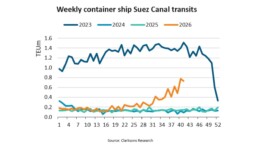
BIMCO Shipping Number of the Week
Suez Canal container ship transits exceed 50% of pre-disruption levels "During the first two weeks of October, weekly container ship capacity…
Subscribe to our newsletter!
if you dont want to swim alone in the ocean of news, sign up for the newsletter, and you will receive daily all the important news of world shipping!
